
Suwon is located about a 30-minute drive from Seoul, yet it often does not make it into tourists’ itineraries, partly because it remains relatively unknown to international visitors. Its scenic landscapes and rich cultural heritage have made it a popular filming location for Korean productions, particularly historical dramas. With a population of about 1.2 million, Suwon is an important economic centre and home to Samsung Electronics’ global headquarters. It is also one of South Korea’s most historically significant and culturally vibrant cities. Visitors are often surprised by the range of attractions it offers, extending far beyond its role as a satellite city of Seoul. Suwon is best known for its UNESCO-listed fortress, historical ties to the Joseon dynasty, distinctive cuisine, and blend of traditional heritage and modern urban life. For travellers interested in Korean history, it makes an excellent and convenient day trip from Seoul. Read on to discover my experience and recommendations for making the most of your visit.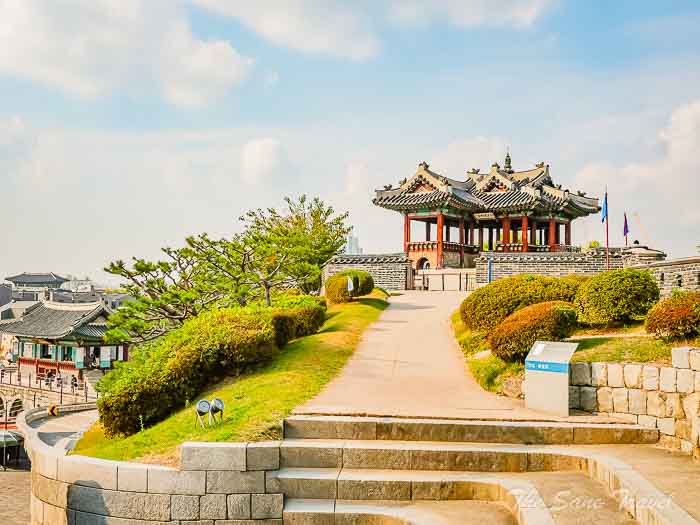
Hwaseong Fortress
Suwon was one of the four major regional administrative centres during the Joseon dynasty. It is best known for Hwaseong Fortress, a UNESCO World Heritage Site and one of South Korea’s most significant historical landmarks. Built in the late 18th century, the fortress reflected King Jeongjo’s filial devotion to his father and his vision of establishing a new city with an independent economic foundation. It once enclosed the entire city before Suwon expanded beyond its walls. Hwaseong is notable for its sophisticated architectural design, combining traditional Korean fortification techniques with influences from China and the West. The fortress hosts daily performances and the Suwon Hwaseong Cultural Festival each autumn. Its walls stretch for approximately 5.7 kilometres around Paldalsan Mountain. Walking along the walls is a popular activity in Suwon, offering scenic views of the city, particularly at sunset. Along the way, visitors can explore gates, watchtowers, pavilions, and concealed defensive structures that demonstrate the military innovations of the period. Today, Hwaseong Fortress is not merely a historical site but also an integral part of Suwon’s urban life.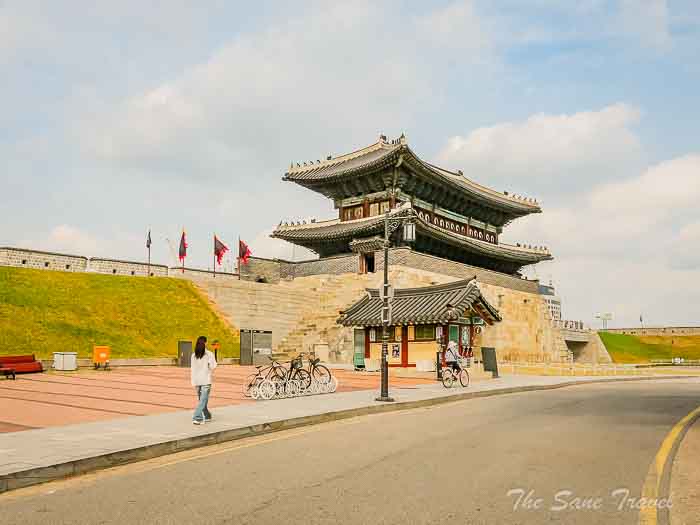
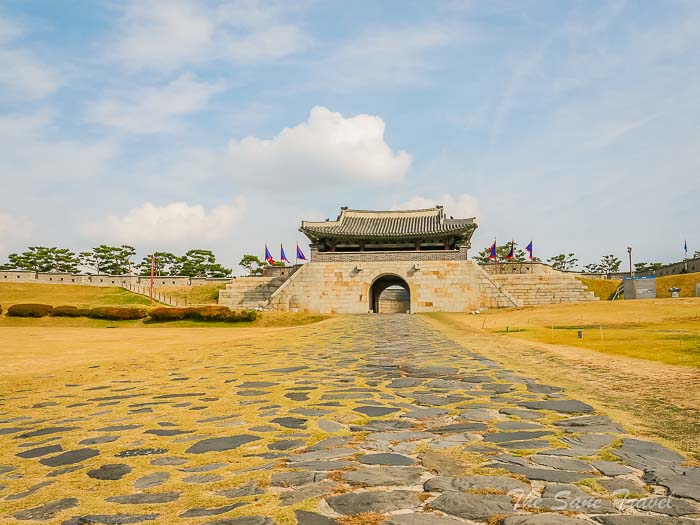
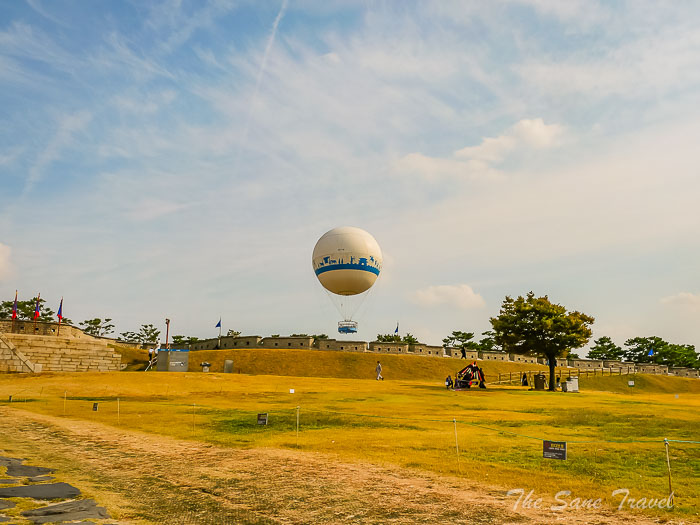
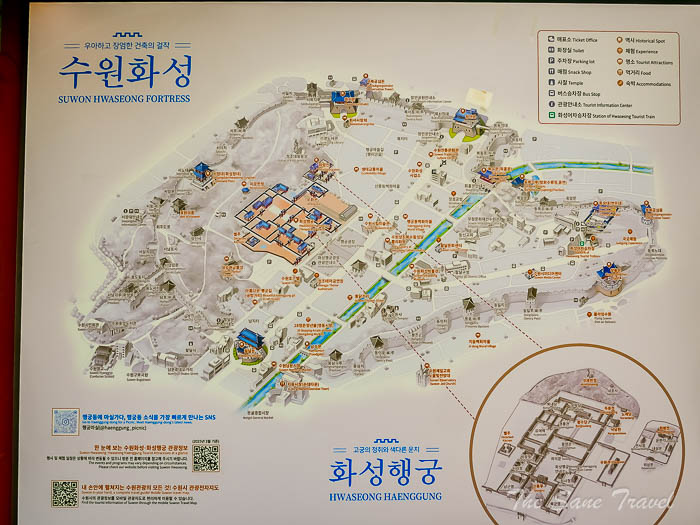
To begin your tour of Suwon, take a local bus to Paldalmun Gate and start your walk from there.
Paldalmun Gate
Paldalmun Gate, the southern gate of Hwaseong Fortress, is particularly noteworthy because it survived the Korean War and is now separated from the rest of the fortress. Situated in the centre of a traffic roundabout, the gate stands as a reminder of Korea’s rich history amid the bustle of modern city life.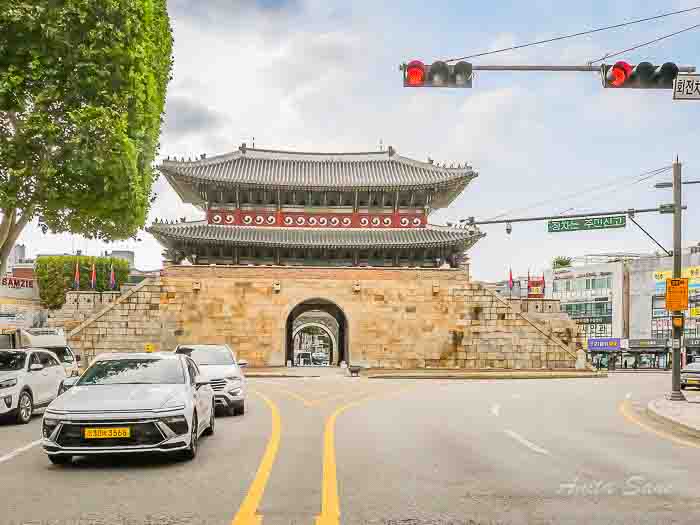
From there, walk along Haenggung-ro Street to Sinpungnu Gate at Hwaseong Haenggung Palace. If time permits, stop at one of the nearby cafés for a snack or a drink.
Haenggung-ro Street
Haenggung-ro is a short street connecting the main entrance of Hwaseong Haenggung Palace with Paldalmun Gate. Officially known as Workshop Street or Beautiful Haenggung-gil Road, it is a lively cultural area filled with independent craft studios, traditional shops, and public art. Approximately 30 small craft studios line the street, offering everything from woodwork and traditional Korean paper crafts to ceramics, leatherwork, embroidery, metalwork, and pressed-flower art. Many operate as both shops and hands-on workshops, allowing visitors to try their hand at making their own crafts. At the northern entrance, Haenggung Gallery offers free admission to rotating exhibitions by local Suwon artists. The street features various forms of decorative artwork, including distinctive shop signs, painted brick walls, roof-tile murals, and pavement sections with 3D optical illusions. Visitors can also browse gift shops and speciality stores selling handmade jewellery, lifestyle products, personalised name stamps, souvenirs, and character merchandise. 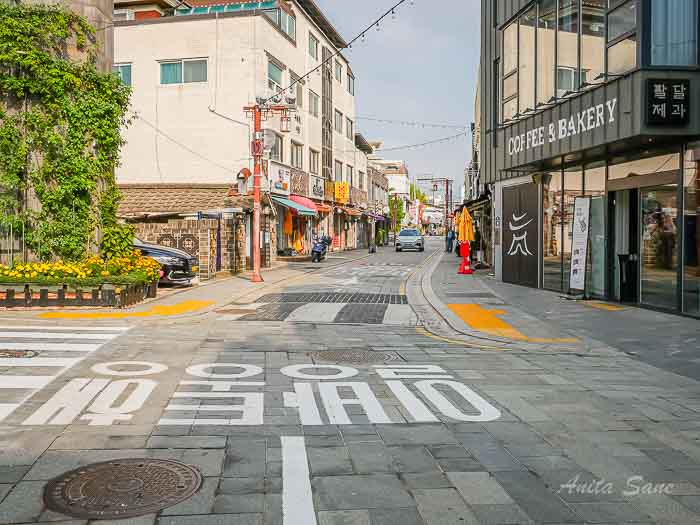
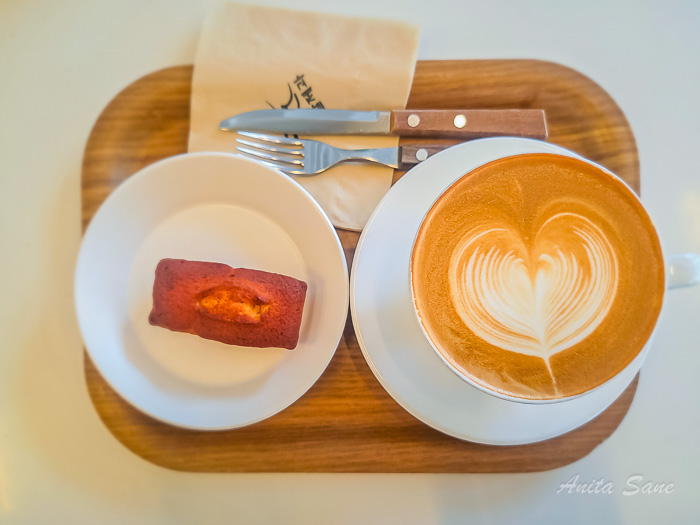
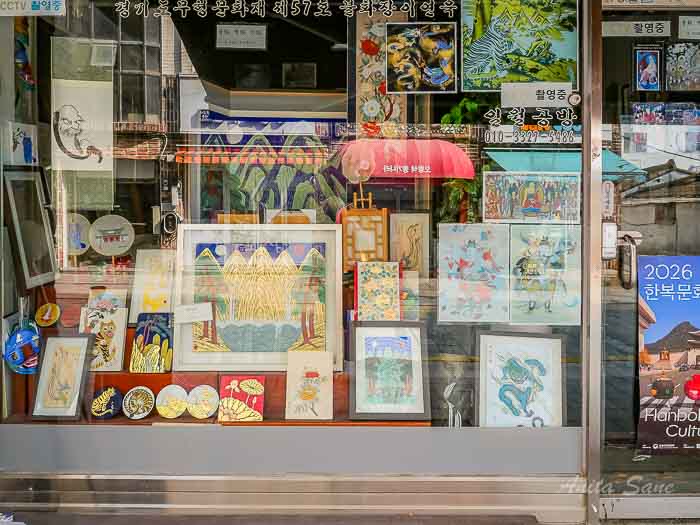
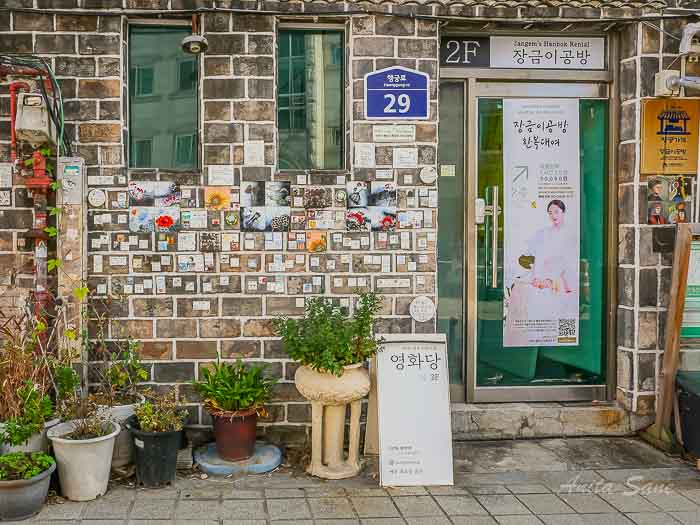
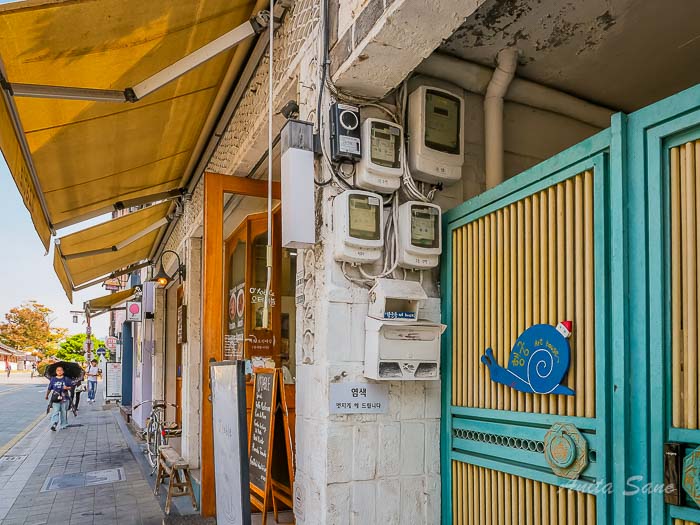 Food options include traditional snacks, small restaurants, tea houses, and street-food stalls offering retro treats. Visitors can even try activities such as making dalgona, a traditional South Korean sponge-toffee candy made from melted sugar and a pinch of baking soda.
Demonstration of traditional Korean martial arts
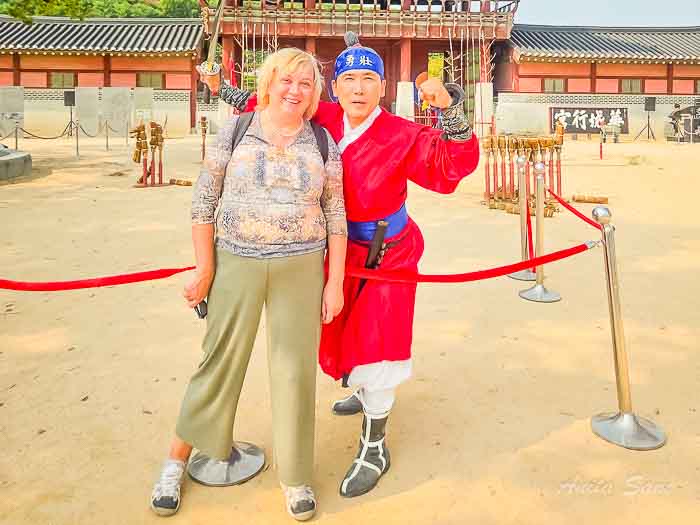
Muye 24 Gi (24 Martial Art Techniques) is a live demonstration of traditional Korean martial arts held in front of Sinpungnu Gate at Hwaseong Haenggung Palace. Performances take place at 11:00 am from Tuesday to Friday and on public holidays. At weekends, shows are held at 11:00 am and 2:00 pm. There are no performances on Mondays. Admission is free, although the standard palace entrance fee may apply to visitors entering the palace grounds. Performances may be cancelled in the event of severe weather. The demonstration is based on the Muyedobotongji (Comprehensive Illustrated Manual of Martial Arts), commissioned by King Jeongjo of the Joseon dynasty and published in 1790. The martial arts techniques described in the manual were originally practised by the Jangyongyeong, an elite royal guard unit responsible for protecting Suwon Hwaseong Fortress. During the performance, actors and martial artists dressed in Joseon-era military uniforms demonstrate traditional unarmed combat methods and historical weapon techniques involving swords, spears, and staffs. Practical tip: The performance takes place in front of the main entrance. You do not need to enter the palace to watch it.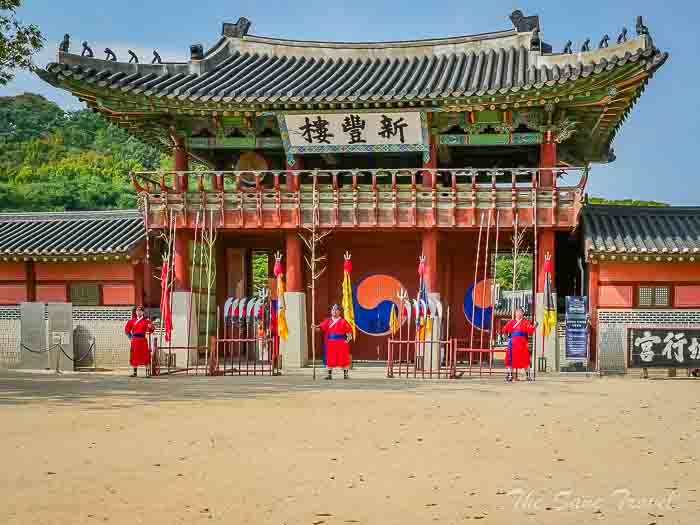
Hwaseong Haenggung Palace
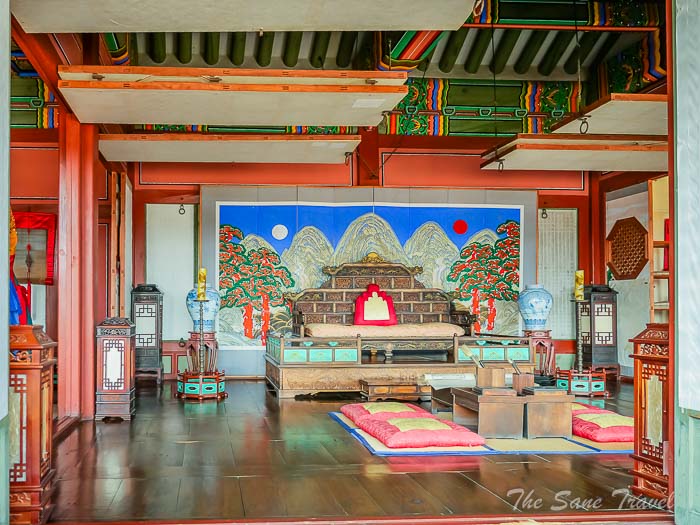
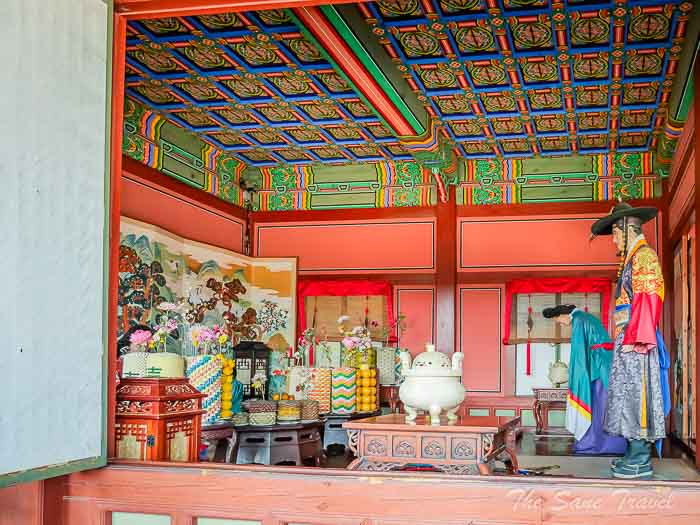
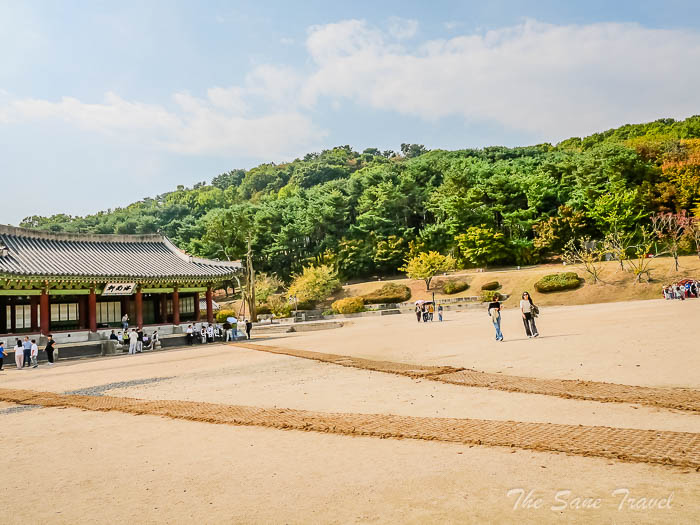
Hwaseong Haenggung Palace is the largest and most architecturally significant temporary royal palace built during the Joseon dynasty. It served as a royal residence, ceremonial site, and administrative centre when the king travelled outside Seoul. The palace was commissioned by King Jeongjo, the 22nd ruler of the Joseon dynasty, and completed in the late 18th century, with more than 600 rooms. It formed part of King Jeongjo’s broader plan to reduce Seoul’s political dominance and develop Suwon into a self-sufficient and economically independent city. Many of the original buildings were destroyed during the Japanese colonial period in the early 20th century. However, a long-term restoration project has seen much of the complex reconstructed using historical royal records. Notable sites include Bongsudang Hall, the complex's main building and former government office. Inside, visitors can see detailed dioramas depicting royal life during the Joseon period. Another highlight is Nangnamheon Hall, one of the few structures to have survived the colonial period largely intact. 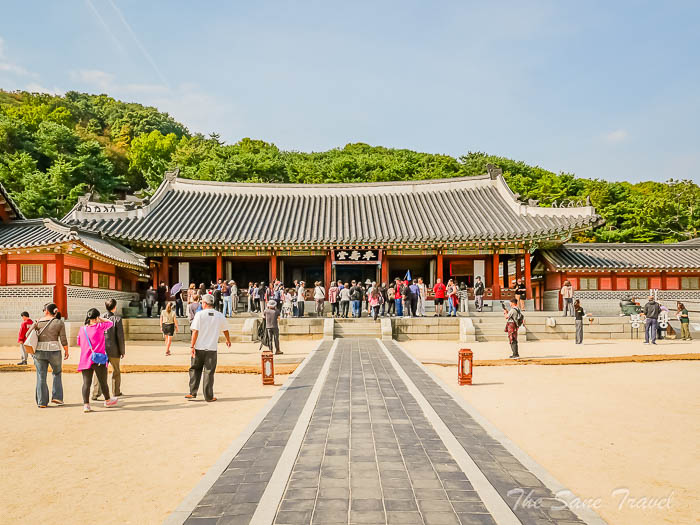
Notice the guardians on the roof: the small clay figures arranged along the roof ridges of historic Korean buildings are known as Japsang. These sacred, shamanic guardians were believed to repel evil spirits, misfortune, and disasters—particularly fires, which posed a serious threat to Korea’s ancient wooden structures. Interestingly, these figures were inspired by characters from the sixteenth-century Chinese novel Journey to the West. A typical group of five includes Monk Xuanzang, the Monkey King, the half-pig character Zhu Bajie, the river disciple Sha Wujing, and a mythical creature such as a Haetae. Japsang appeared only on royal palaces and important state buildings because they represented the king’s supreme authority.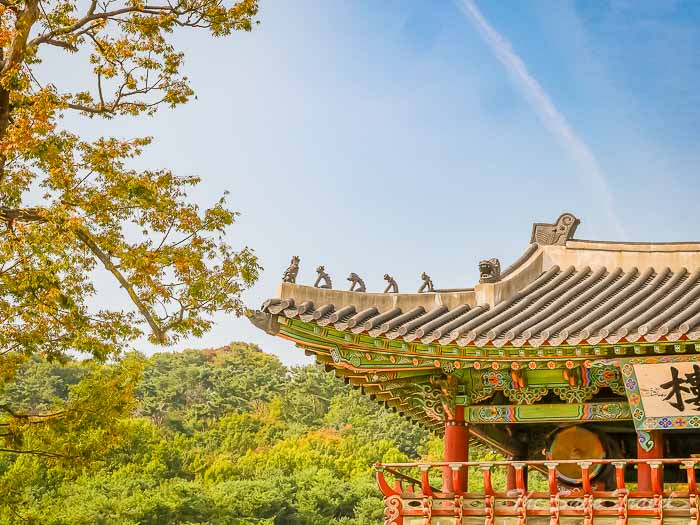
To create your own Korean souvenir, bring a small notebook to collect stamps from the places you visit. You can begin with this stamp at the palace. 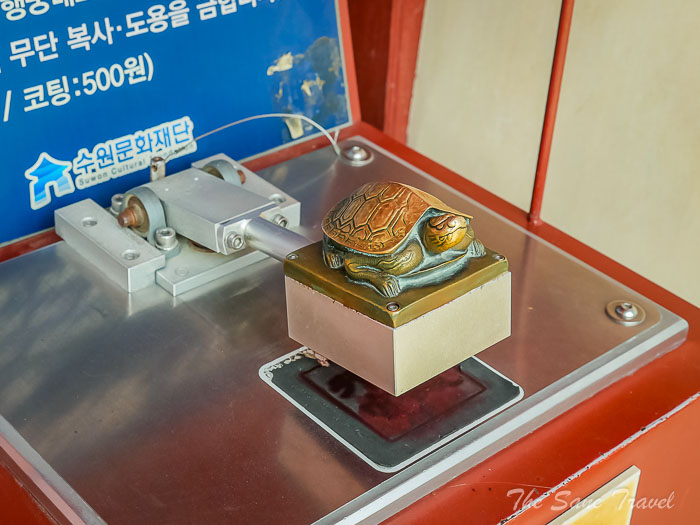 Just beside the palace stands Hwaryeongjeon Shrine, built in 1801 by King Sunjo to house the official royal portrait of his late father, King Jeongjo.
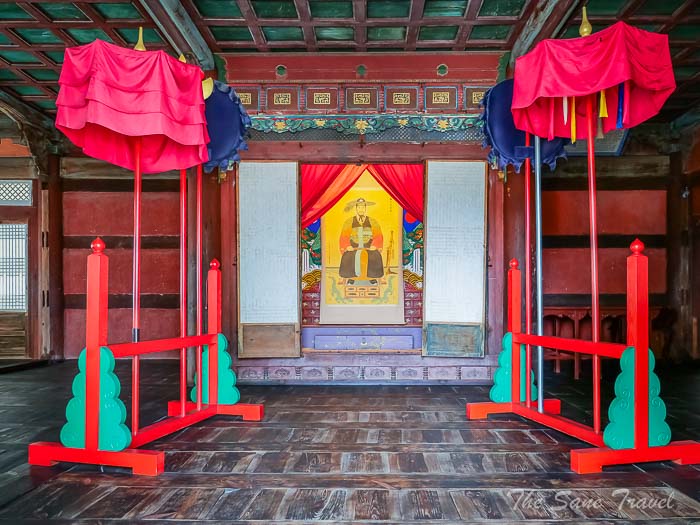
After visiting the palace, stop by the Art Museum Toilet.
Art Museum Toilet
The Art Museum Toilet is a well-known, award-winning public toilet located beside the Suwon Museum of Art in South Korea. It remains fully operational and features a contemporary, minimalist concrete design that complements the adjacent gallery. The facility received the Grand Prize in the Beautiful Restrooms Contest for its architectural integration and refined design. It is also recognised as a “smart toilet” because it incorporates advanced automated systems, including climate control, smart lighting, touchless fixtures, and digital maintenance monitoring. The project reflects Suwon’s broader efforts to develop clean, technologically advanced, and aesthetically pleasing public toilet facilities. Located in Hwaseong Haenggung Palace Square, it is a convenient stop for visitors exploring the historic palace grounds and the main art museum.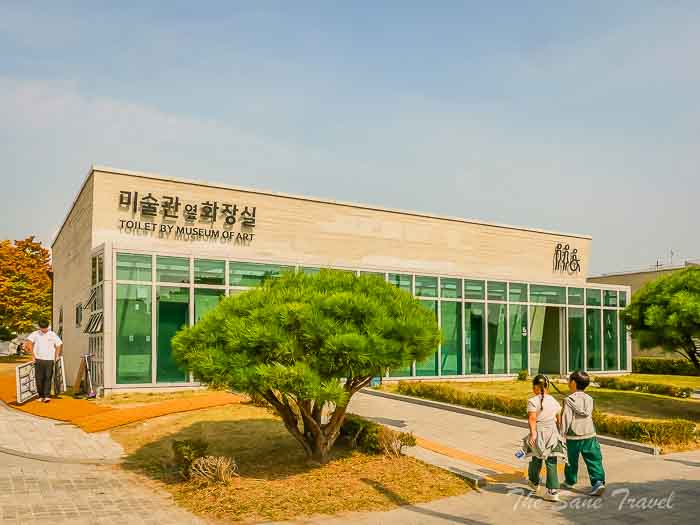
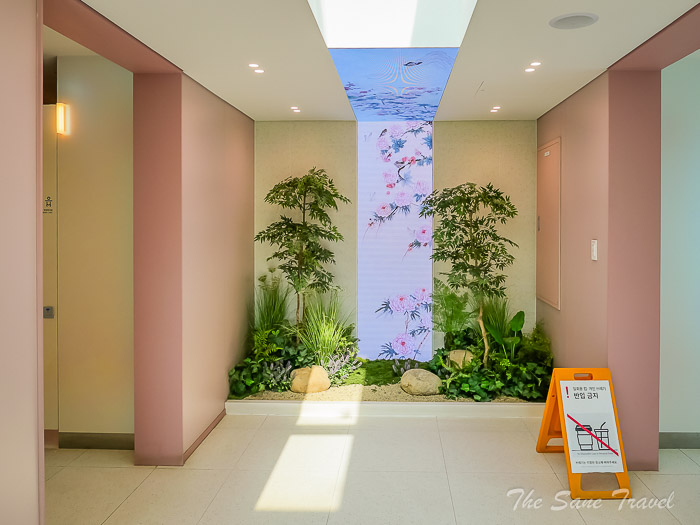
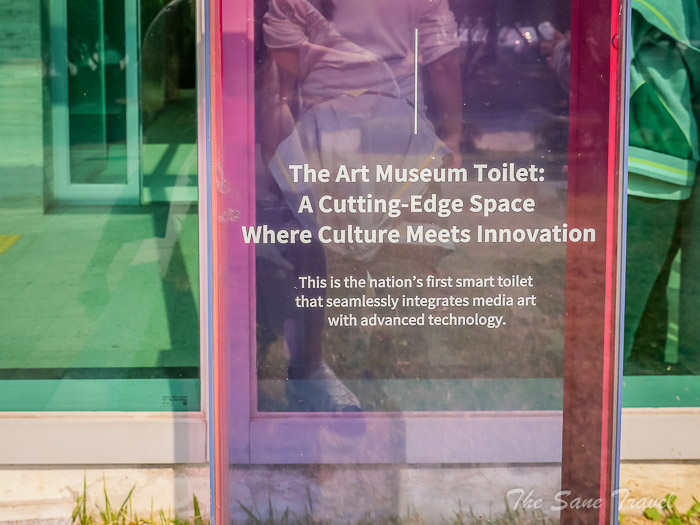
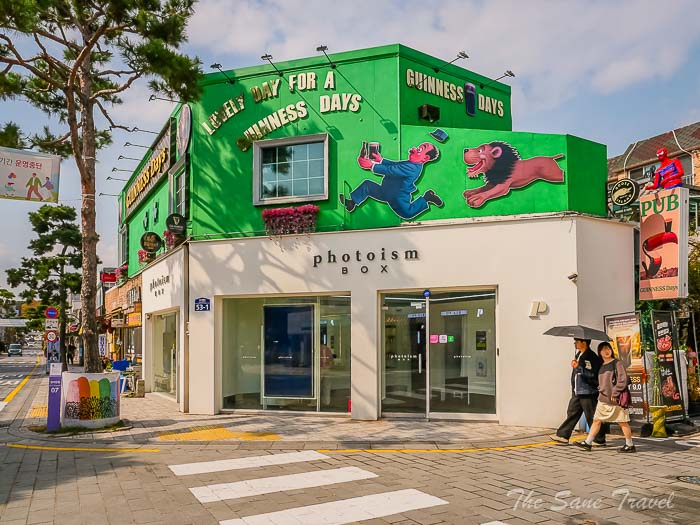
Photo booths
While exploring the city, look for themed photo booths and consider stepping inside one. Suwon offers a variety of popular self-service photo booths, high-angle studios, and retro-style photo spots. Many unmanned studios provide free-to-use mirrors, hair straighteners, combs, and themed headbands or glasses.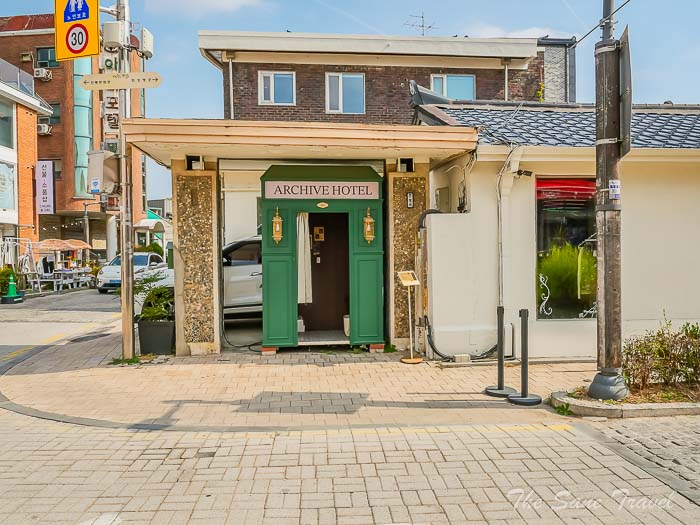
Suwon Traditional Culture Centre
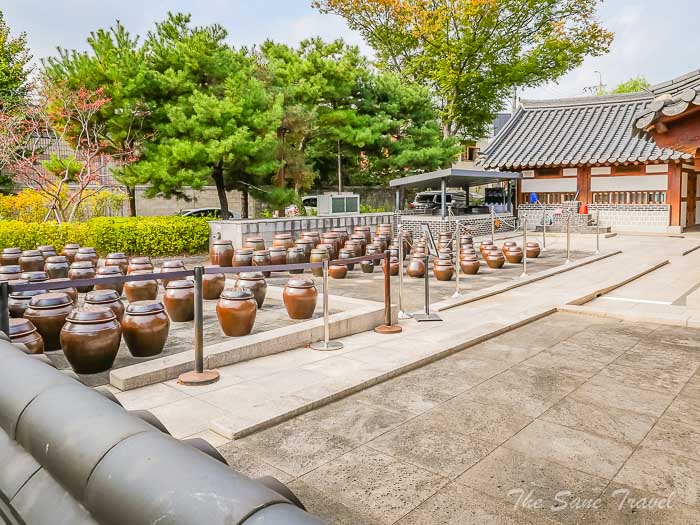
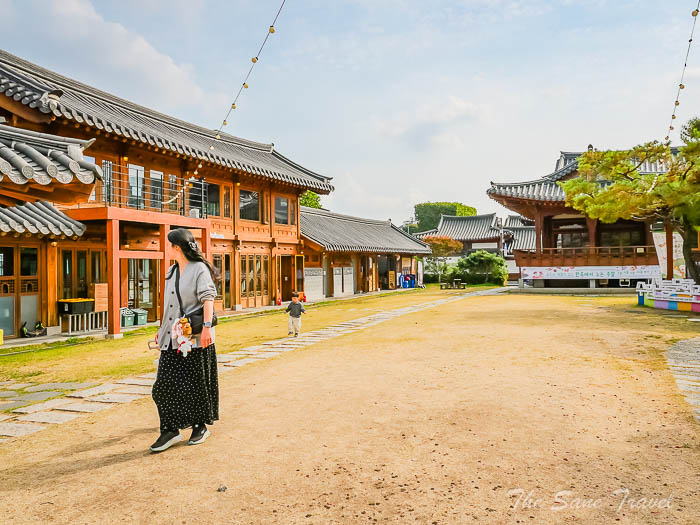
The Suwon Traditional Culture Centre is a cultural institution dedicated to preserving and promoting Korean traditions. It comprises the Traditional Dietary Life Experience Centre and the Etiquette Education Centre, offering programmes and exhibitions that showcase the region’s history and cultural heritage. Visitors can take part in activities such as traditional craft workshops, music performances, and seasonal festivals. The centre also offers educational programmes covering traditional food, royal cuisine, dietary customs, tea ceremonies, and etiquette. One-day classes allow participants to prepare traditional Korean foods, including yakgwa and other snacks, and learn about Korean kimchi culture.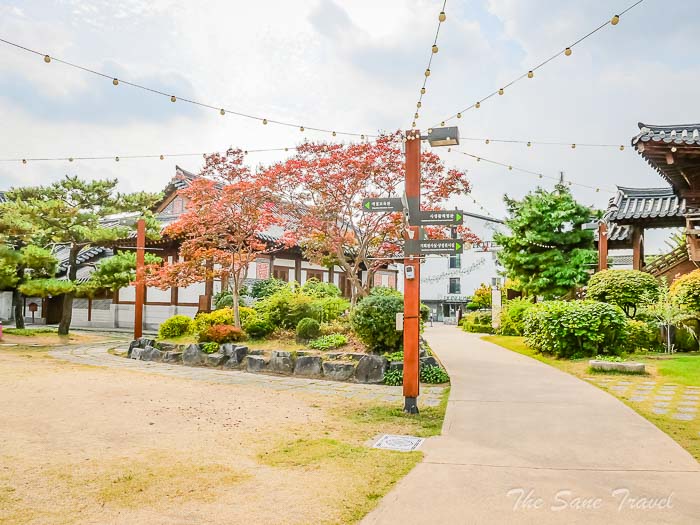
Haenggung-dong Mural Village
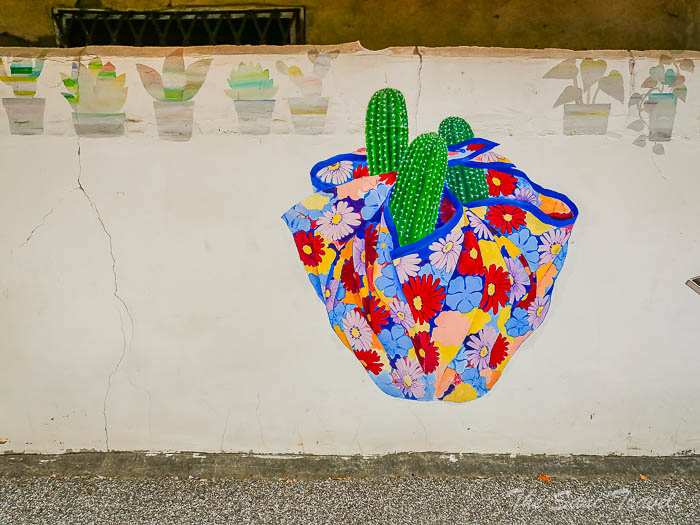
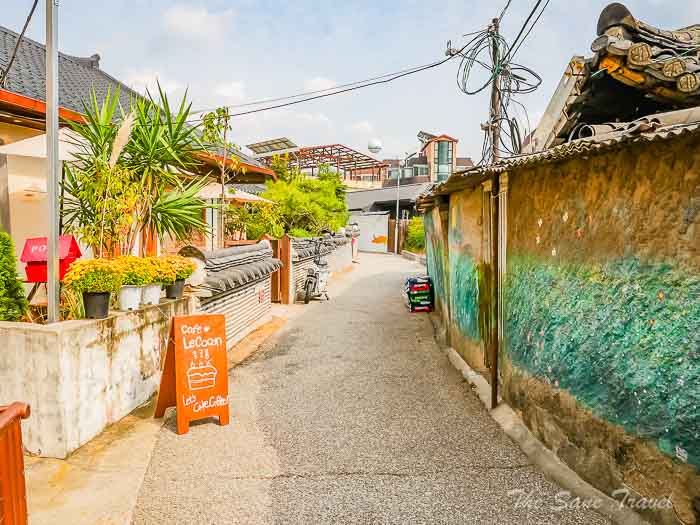
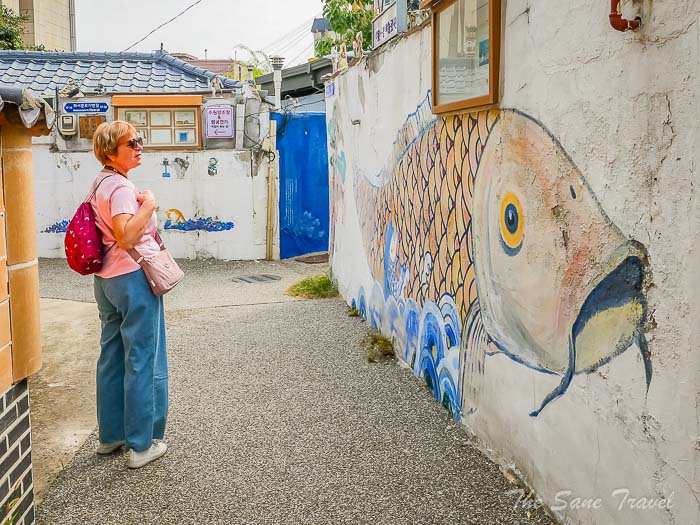
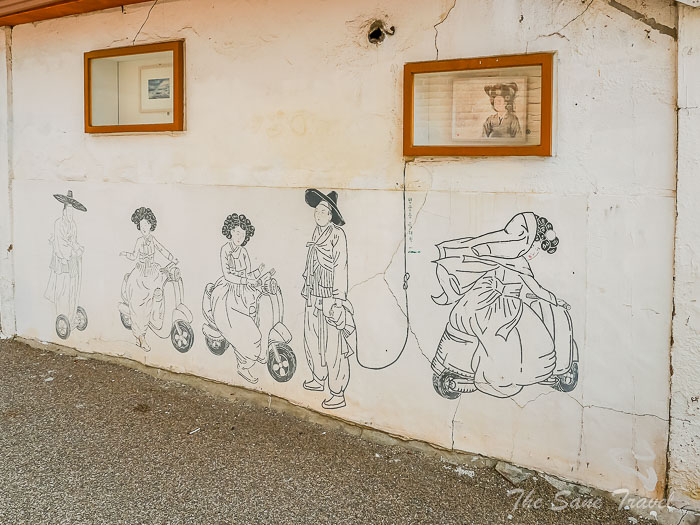
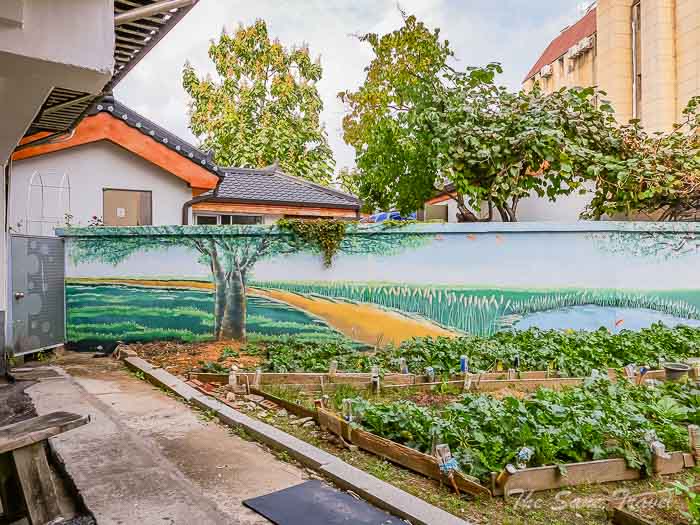
This small neighbourhood was once neglected, but in 2010, residents and artists collaborated to revitalise the area through art. Today, it is home to a collection of colourful murals, cafés, and restaurants. Vibrant artwork lines the narrow alleyways winding between the residential buildings. As with other mural villages in Korea, the area features artwork ranging from small, detailed paintings and quirky images to large, colourful murals. Some pieces reflect the area’s traditional history and culture, while others feature light-hearted and playful designs. 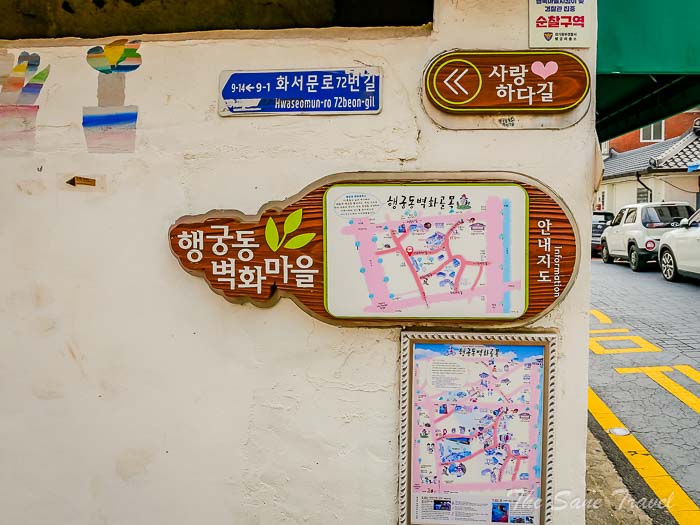
From there, I took a bus to my next stop, Yeonmudae, where I planned to take the tourist trolley. However, the tourist trolley did not run that day, so I watched a traditional archery demonstration before setting off along the fortress wall.
Tourist Trolley
Inspired by King Gojong’s royal vehicle and the palanquins used during the Joseon dynasty, the Hwaseong Fortress Tourist Trolley offers visitors a comfortable way to explore Suwon Hwaseong Fortress. It operates on two routes: a sightseeing route from Hwaseong Temporary Palace to the fortress’s main gates, and a circular route from Yeonmudae Post to its major military facilities.
Traditional Korean archery experience
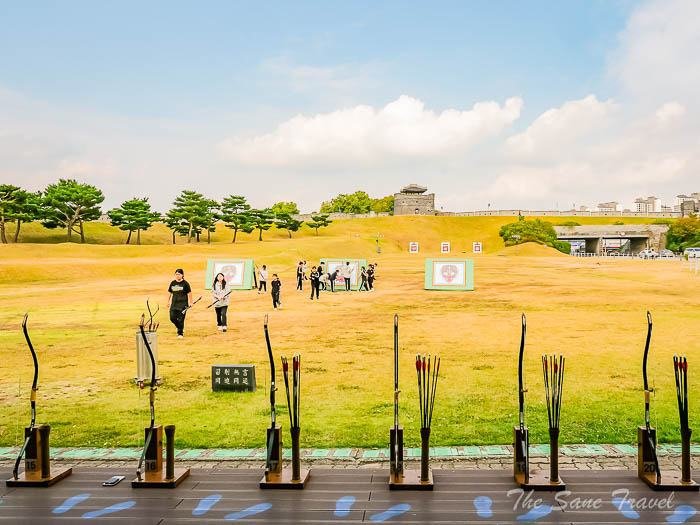
Visitors can try traditional Korean archery at Yeonmudae, a historic military observation post within the UNESCO-listed Suwon Hwaseong Fortress. The experience includes a brief introduction to Korean archery and its history, guidance from staff on proper posture and stance, and the opportunity to shoot a round of arrows at targets. The activity is affordable, typically costing just a few thousand won per round, and is available year-round, weather permitting. Opening hours are generally 9:30 am to 5:30 pm from March to October, and 9:30 am to 5:00 pm from November to February. 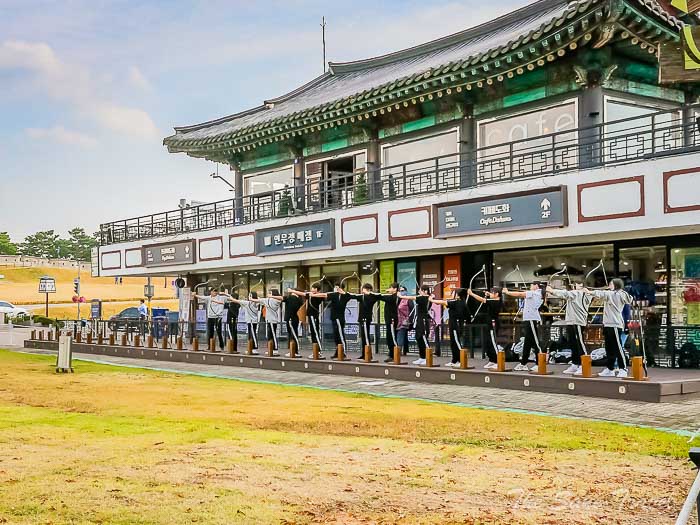
Walking the Fortress walls
Walking along the Fortress walls was quite an experience, but I was disappointed that the route was not continuous. Some sections were inaccessible because the doors were locked, forcing me to take detours.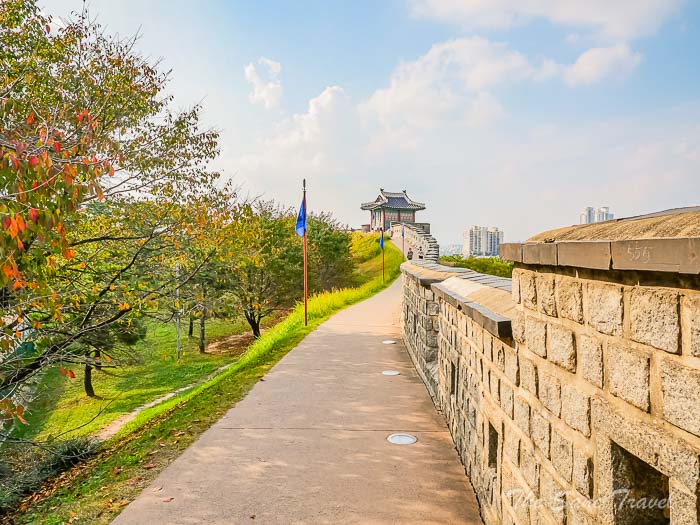
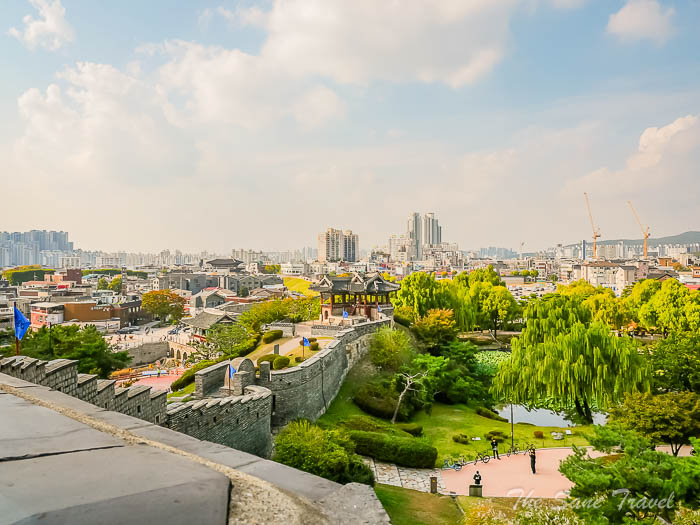
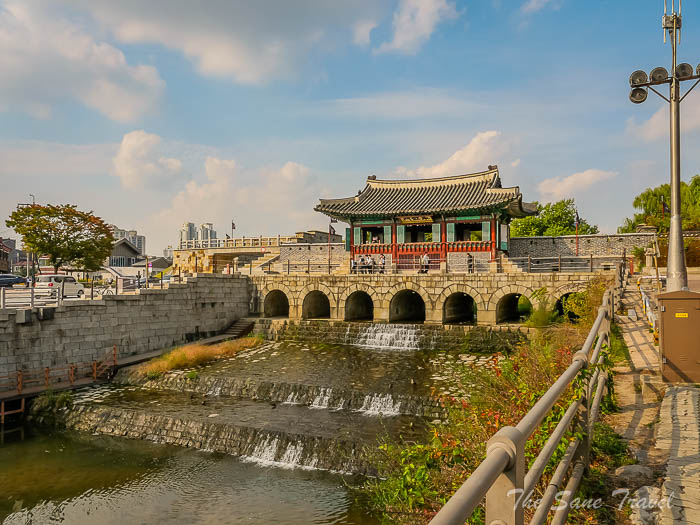
Before heading to my final destination, Starfield Library Suwon, I had a hearty meal on Chicken Street.
Suwon Chicken Street
Suwon Chicken Street is a well-known historic food district near Paldalmun Gate, Suwon Stream, and Hwaseong Fortress. It is famous for its numerous traditional fried chicken restaurants. The street’s history dates back to the 1970s, when local vendors began frying whole chickens in large cast-iron cauldrons called gamasot. This traditional cooking method produces chicken with thin, crispy skin. Many restaurants still use this technique and often serve complimentary fried chicken gizzards alongside their main dishes. Several established restaurants line the street. Jinmi Chicken is one of the most popular and often attracts long queues. Maehyang Chicken is one of the area’s oldest restaurants and still follows recipes passed down through generations. My choice was Yongsung Tongdak, known for its traditional cauldron-fried chicken and generous side dishes.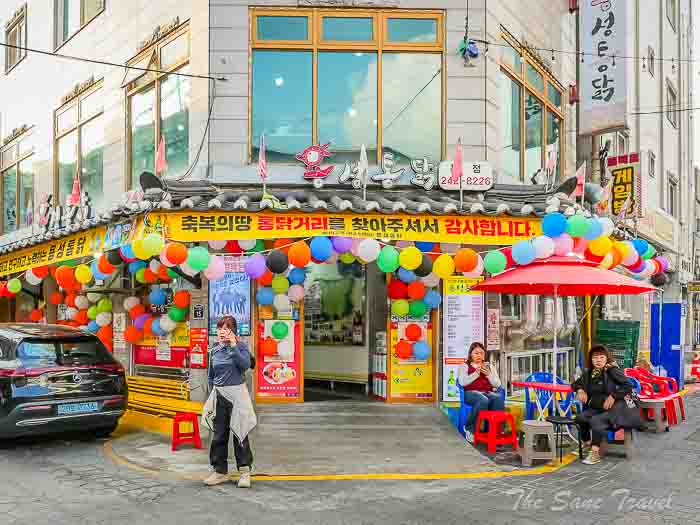
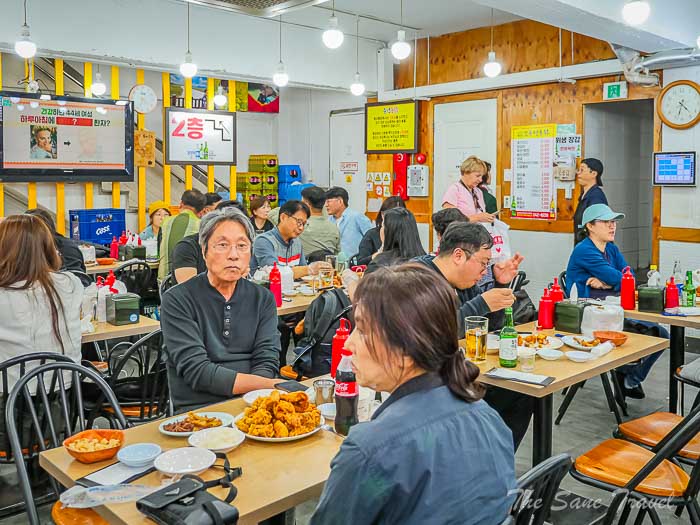
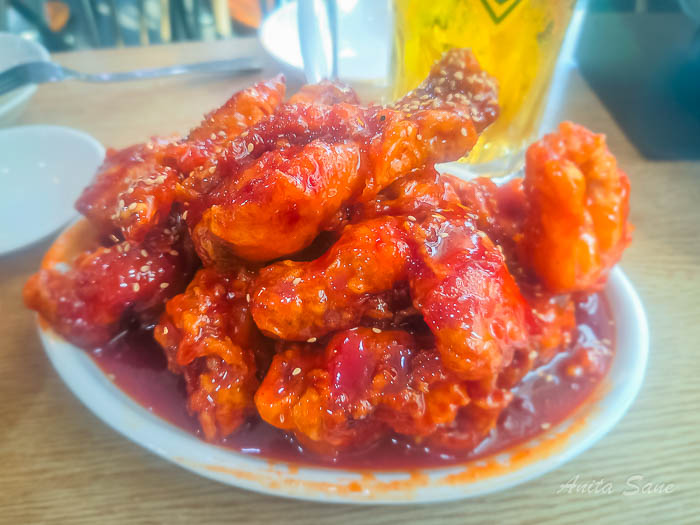
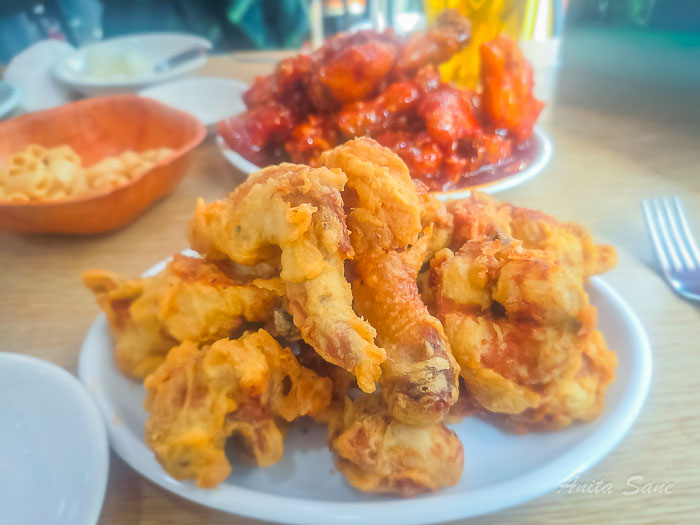
The street can get very crowded on weekend evenings and public holidays, so try to visit outside peak hours to avoid long waits.
Starfield Library Suwon is some distance from the old town, so you will need to take a bus to get there.
Starfield Library Suwon
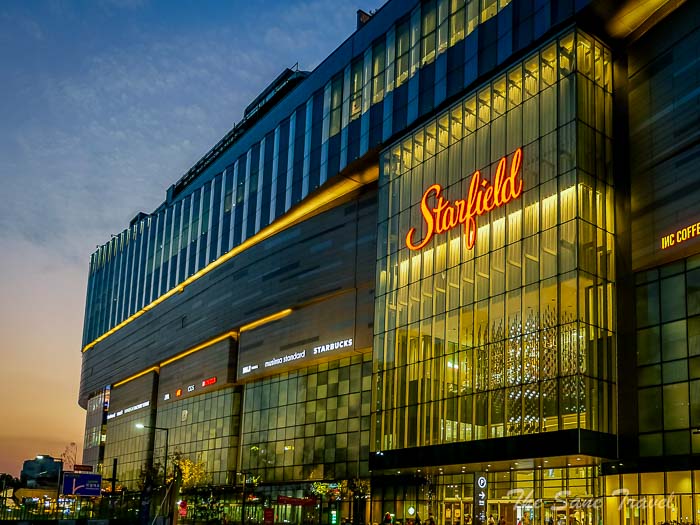
Opened in 2024, Starfield Suwon is a large shopping centre that has quickly become a major attraction in South Korea, largely thanks to its distinctive library. Known as Starfield Library Suwon, it has helped turn the complex into a destination for people interested in architecture, design, and literature, much like the original Starfield Library in Seoul. Its layout is distinct and impressive, with a central staircase as the focal point, surrounded by large wooden bookshelves that extend organically from the fourth to the seventh floor. These sculptural structures house more than 60,000 books and magazines. Small reading areas are integrated throughout the library, with chairs, tables, armchairs, and sofas offering views of the surrounding space. Like Starfield in Seoul, it is designed as an open and accessible space for people to meet, relax, and find inspiration, serving as a “third space” between home and work. 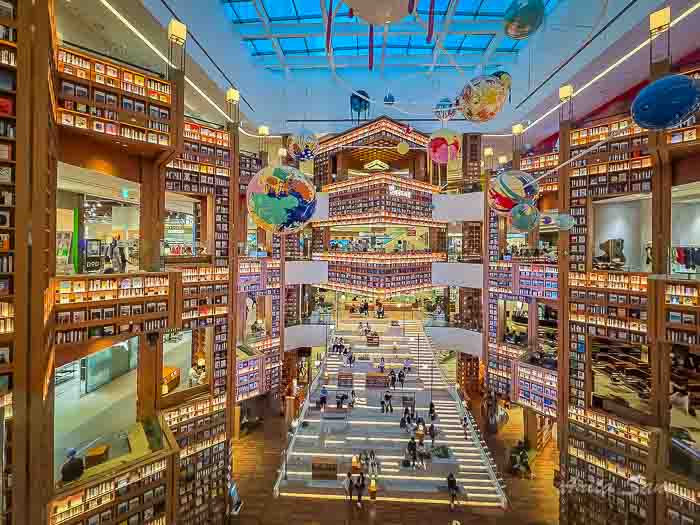
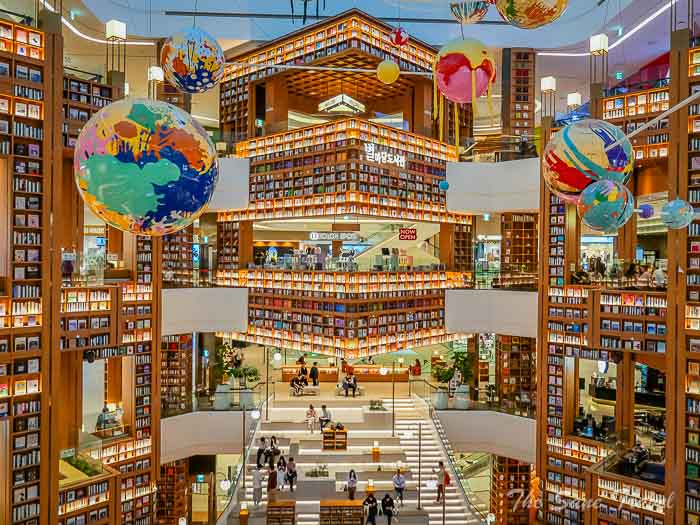
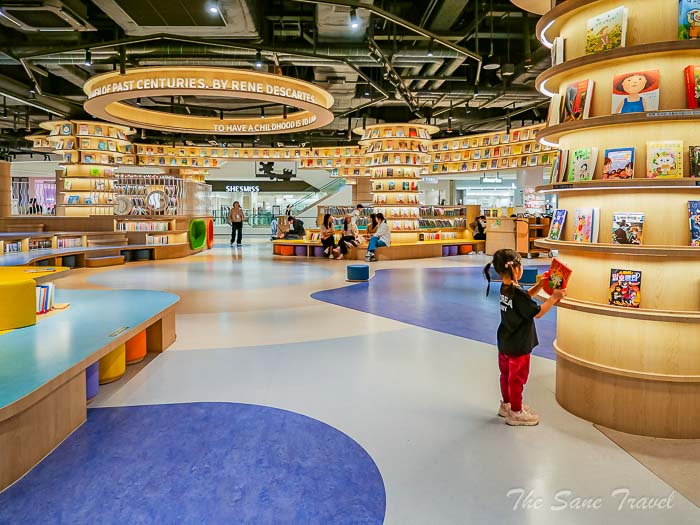
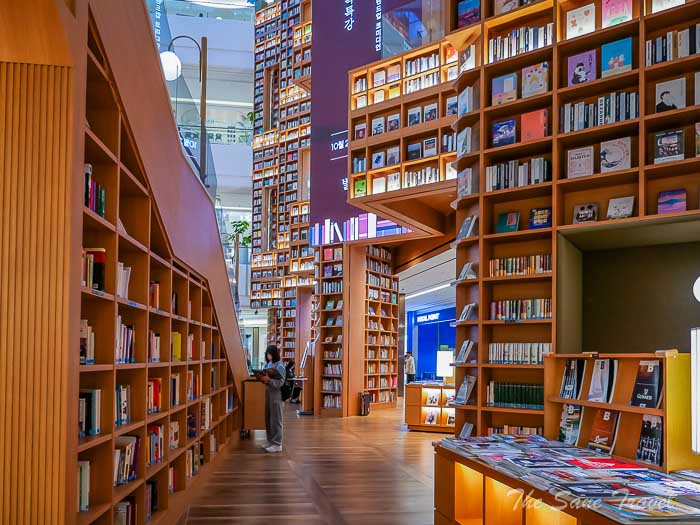 Starfield in Suwon houses the children's library as well.
 The eight-storey complex also includes a cinema, an indoor sports park, a large food court, and a variety of restaurants and cafés. Starfield Suwon also features a wide variety of retail outlets selling clothing, cosmetics, consumer electronics, and other products.
Seoul to Suwon travel guide and tips
Travelling from Seoul to Suwon generally takes 30 to 70 minutes, depending on the mode of transport and departure station, making it a convenient day-trip option. The main public transport services are Seoul Subway Line 1 and metropolitan red buses. Once in Suwon, local buses such as routes 11, 13, and 36 can take you to Hwaseomun Gate or Jangan Park in approximately 10 to 15 minutes. These buses accept T-Money cards. Alternatively, you can walk there in about 30 to 45 minutes. Plan to arrive outside Sinpungnu Gate at Hwaseong Haenggung Palace by 10:50 am for the 11:00 am martial arts demonstration. It is well worth seeing. For reliable, real-time walking and bus directions in Suwon, use Naver Map or KakaoMap rather than Google Maps. Make sure your T-Money card has a sufficient balance, as it can be used on Seoul subways, Korail commuter trains, and Suwon local buses. If you intend to walk the entire 5.5-kilometre Suwon Hwaseong Fortress wall, wear comfortable shoes and set aside at least half a day.
Like it? Pin it!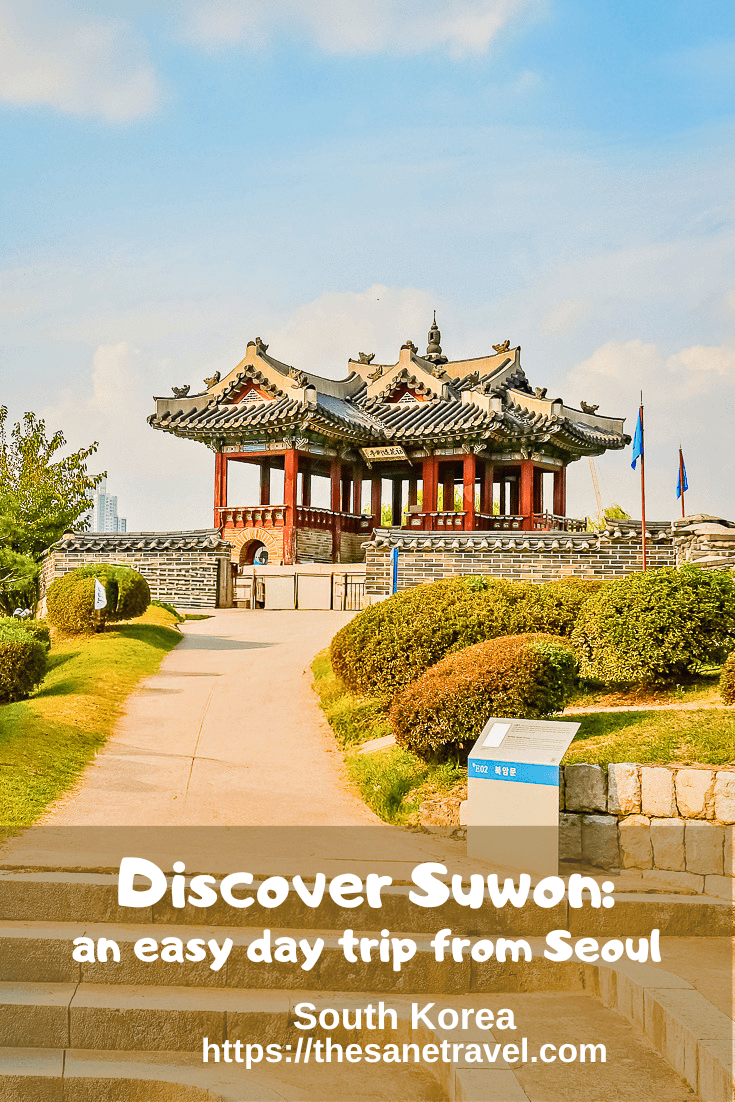
What did you think? Have you been to Suwon and South Korea? I would love to hear from you, so please add your comment below.
Author: Anita Sane

About the author
Anita is a part-time traveller, passionate photographer and a retired career woman from Latvia, travelling mostly solo for more than 15 years. She is a skilled travel planner who plans and executes her travels by herself. Anita wants to show you how to travel the world and open your mind to new experiences. Follow her on Facebook, Instagram, Pinterest, Twitter and Bloglovin.
Report
My comments