
Gyeongju is a historic city known for its rich cultural heritage dating back to the Silla Kingdom (57 BC–AD 935), a significant period in ancient Korean history. Although it is now a relatively small city with a population of around 270,000, Gyeongju retains the legacy and character of the kingdom that flourished under 56 monarchs over more than a thousand years. Today, the city is often described as an open-air museum, featuring Buddhist art, palace sites, and royal tombs. Before embarking on our two-day journey, let us look at the UNESCO World Heritage Sites in and around Gyeongju.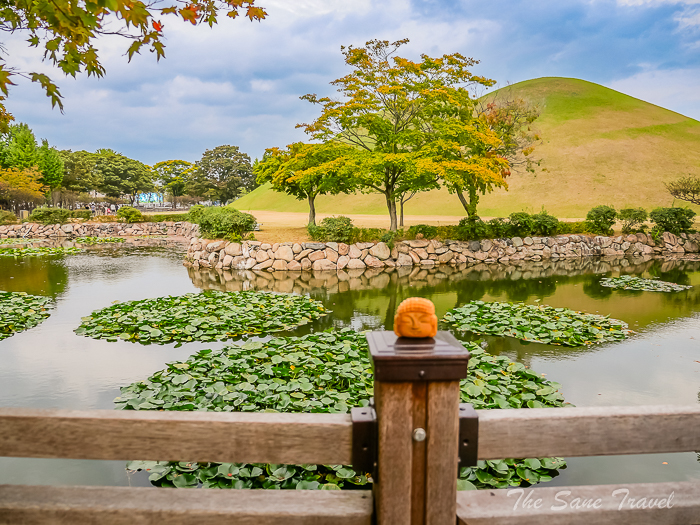
UNESCO heritage sites in the Gyeongju area
Gyeongju and its surrounding areas are home to three UNESCO World Heritage sites: Gyeongju Historic Areas, Bulguksa Temple and the nearby Seokguram Grotto, and Yangdong Folk Village.
Gyeongju Historic Areas
Gyeongju Historic Areas were added to the UNESCO World Heritage List in 2000 in recognition of the city’s cultural importance and the need to preserve its heritage for future generations. The site is divided into five zones based on the nature of their historical remains: Mount Namsan, known for its extensive Buddhist art; Wolseong, the site of the royal palace; Tumuli Park, home to numerous burial mounds; the Hwangnyongsa Temple site; and Myeonghwal Mountain Fortress, which once protected the capital. Together, these five zones contain 52 designated cultural properties. In the city centre, the Wolseong zone includes the ruins of Wolseong Palace, the historic Gyerim Woodland, Cheomseongdae Observatory, and Anapji Pond, which is particularly scenic at night. Nearby, the Tumuli Park zone features large, grass-covered burial mounds belonging to Silla royalty. Excavations have uncovered valuable artefacts, including gold crowns and the well-known painting of a winged horse.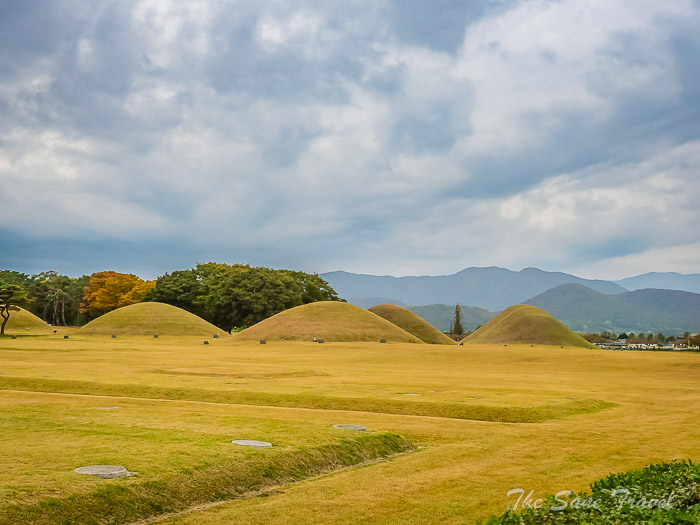
Bulguksa Temple and Seokguram Grotto
Bulguksa Temple and Seokguram Grotto were added to the UNESCO World Heritage List in 1995. Built in 774, Bulguksa is one of South Korea’s most renowned Buddhist temples and represents the pinnacle of Silla architecture and Buddhist art. The temple combines religious significance with architectural beauty.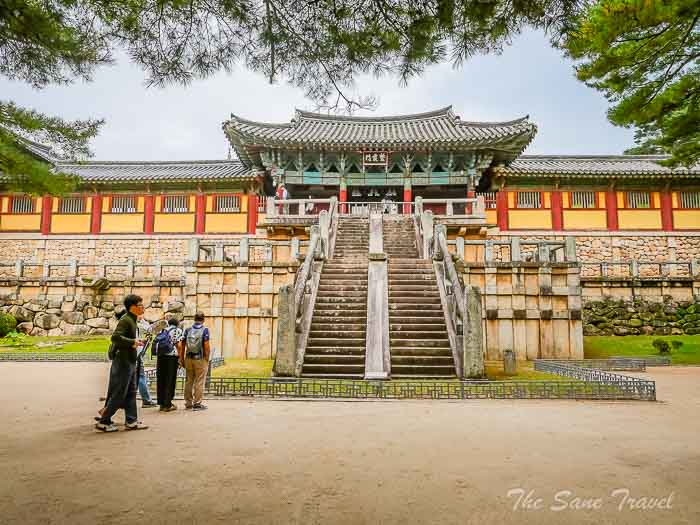
Yangdong Folk Village
In 2010, Yangdong Folk Village was inscribed as part of the Historic Villages of Korea. Dating back to the 14th and 15th centuries, it is a traditional Joseon-era clan village renowned for its well-preserved hanok houses and Confucian traditions. Now, let us begin our two-day tour of Gyeongju.
Day 1
Gyeongju is best known for its ancient burial mounds. The city is home to more than 150 tumuli dating from the Silla Kingdom, scattered across various areas. So that's why we are starting to explore those first.
Silla Dynasty Tombs Information Centre
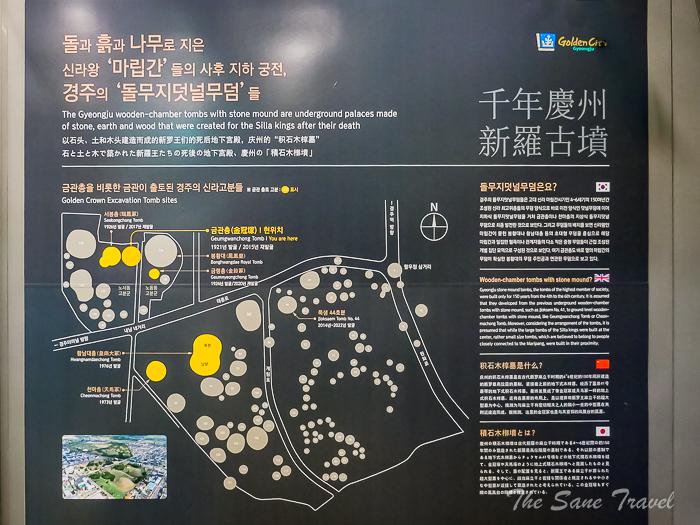
The Silla Dynasty Tombs Information Centre introduces visitors to the burial mounds and helps them understand their historical significance before exploring the tomb area. It features educational exhibits on the history and culture of the Silla Kingdom, which lasted from 57 BC to AD 935. Visitors can also pick up maps and guides to help them navigate the extensive site, where numerous tombs and artefacts are set amid scenic surroundings. The centre adds context to the visit and encourages a deeper appreciation of this UNESCO World Heritage site and Korea’s historical heritage.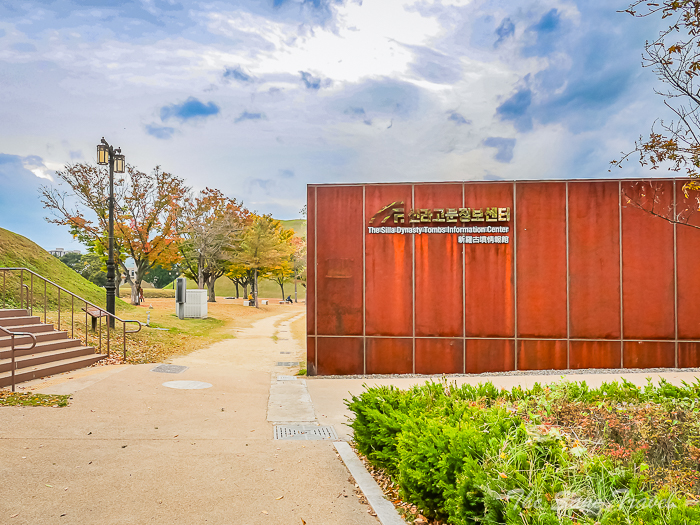
Cheonmachong
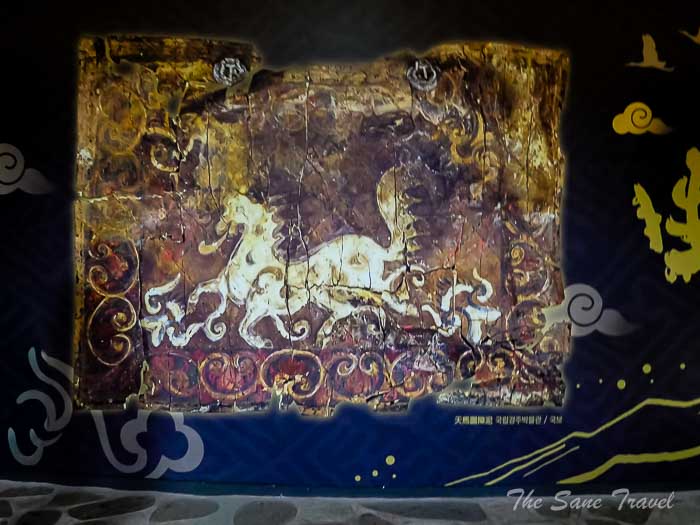
Cheonmachong means “Heavenly Horse Tomb”. Built during the Silla period, the tomb is believed to date to the fifth century, although it may have been constructed as late as the sixth century, and was intended for an unidentified Silla king. The 1973 excavation revealed approximately 11,500 artefacts inside the tomb, three of which were later designated Korean National Treasures. Its name comes from a famous painting of a white horse discovered on a birch-bark saddle flap. Known as a Cheonma, the horse is depicted with eight legs and wings on its feet. The opposite side of the saddle flap features horsemen and a phoenix. The discovery of horse equipment and an actual horse buried alongside the king reflects the important role horses played during the Silla period.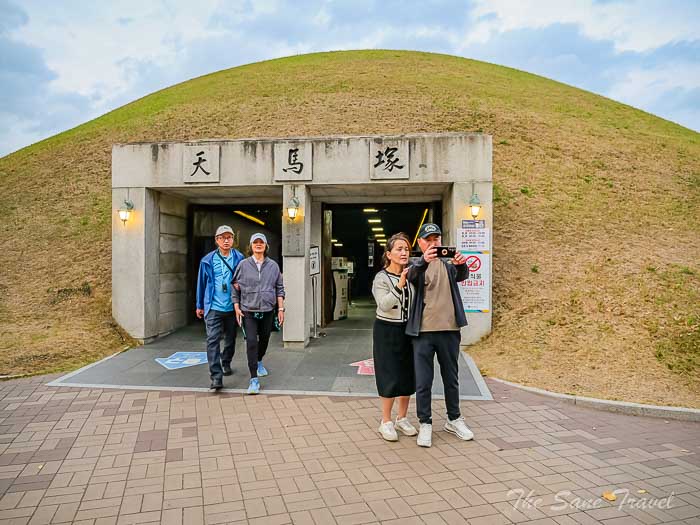
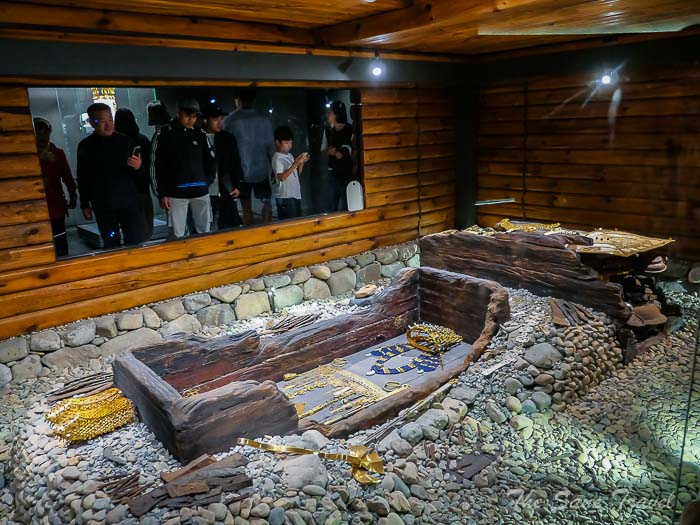
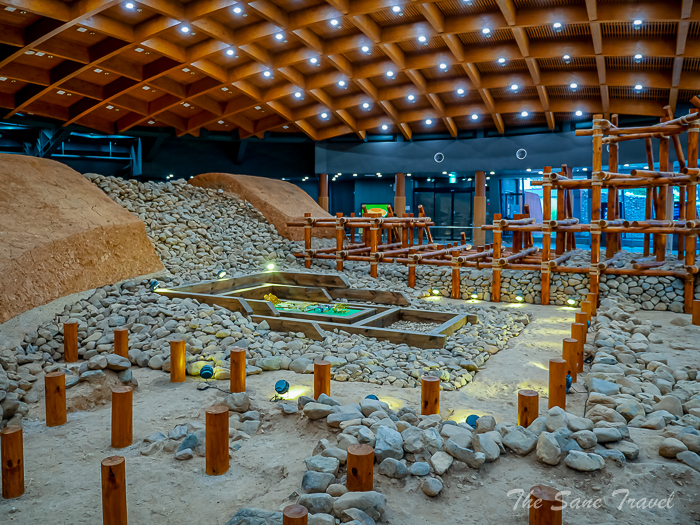
Geumgwanchong, or the Gold Crown Tomb, is another tomb whose interior is open to visitors. Located in the Noseo-dong historic area near central Gyeongju, it features a dedicated exhibition hall and a reconstructed cross-section that allows visitors to see the tomb’s internal structure. From there, head to Cheomseongdae Observatory.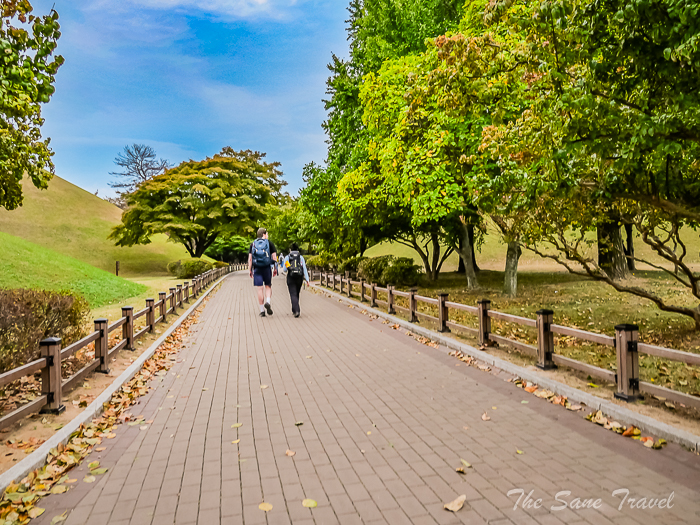
Cheomseongdae Observatory
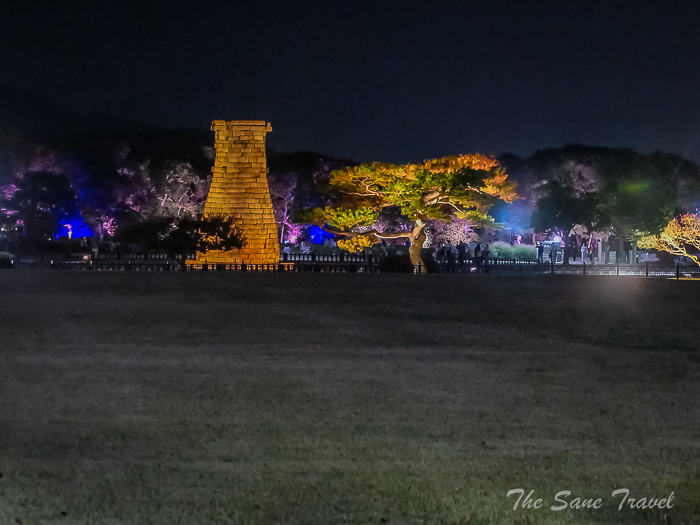
Cheomseongdae is considered the oldest surviving astronomical observatory in Asia. Built during the reign of Queen Seondeok (632–647), it is one of Gyeongju’s most notable landmarks. Approximately 9 metres tall, the observatory features a cylindrical structure made from hundreds of stones. The stones are arranged in 27 layers, symbolising Queen Seondeok as the 27th ruler of Silla. Additional layers at the top are thought to represent the days of a lunar month. Observations made at Cheomseongdae were used to determine the spring and autumn equinoxes, the winter and summer solstices, and the 24 solar terms that make up the traditional astronomical year. The platform stone may have served as a reference point for identifying the four cardinal directions. According to some accounts, the observatory was constructed from 362 stones, corresponding to the number of days in a lunar year.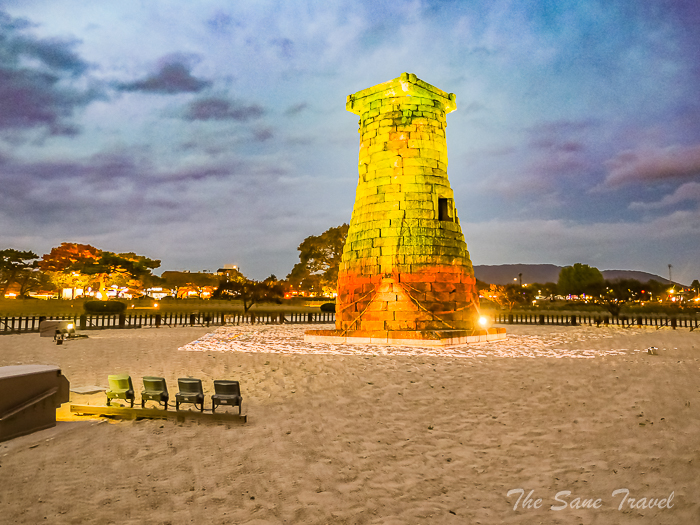
Eastern Palace and Wolji Pond
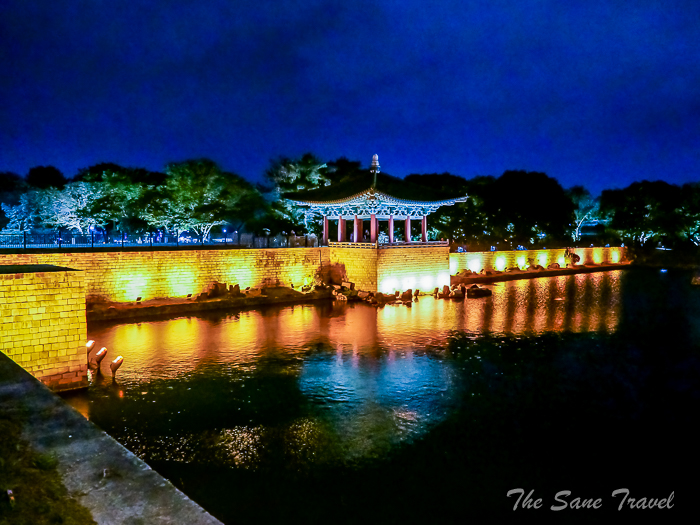
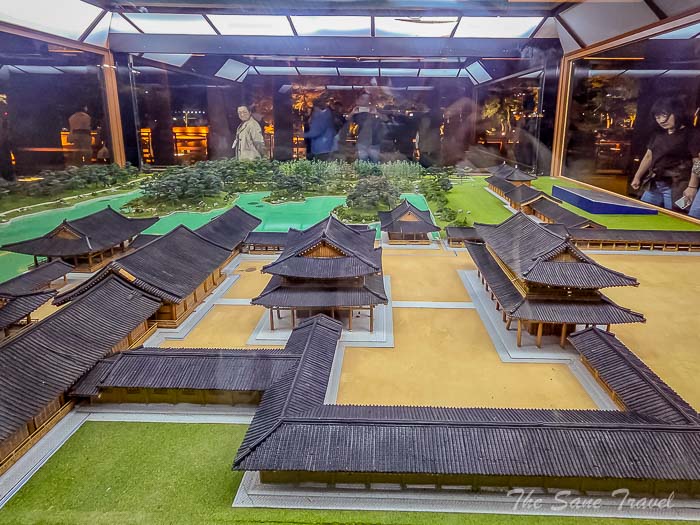
Evening is an ideal time to visit Eastern Palace. Although only a few of its original buildings remain, the site is still an impressive attraction. It was originally built in 674 CE during the reign of King Munmu of the ancient Silla Kingdom and served as the crown prince’s residence and a venue for state banquets. The site is known for its evening lighting, which creates golden reflections of the traditional Silla pavilions on the water. As a result, the hours around sunset and after twilight are typically the most popular and busiest. The landscape was carefully designed to ensure that no single viewpoint offers a complete view of the pond. Eastern Palace and its pond are located at 102 Wonhwa-ro, Gyeongju-si, Gyeongsangbuk-do. The site is open daily from 9:00 am to 10:00 pm, with last admission at 9:30 pm.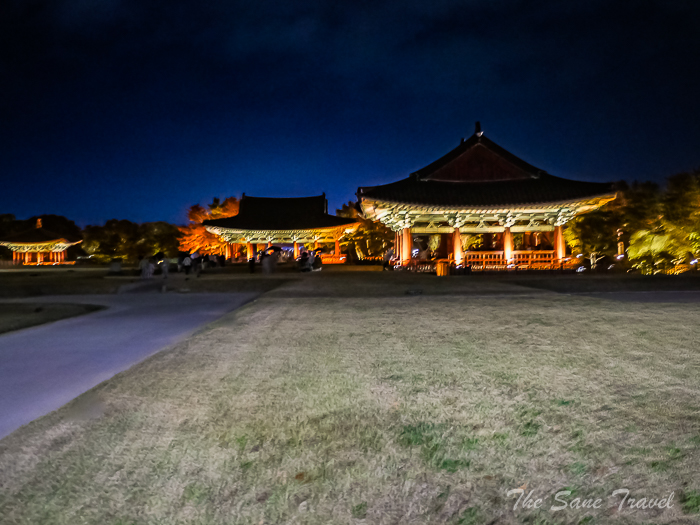
Day 2
In the morning, take a bus to Bulguksa Temple, located outside Gyeongju. The journey takes around one hour, followed by a 10-minute uphill walk to the temple. Upon arrival, check the bus schedule for services to Seokguram Grotto and plan your visit accordingly, as buses to the grotto are infrequent.
Bulguksa Temple
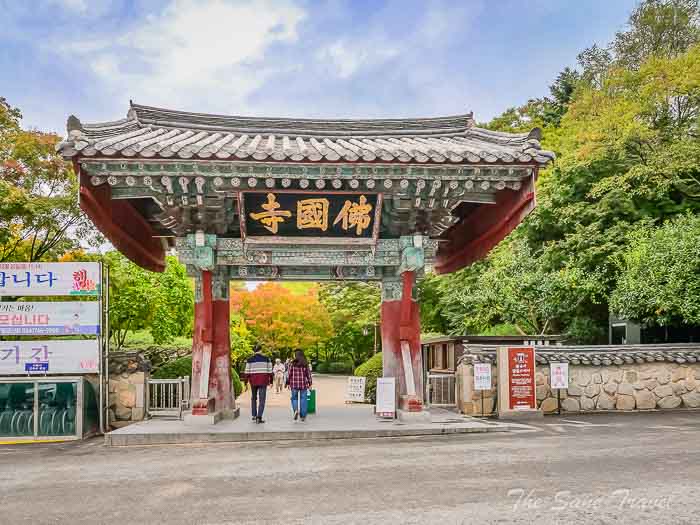
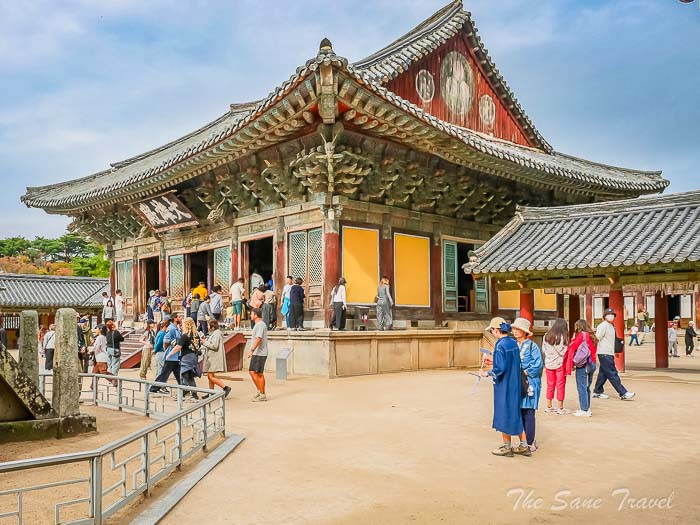
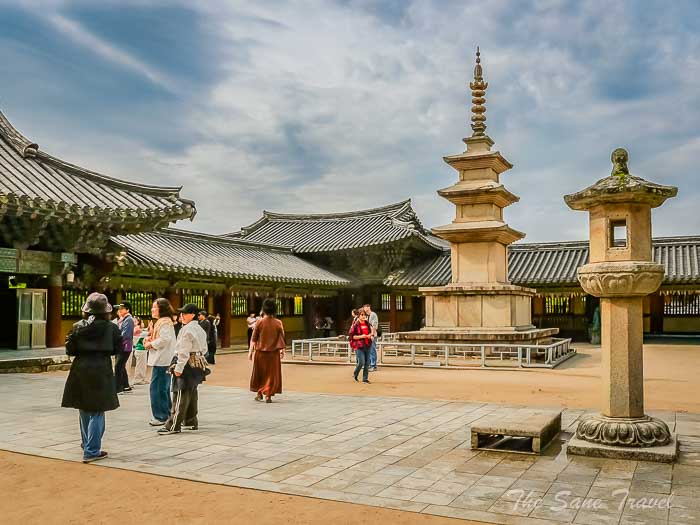
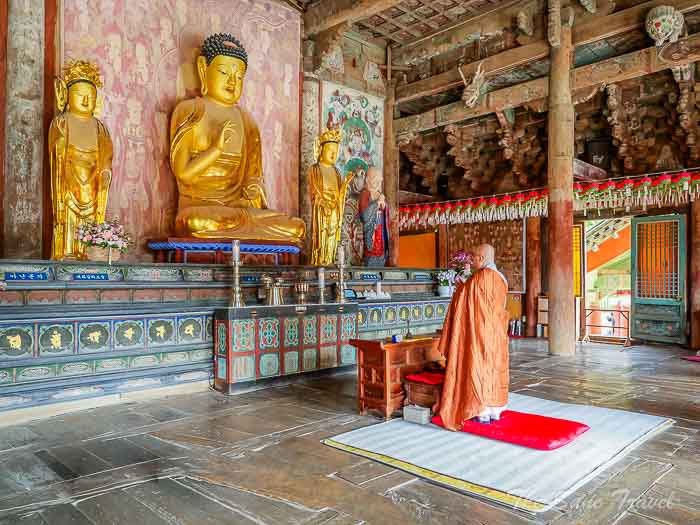
Marvel at the intricate architecture, delicate carvings, and spiritual atmosphere of Bulguksa Temple, one of Korea’s oldest and most significant Buddhist temples. Meaning “Temple of the Buddha Land”, Bulguksa has been a UNESCO World Heritage Site since 1995. 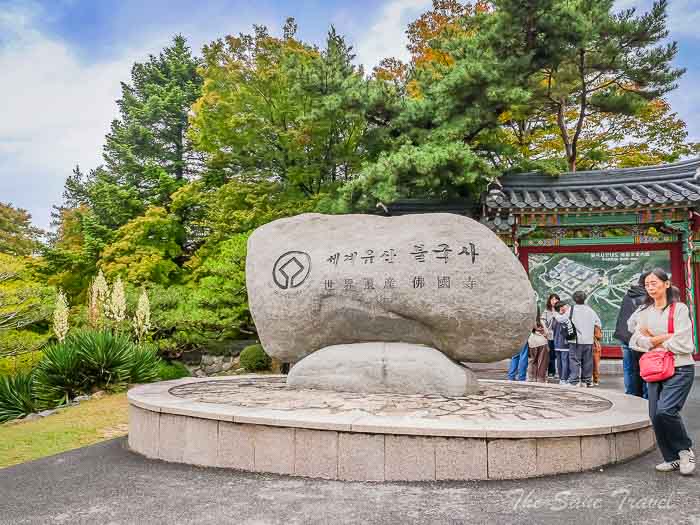 Located on Mount Toham, it is widely regarded as a masterpiece of Silla-period Buddhist architecture and artistic craftsmanship. The temple and Seokguram Grotto were built between 751 and 774 CE by Kim Dae-Seong, a prominent figure during the Silla period. According to legend, Bulguksa was constructed in honour of Kim Dae-Seong’s parents in his present life, while Seokguram Grotto was built in memory of his parents from a previous life. Both sites are situated on Mount Toham and together form a single UNESCO World Heritage Site. In front of Daeungjeon, the Main Hall, stand two renowned eighth-century stone pagodas: Dabotap, known for its elaborate ornamentation, and Seokgatap, admired for its refined design and balanced simplicity. Visitors can also admire the Cheongungyo and Baegungyo bridges, which together form a 33-step stone staircase symbolising the journey from the secular world to the realm of the Buddha. Another pair of ornate stairways, Chilbogyo and Yeonhwagyo, leads to Geuknakjeon, the Hall of Supreme Bliss. The temple’s central worship area is Daeungjeon, which houses a statue of the historical Buddha, Shakyamuni. The complex also features peaceful courtyards and additional halls, including Geuknakjeon and Museoljeon, where visitors can discover sacred bronze seated Buddha statues.
Seokguram Grotto
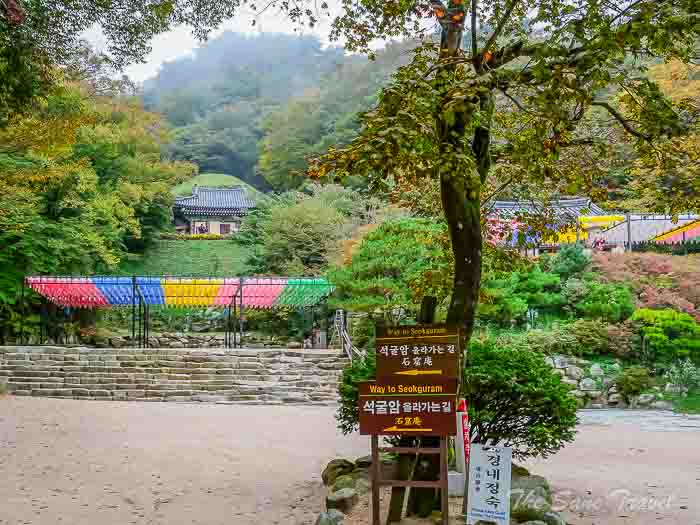
Approximately 3 kilometres up the mountain lies Seokguram Grotto, an artificial stone cave hermitage that can be reached via a scenic hiking trail or by local shuttle bus. Since the bus does not operate frequently, check the schedule before entering the temple to plan accordingly.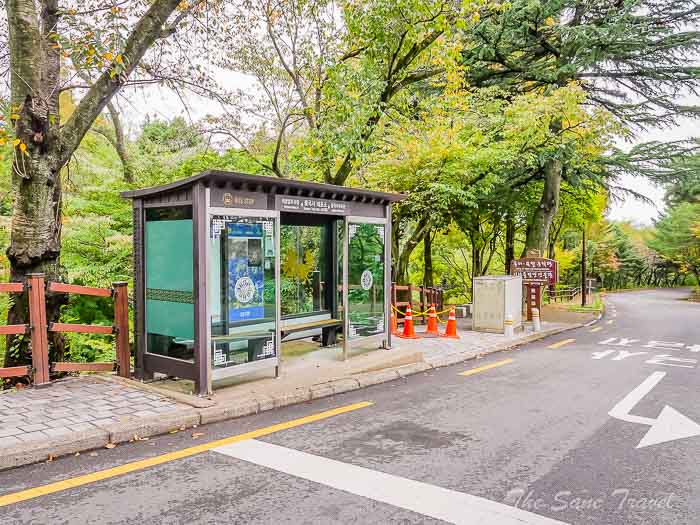
Its central feature is a 3.45-metre-high white granite statue of Shakyamuni Buddha seated in the lotus position. Facing the East Sea, the Buddha is depicted with his right hand touching the ground. As the morning sun rises over the sea, the statue’s expression is traditionally associated with the “Smile of the Silla People”. The circular main chamber and surrounding corridor are adorned with finely carved images of Bodhisattvas, disciples, and guardian deities. The grotto is also renowned for its precise mathematical and architectural design. Its domed rotunda, chamber dimensions, and statue proportions were based on ancient geometric principles intended to harmonise the structure with its natural surroundings and ensure its preservation for more than a thousand years. 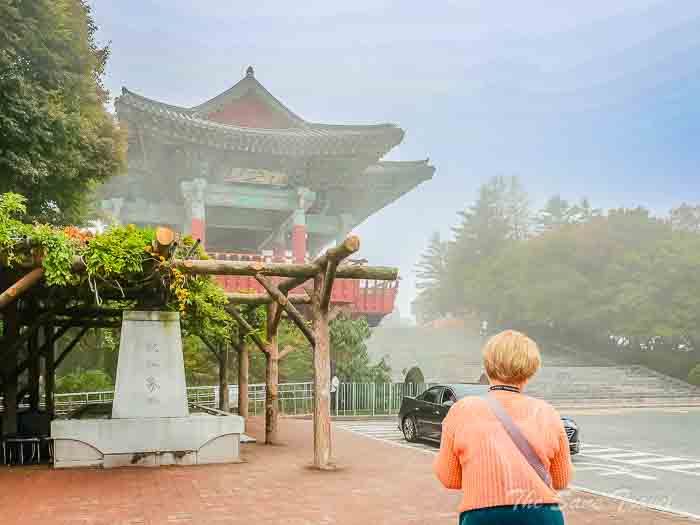
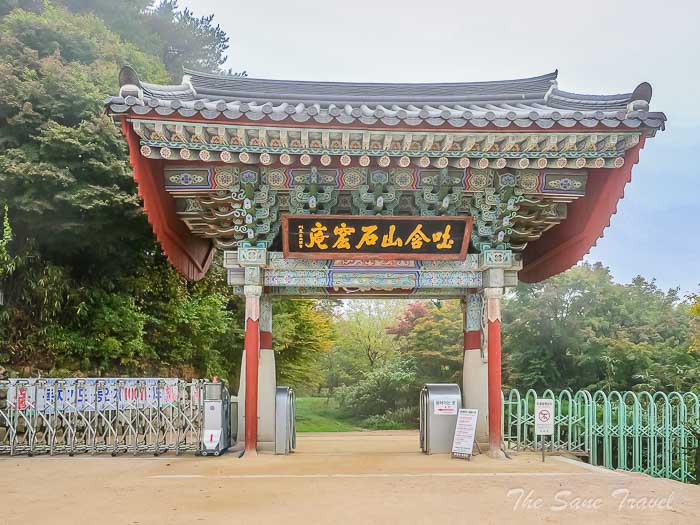
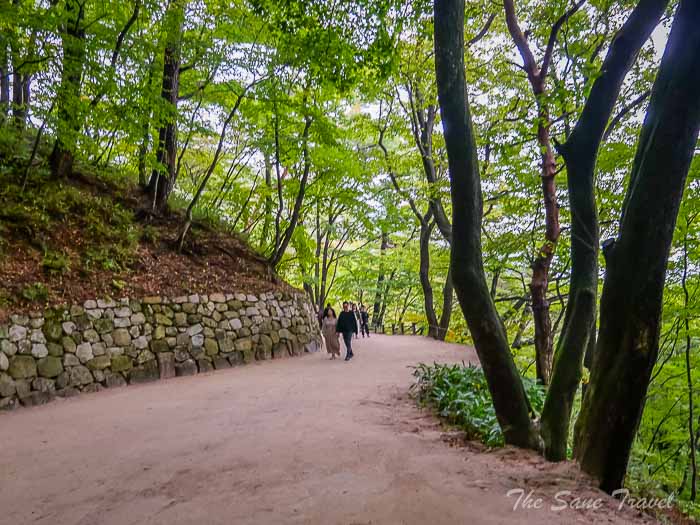
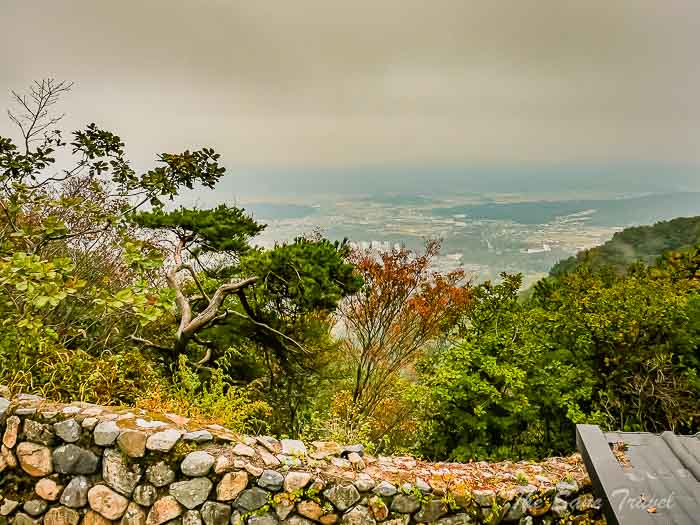
 In good weather, you can get amazing views of the area below. I was not very lucky.
After exploring Seokguram Grotto, it is time to return to Gyeongju and visit the Gyeongju National Museum.
Gyeongju National Museum
For an overview of Gyeongju’s history and culture, the Gyeongju National Museum is an excellent place to visit. The museum showcases the heritage of the ancient Silla Kingdom, which ruled much of the Korean Peninsula from 57 BC to AD 935.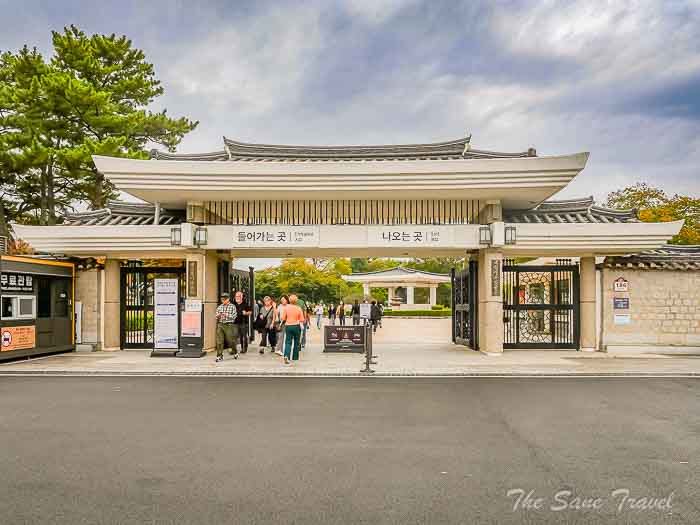
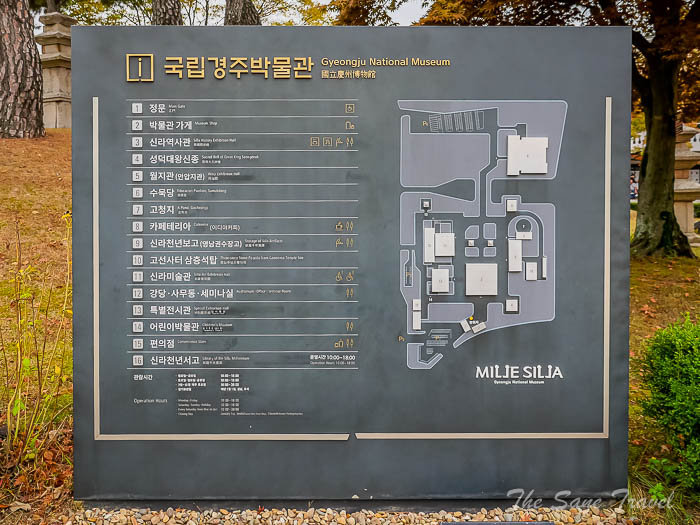 The visit begins in the Silla History Gallery, tracing the kingdom’s development from its early period to its height. One of the main highlights is the collection of Silla gold crowns, including examples excavated from royal tombs such as Cheonmachong. These crowns feature intricate tree and antler motifs, dangling gold ornaments, and comma-shaped jade pieces known as gok-ok.
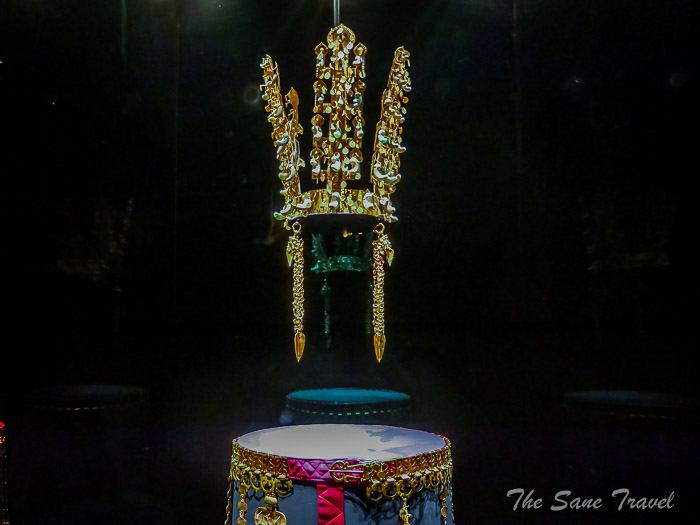 The Silla Art Gallery focuses on religious art and craftsmanship. Its collection includes Buddhist sculptures and metalwork, such as the gilt-bronze Medicine Buddha from Baengnyulsa Temple, as well as stone and bronze triad statues. The Wolji Gallery offers a glimpse into the lives of Silla royalty through artefacts recovered from Wolji Pond, formerly known as Anapji. The exhibits include both everyday objects and luxury items, such as gilt-bronze wick trimmers, decorated dagger sheaths, pottery, and wooden slips bearing court records. The Silla Millennium Treasury offers another open-storage-style display featuring a large collection of Silla-era artefacts.
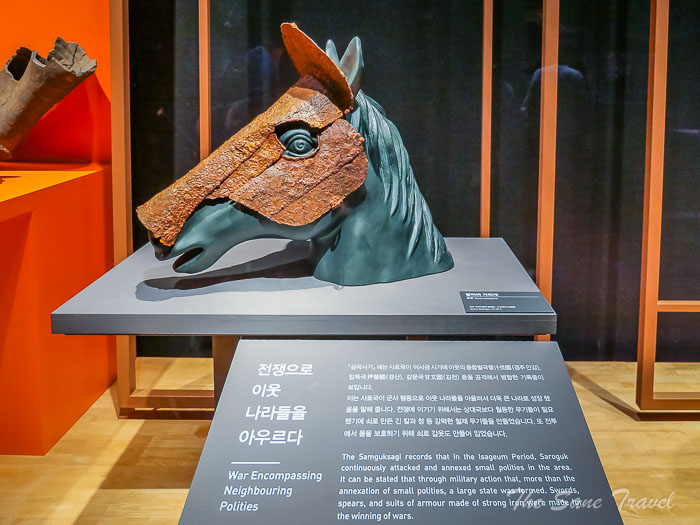
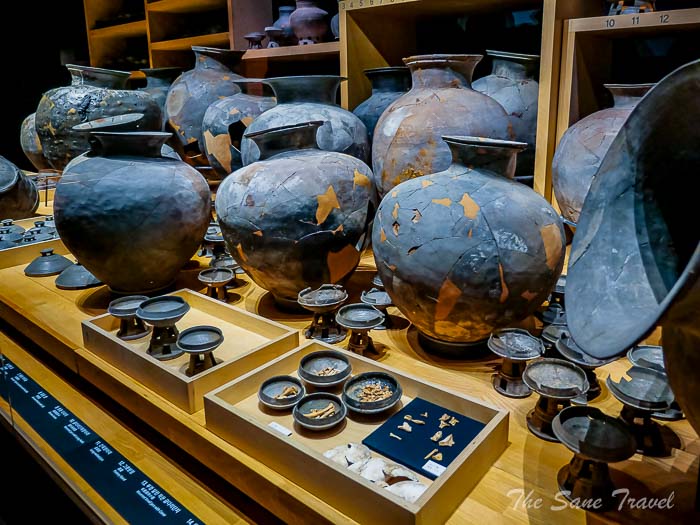
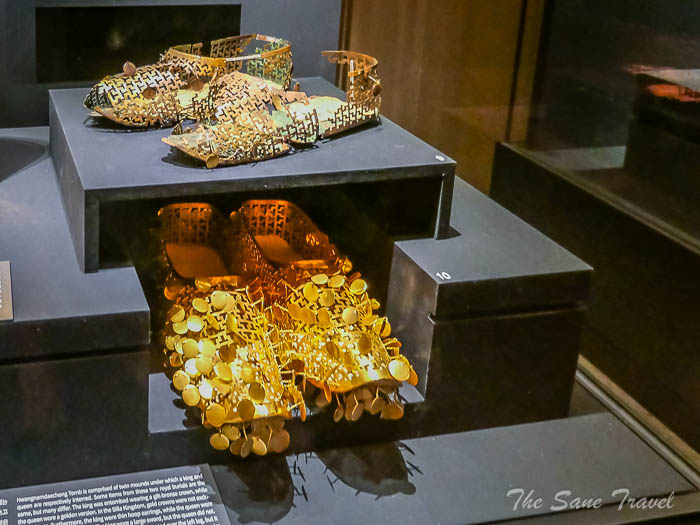
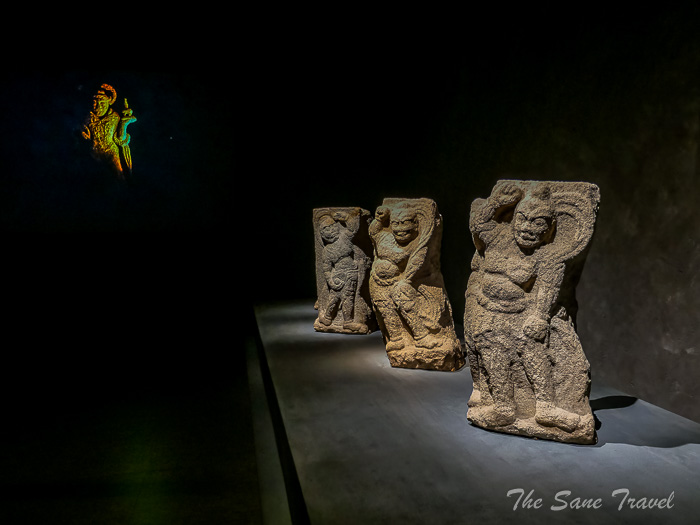 The museum grounds are also worth exploring. The Outdoor Exhibition Area contains approximately 1,100 large stone relics, including pagoda fragments, lantern parts, and carved Buddha statues.
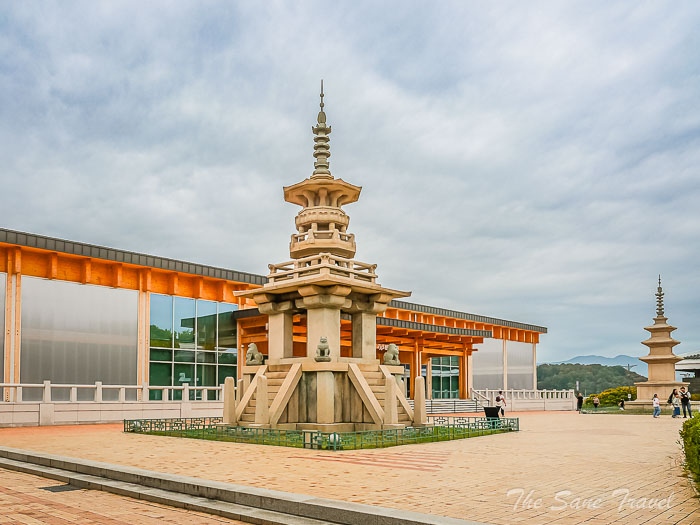 A central feature is the Sacred Bell of King Seongdeok, commonly known as the Emille Bell. Standing more than 3.5 metres tall and weighing nearly 19 tonnes, it is one of Korea’s largest and best-known ancient bronze bells. It is renowned for its detailed reliefs depicting heavenly figures and its distinctive resonance.
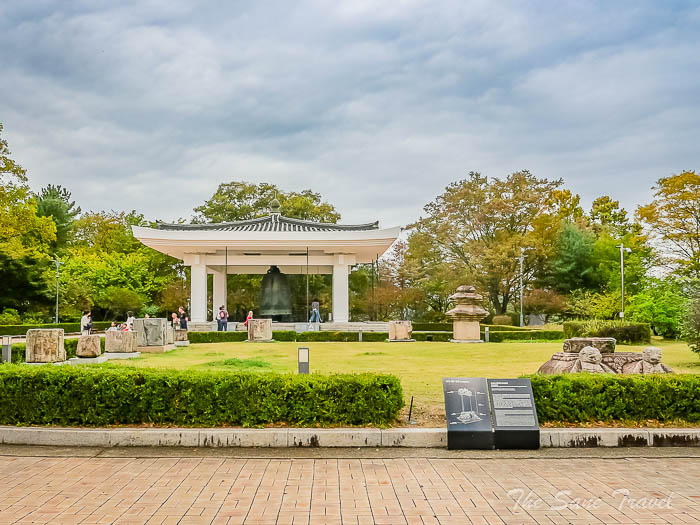 General admission to the museum is free, although some temporary exhibitions may charge an additional fee. Allow at least two hours to explore the galleries and outdoor areas. Before visiting, check the official website for current opening hours and special programmes.
In the evening, visit the beautifully illuminated Woljeonggyo Bridge.
Woljeonggyo Bridge
When visiting Gyeongju, Woljeonggyo Bridge is a notable attraction worth adding to your itinerary. Spanning the Namcheon River, it is a historic landmark and a popular spot for enjoying nighttime views. Originally built during the Silla period, the bridge connected Wolseong Fortress, the site of the royal palace, with areas south of the city near Namsan Mountain, according to historical records such as the Samguk Sagi. Following its destruction during the Joseon dynasty, the site was excavated in the 1980s. A ten-year restoration project, completed in 2018, reconstructed the bridge as South Korea’s largest traditional wooden bridge. Measuring more than 66 metres in length, it features ornate two-storey gate towers. After sunset, its golden lighting creates a striking reflection on the Namcheon River and stays illuminated until 11 pm. For a full view of the bridge, the Woljeonggyo Stepping Stones directly in front of the bridge offer a good photography spot. Visitors can also explore a free digital exhibition inside the second-floor gatehouses, which explains the bridge’s excavation and restoration. 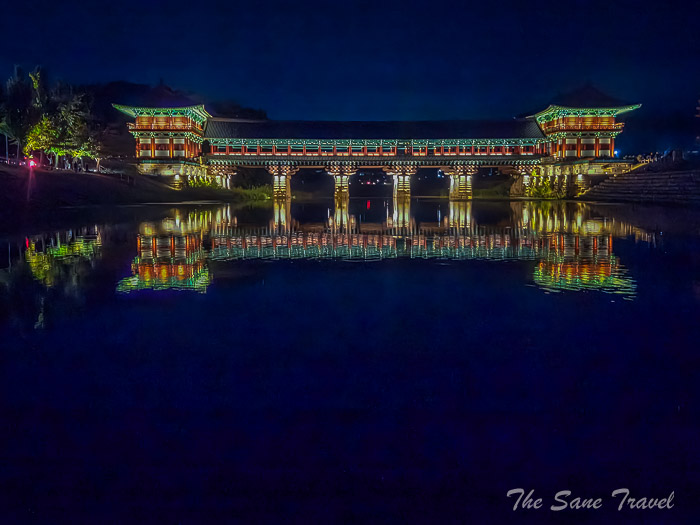
Where to eat in Gyeongju
I highly recommend Baeknyeon Sonnim, also listed on Google Maps as “100yrs Guest”. Located near Hwangnidan-gil, this traditional Korean set-meal (baekban) restaurant is known for its charcoal-grilled bulgogi (seoksoe bulgogi) and grilled mackerel. The menu is limited, and dishes are served for at least two people. Nevertheless, it was the best meal I had in Gyeongju, and possibly in all of South Korea.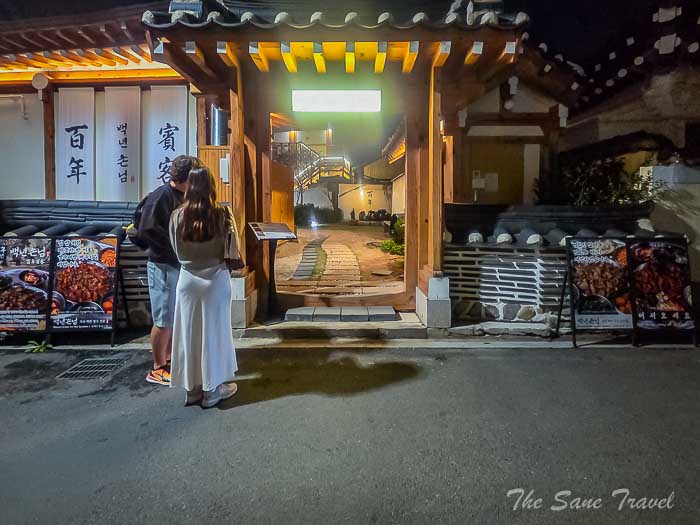
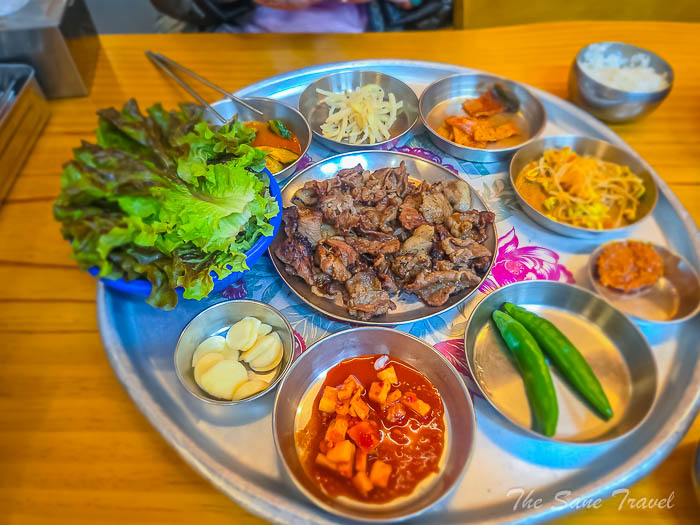
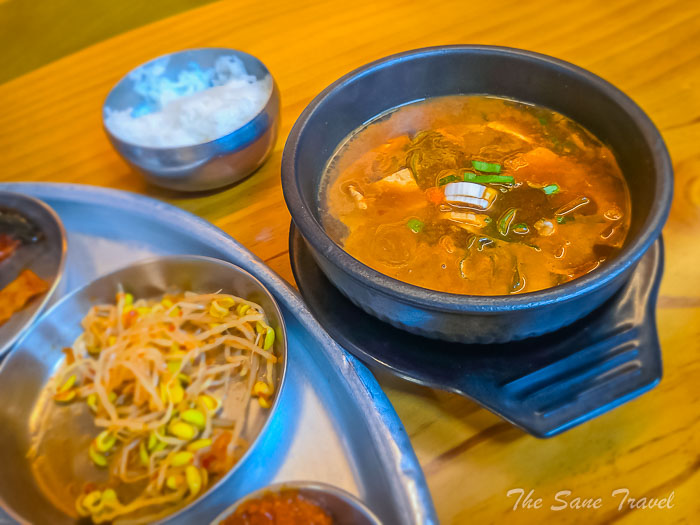
Address: 20 Cheomseong-ro 99beon-gil, Gyeongju-si, Gyeongsangbuk-do.
How to get to Gyeongju
One way to get to Gyeongju is to take a bus from Busan, which takes about an hour. For reliable, real-time walking and bus directions, use Naver Map or KakaoMap rather than Google Maps.
Like it? Pin it!
What did you think? Have you been to Gyeongju or South Korea? I would love to hear from you, so please add your comment below.
Author: Anita Sane

About the author
Anita is a part-time traveller, passionate photographer and a retired career woman from Latvia, travelling mostly solo for more than 15 years. She is a skilled travel planner who plans and executes her travels by herself. Anita wants to show you how to travel the world and open your mind to new experiences. Follow her on Facebook, Instagram, Pinterest, Twitter and Bloglovin.
Report
My comments