
Beyond London’s grand façades and famous landmarks lie countless architectural details that reveal another side of the city’s history. Among the most impressive, yet often overlooked, are its historic staircases. Over the years, I have become fascinated by exploring some of London’s most beautiful staircases, from the Tulip Staircase in the Queen’s House to the winding stairs at the St. Pancras London, Autograph Collection hotel. More than functional features, these staircases tell stories, showcase ingenious design, and offer a glimpse into the character of the buildings they belong to. So, next time you are exploring London, take a moment to look beyond the grand façades and appreciate the beauty and history of the staircases you encounter. Explore my selection of seven remarkable staircases in some of London’s most stunning historic buildings and find inspiration for your next visit. 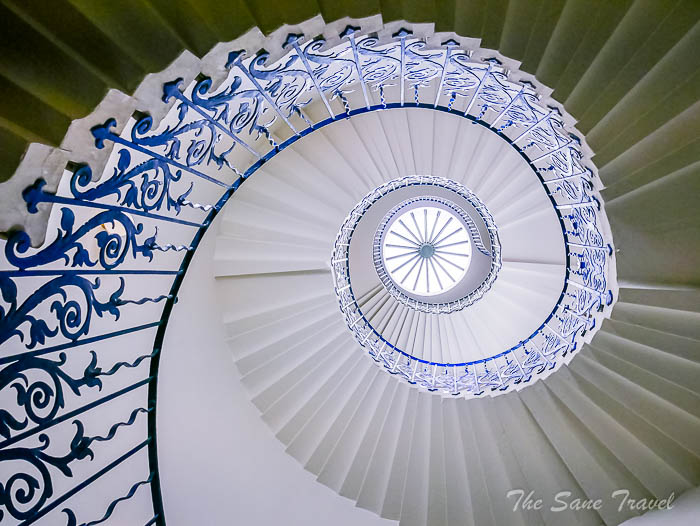
Staircase at St. Pancras London, Autograph Collection
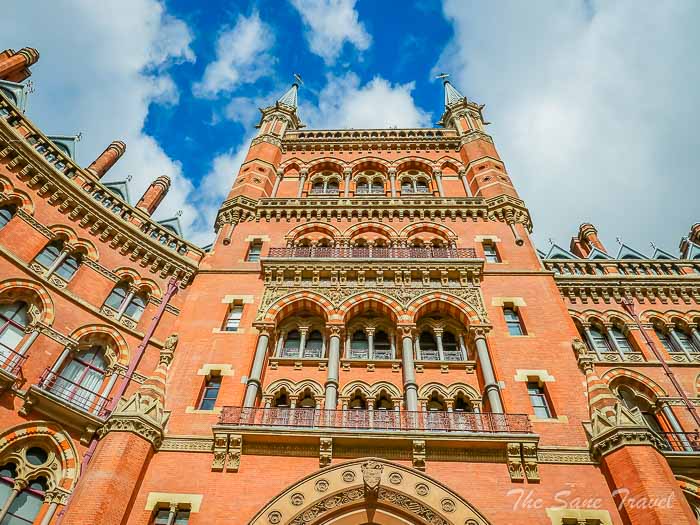
An architectural masterpiece in the heart of London, St. Pancras London, Autograph Collection combines Victorian Gothic grandeur with modern sophistication. Completed in 1876, the hotel is known for its striking red-brick façade and intricate detailing and is one of the city’s most beautiful and historic landmarks. Few hotels have staircases as grand as the one at St. Pancras, London. Designed by George Gilbert Scott in the High Victorian Gothic Revival style, the staircase is a familiar sight on the silver screen, having featured in Harry Potter and the Chamber of Secrets and The World Is Not Enough, among other films.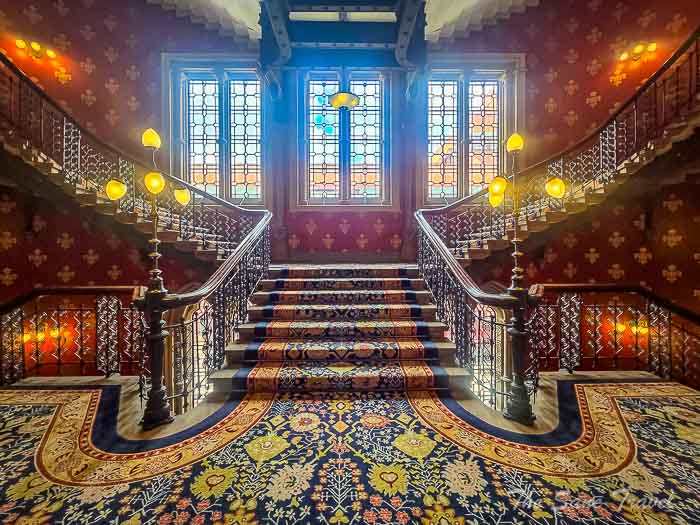
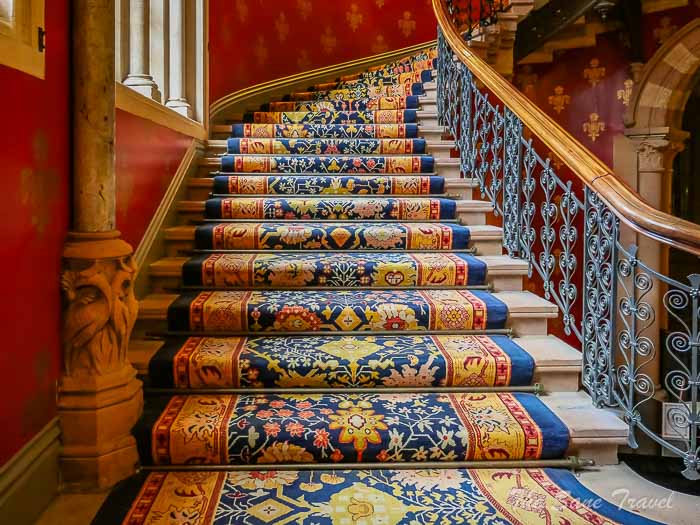
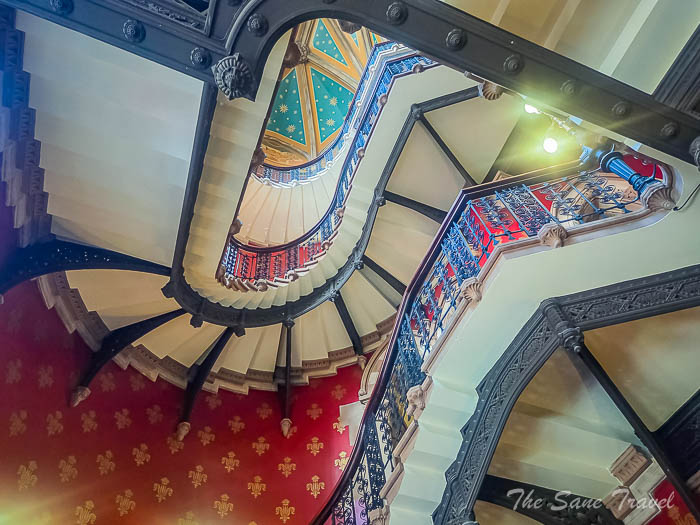
This five-star hotel features 38 opulent Chambers Suites and 207 fully renovated guest rooms, offering refined comfort and modern amenities. Guests can enjoy superb dining and expertly crafted cocktails in a distinctive selection of restaurants and bars, unwind at the serene St. Pancras Spa, or host events in elegant meeting rooms, including the historic Ladies’ Smoking Room. The hotel is conveniently situated next to St. Pancras International, which is renowned as one of the most attractive railway stations in Europe. This location offers easy access to a variety of memorable experiences in the bustling area of King's Cross.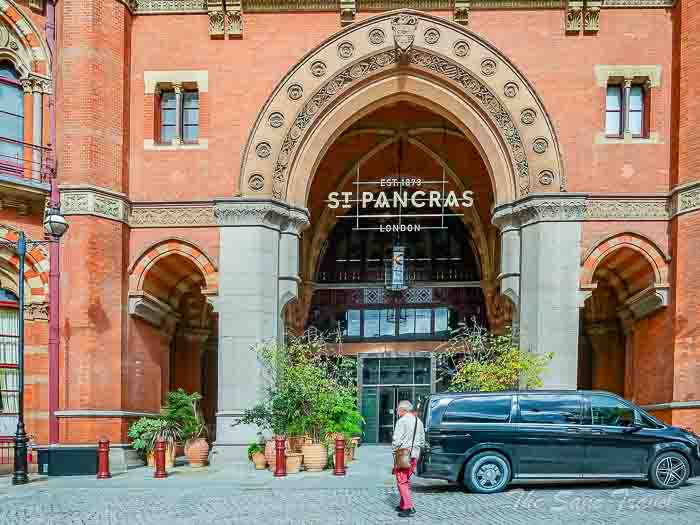
Address: Euston Road.
Leighton House Staircase Hall
Leighton House, on Holland Park Road, was built in 1865 by Frederic Leighton, a prominent Victorian British artist, as his residence and workspace.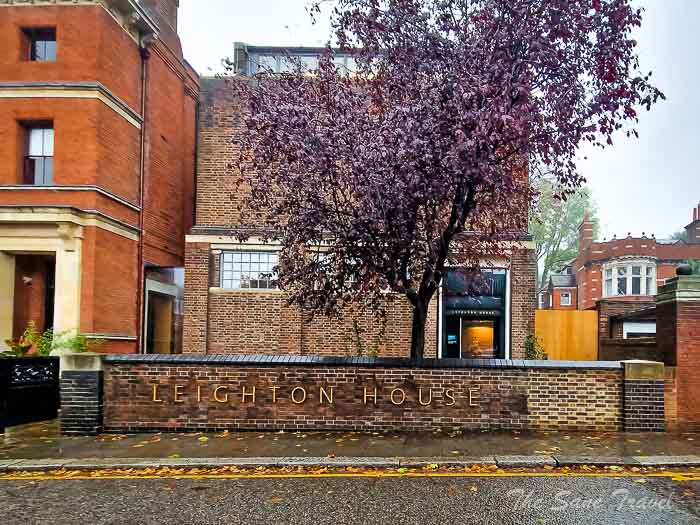 The house features intricate plasterwork designed by architect George Aitchison, with Leighton actively involved in creating its opulent, highly artistic atmosphere.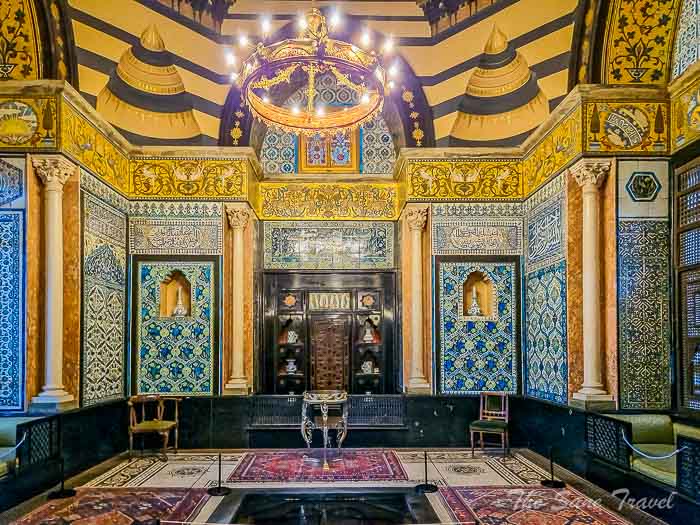
One of the house’s most distinctive spaces is the Staircase Hall, inspired by the Palazzo Centani in Venice. It connects the entrance on the ground floor with the grand rooms above and features strong contrasts, rich textures, and peacock-blue glazed tiles that complement the authentic Ottoman and Iznik tiles found throughout the house. A black-and-white marble mosaic floor adds visual continuity, while a lacquered black handrail leads visitors up to Leighton’s top-floor studio. The hall is designed as a sensory journey, with the sound of flowing water from the fountain in the Arab Hall providing a soothing backdrop. A stuffed peacock near the stairs is a striking decorative element, reflecting the Victorian Aesthetic Movement’s belief in “beauty for beauty’s sake”.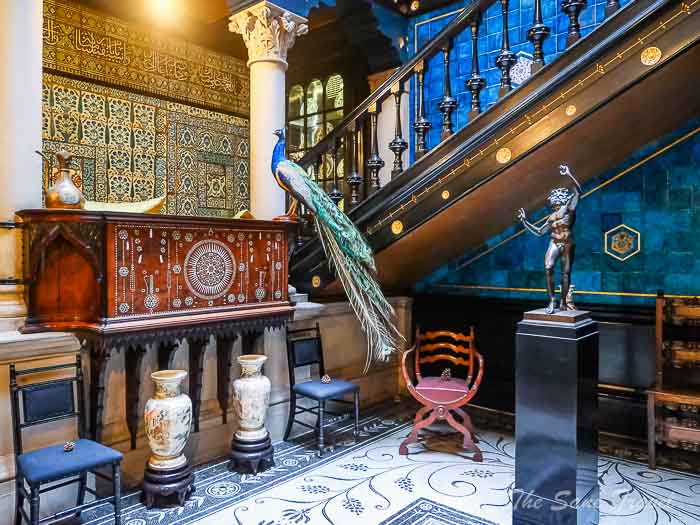
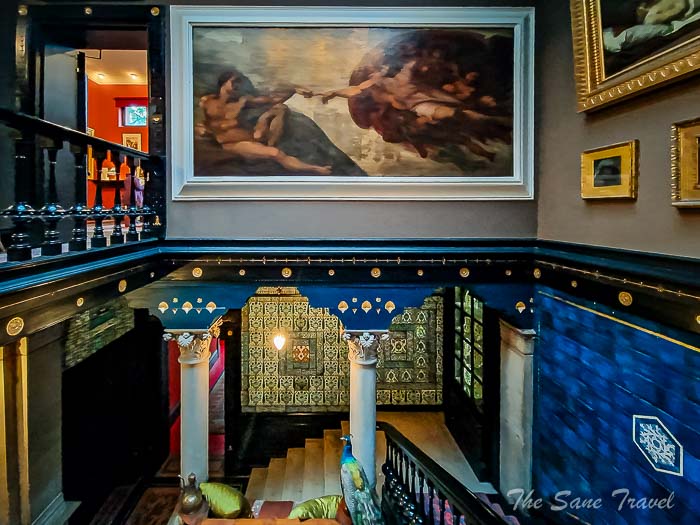 Address: 12 Holland Park Road.
Wallace Collection grand staircase
The Wallace Collection, also known as Hertford House, is a former family residence in Marylebone and is considered one of London’s finest buildings, thanks to its impressive design and grand exterior. Open to the public since 1900, it remains a hidden gem that many visitors have yet to discover. It's worth visiting as part of your art and music lovers' itinerary in London. The building combines traditional and modern spaces, with a grand staircase leading to the Upper Galleries. The Main Grand Staircase, installed in 1874 by Sir Richard Wallace, features a marble design with balustrades decorated with coin- and banknote-inspired motifs. 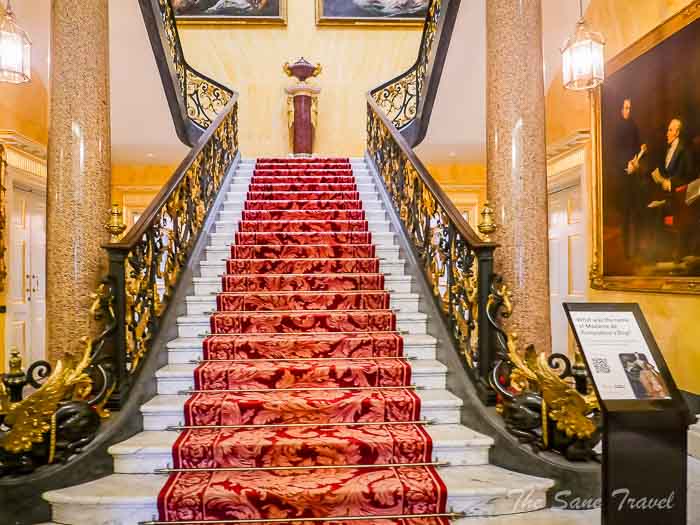 Beyond its striking architecture, Hertford House also contains works by renowned artists such as Canaletto, Reynolds, and Gainsborough, including Frans Hals’s iconic The Laughing Cavalier, displayed in the Great Hall.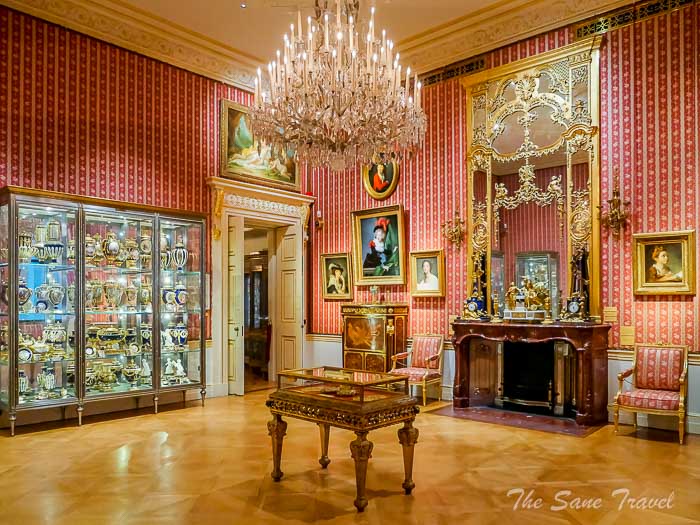
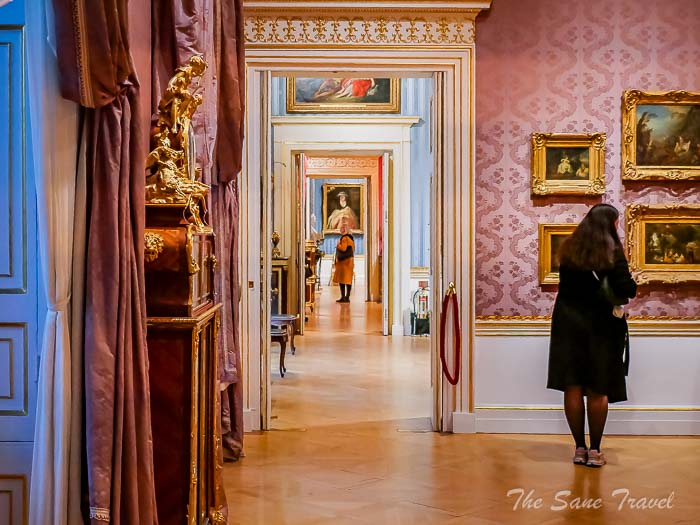
Address: Hertford House, Manchester Square.
Hogarth Stair in Barts North Wing of St Bartholomew’s Hospital
Explore the historic treasures within St Bartholomew’s Hospital, London’s oldest working hospital. 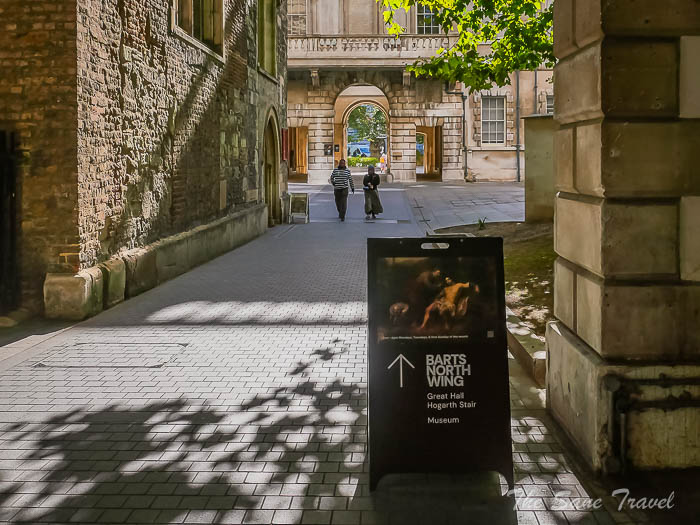
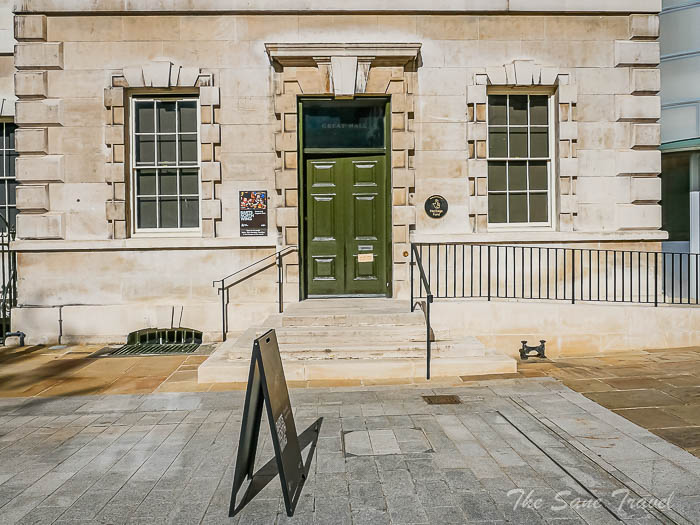 The Barts North Wing houses the stunning Great Hall and Hogarth Stair, designed by architect James Gibbs in the 1730s. The Hogarth Stair is adorned with paintings by renowned English artist William Hogarth, including The Good Samaritan and The Pool of Bethesda. Hogarth created these works as a gift after learning that an Italian artist had been commissioned to decorate the staircase.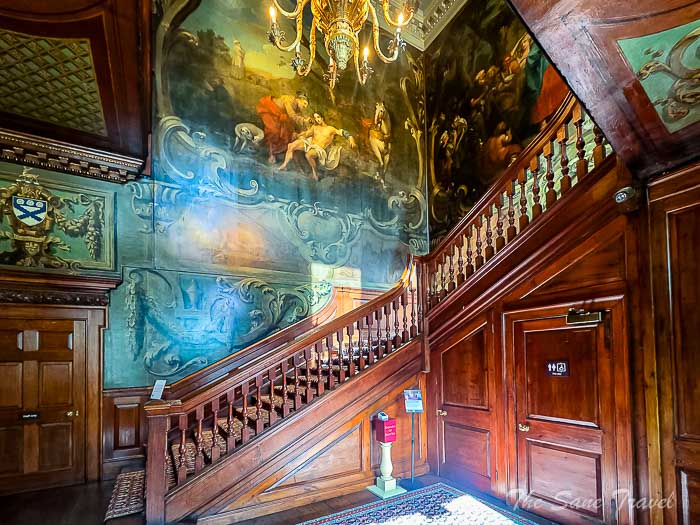
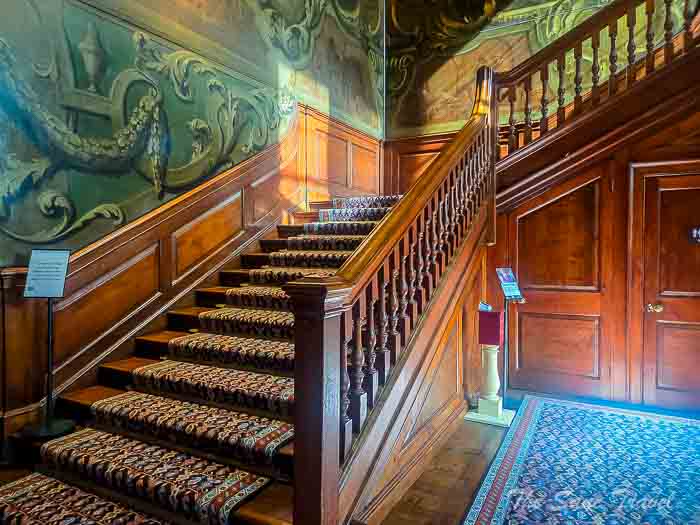
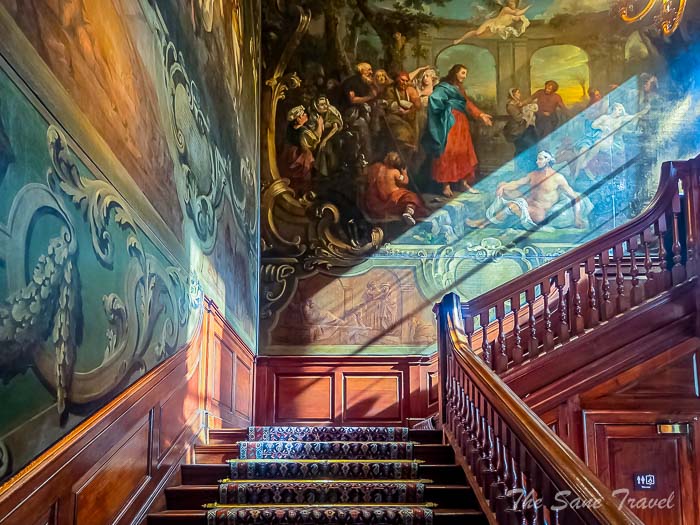
The Great Hall, with its exquisite stucco ceiling by Jean Baptiste St Michele, houses oil paintings and donor boards listing the names of more than 3,000 benefactors dating back to the 16th century.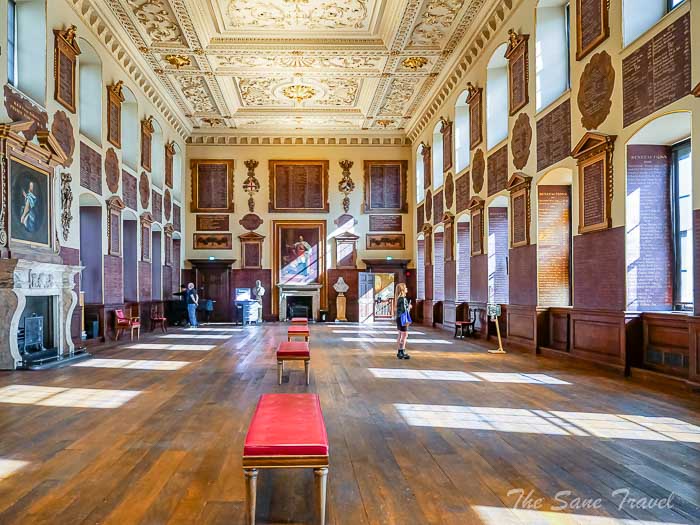
Address: Barts North Wing, St Bartholomew’s Hospital, West Smithfield
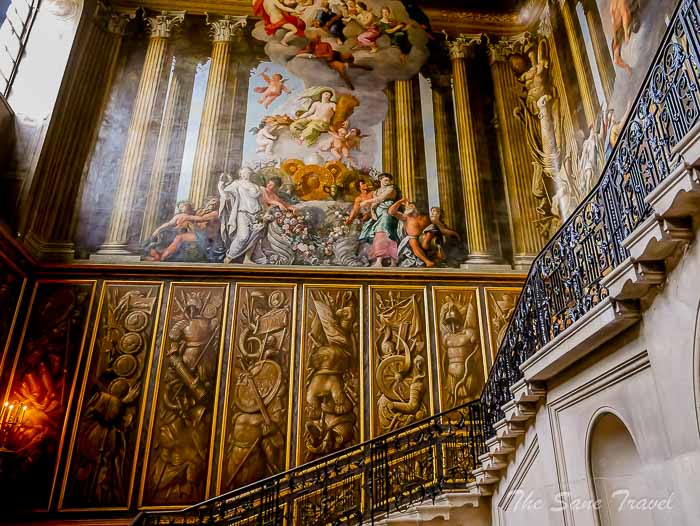
The King’s Staircase at Hampton Court Palace
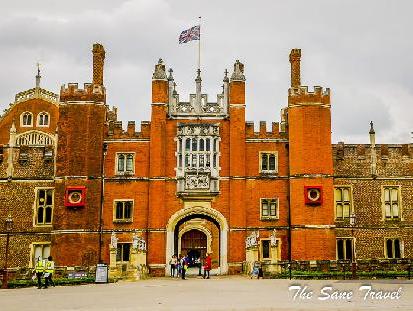
Hampton Court Palace, a historic royal residence situated 15 miles southwest of central London, is renowned for its unique blend of Tudor and Baroque architecture and its connection to Henry VIII.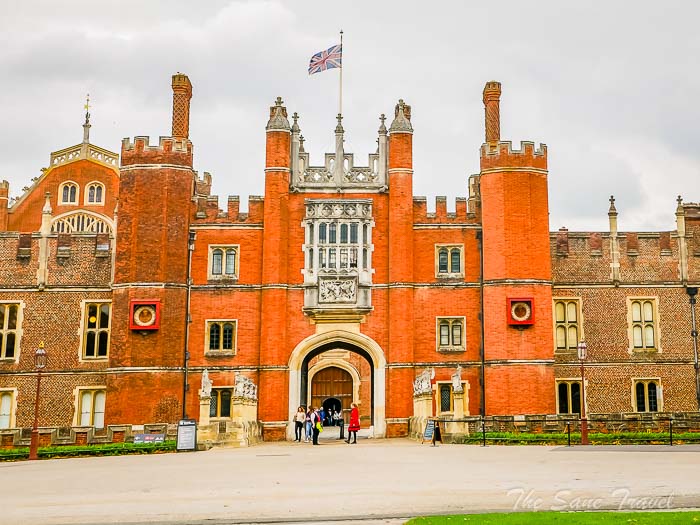
One of the palace’s most striking features is the King’s Staircase. Constructed during the reign of King William III and Queen Mary II, it served as the grand entrance to the King’s Apartments and was designed to make a lasting impression. Italian Baroque artist Antonio Verrio, known for his dramatic style favoured by royal patrons, created the stunning ceiling and wall paintings adorning the staircase. The elaborate mural depicts a competition between Alexander the Great and Julius Caesar in a Roman hall setting, symbolising power and opulence. This staircase leads to William III’s State Apartments, which house valuable tapestries and other exquisite items, including those once owned by Henry VIII.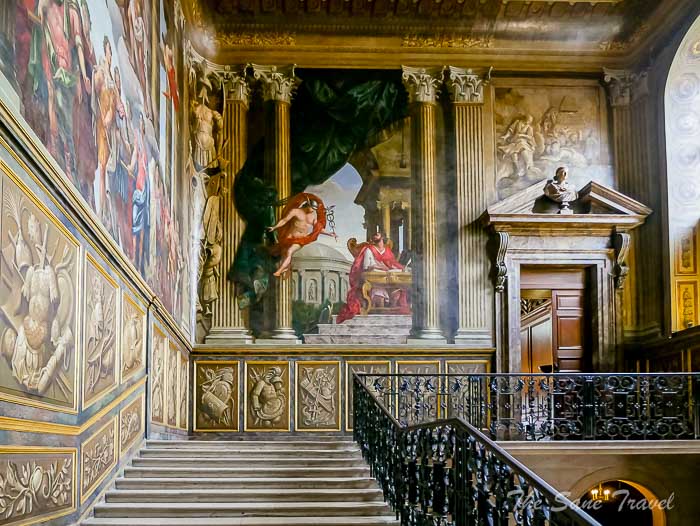
Address: East Molesey, Surrey.
Staircase at Strawberry Hill House
Strawberry Hill House dates back to 1747, when Horace Walpole acquired one of the few remaining plots on the Thames in fashionable Twickenham. He transformed the cottages into a Gothic-style castle, which became a popular tourist attraction during his lifetime. With support from various Trusts and Foundations, £10 million was raised for the restoration of the house and garden, which was completed in 2010. The house received awards recognising its restoration in 2011 and 2013.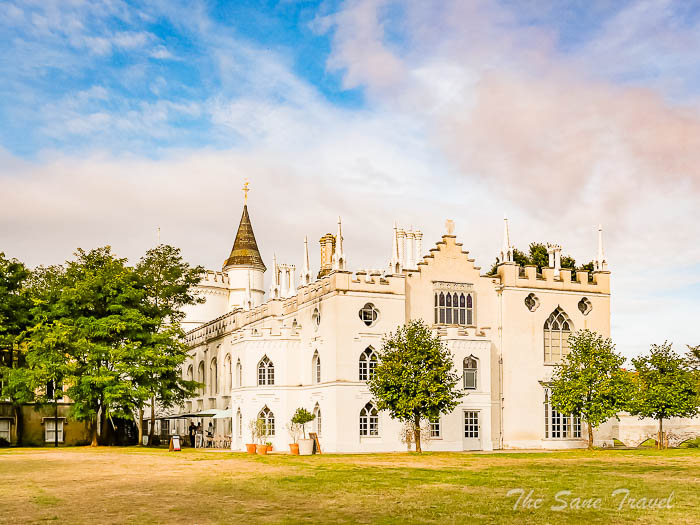
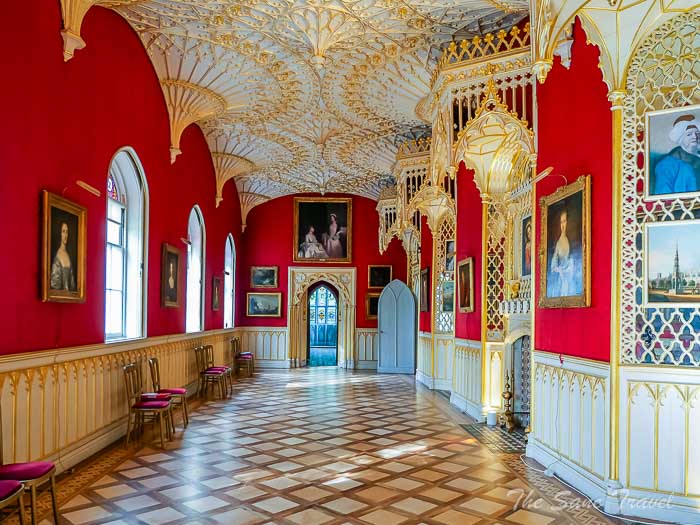
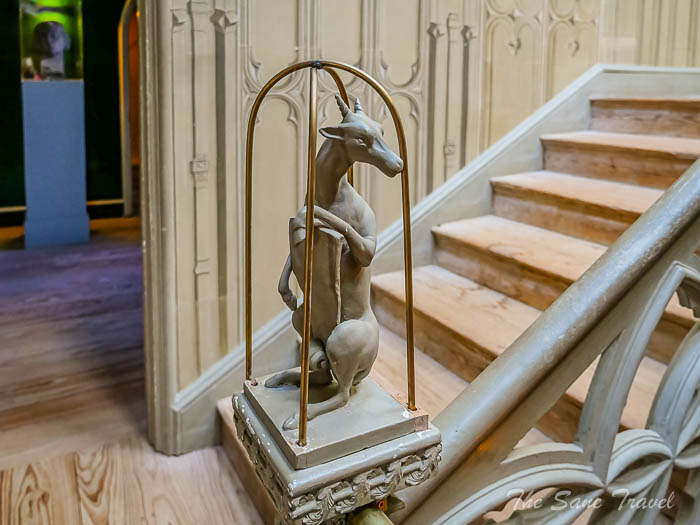
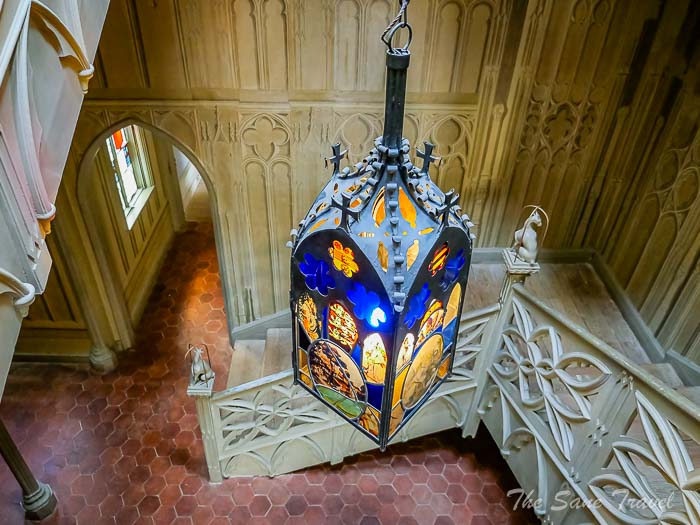
The staircase at Strawberry Hill House is well-known for its dramatic “Gothic gloom” atmosphere, blending illusion with heraldry. For example, the walls are adorned with hand-painted or wallpaper-simulated Gothic tracery and arch patterns inspired by Prince Arthur’s chantry tomb in Worcester Cathedral, creating the appearance of carved Gothic stonework. Designed by Richard Bentley, the balustrade features carved heraldic antelopes holding shields on the newel posts, representing the Walpole family coat of arms. Horace Walpole deliberately designed the entrance hall and staircase to be dark, shadowy, and theatrical. A single Japanned tin Gothic lantern and an overhead light illuminate the space, emphasising emotional and visual impact rather than authentic medieval architecture. 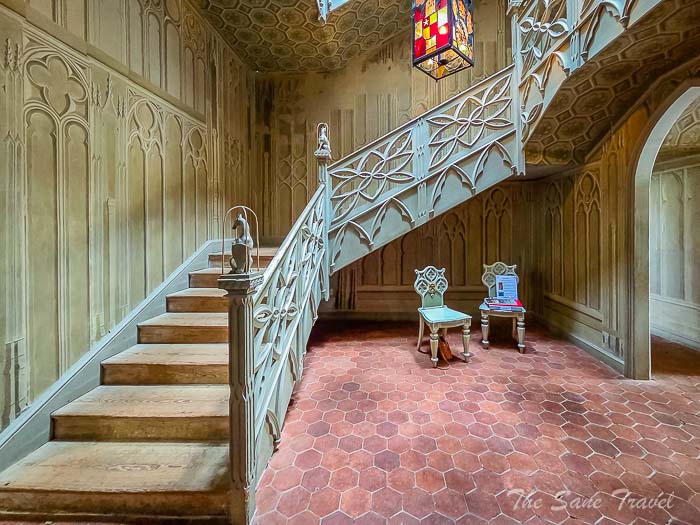
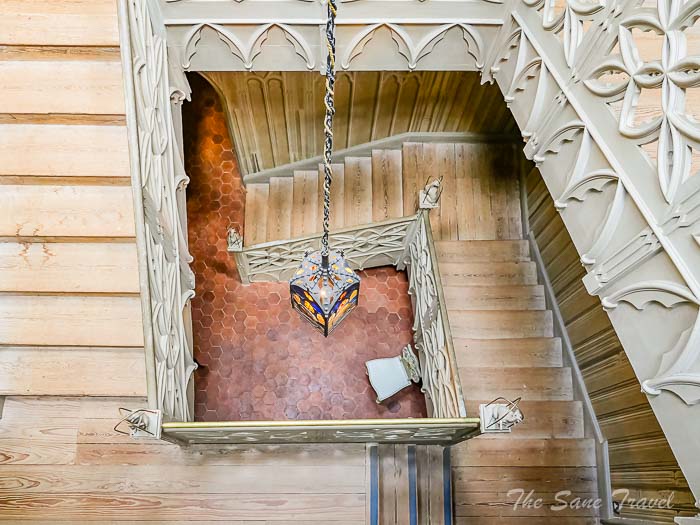 The upper landing leads to the Armoury, which displays medieval and Crusade-era weapons alongside the trompe-l’œil patterns. The trompe-l’œil technique creates the illusion of three-dimensional forms on a painted flat surface.
Address: 268 Waldegrave Road, Twickenham.
Tulip Stairs at Queen’s House
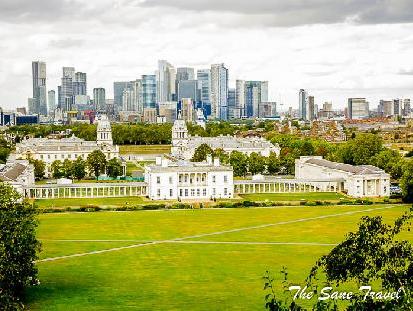
A visit to the Queen’s House is a must as part of any day out in Greenwich. Admired for its classical design, the house is regarded as one of the most important buildings in English architectural history.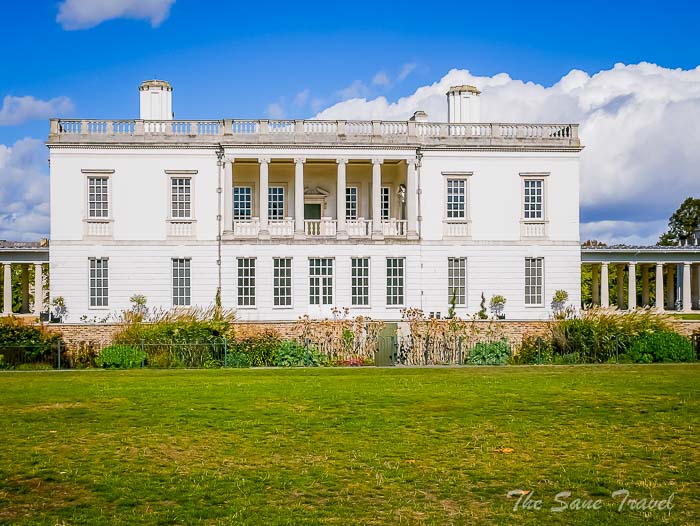
Inside, the impressive Great Hall makes a striking first impression. Make sure you take the time to view the remarkable painting collection, which features portraits of Queen Elizabeth I.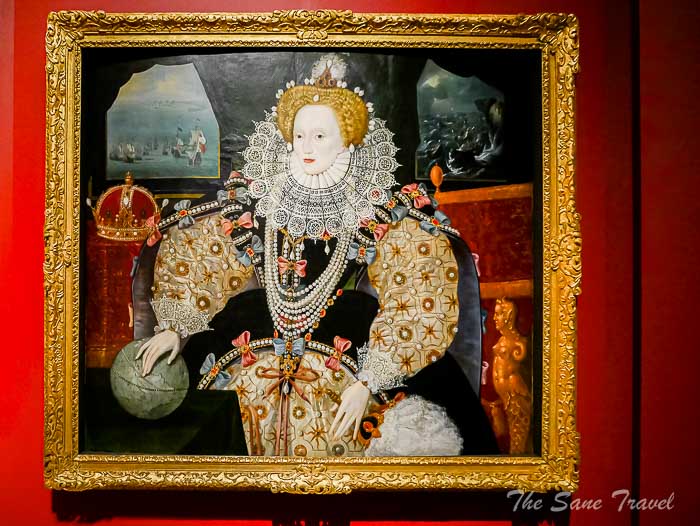
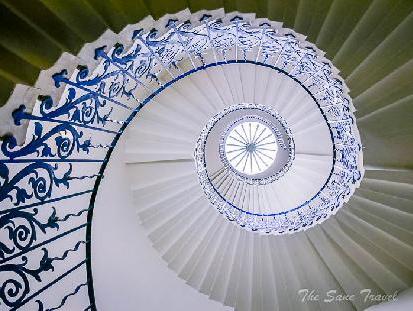
But many visitors, me included, come for the Tulip Stairs, Britain’s first geometric, self-supporting spiral staircase. 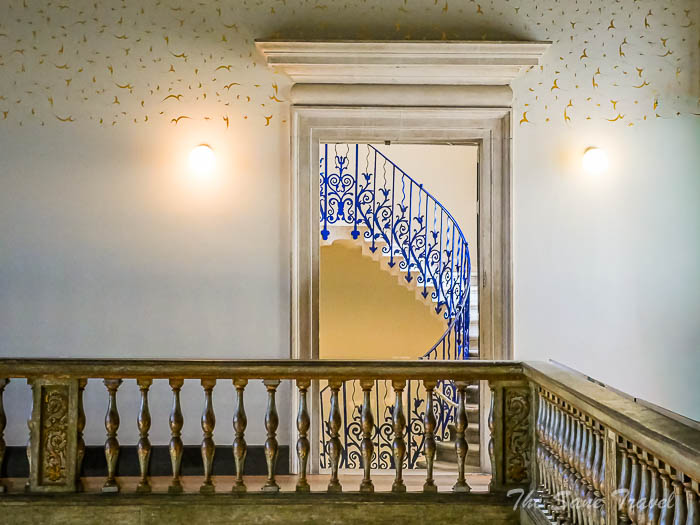 Designed by Inigo Jones, the staircase was completed in 1635 and features a wrought-iron balustrade decorated with flowers once thought to be tulips but now believed to be lilies, the emblem associated with Queen Henrietta Maria. The stone steps cantilever from the surrounding wall, and their interlocking form creates a self-supporting spiral without a central column. An open centre allows natural light to filter down from a roof lantern.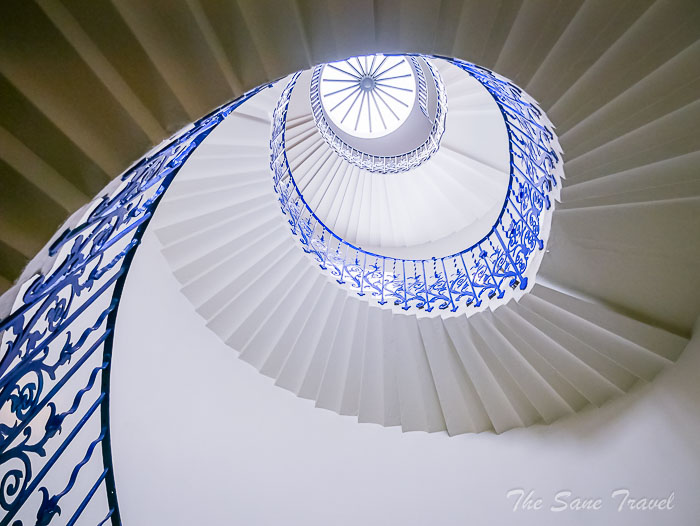
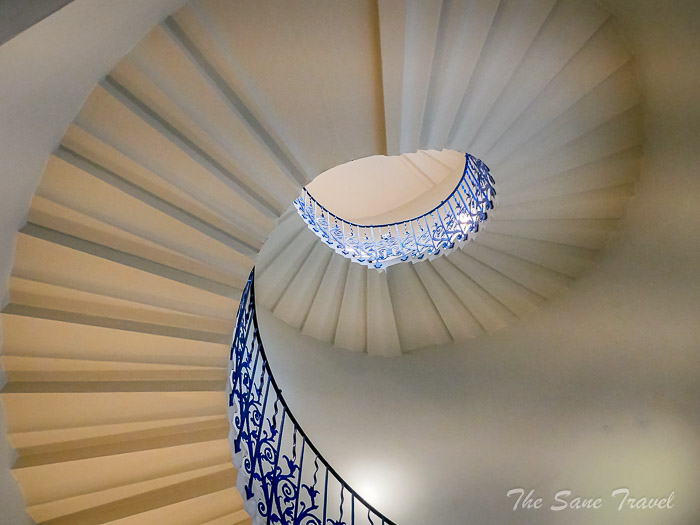
Address: Romney Road, Greenwich.
Practical tips
In order to view all the staircases mentioned in this article, it is recommended to allocate at least two to three days. Some of the buildings are situated a distance away from the city centre of London. It is advisable to explore both the buildings and the surrounding areas. Make sure to check the opening hours, as some buildings are only accessible to the public on specific days of the week.
Like it? Pin it! 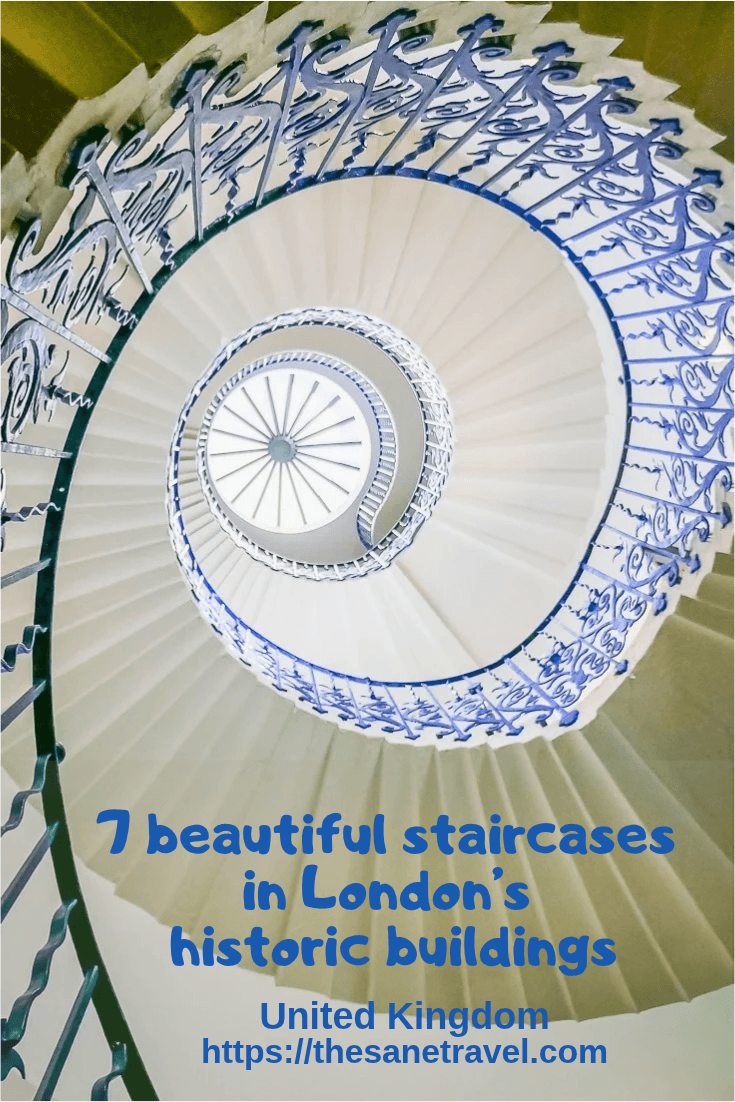
What did you think? Do you visit buildings because of the staircases? If yes, tell me more about that! I would love to hear from you, so please add your comment below.
Author: Anita Sane

About the author
Anita is a part-time traveller, passionate photographer and a retired career woman from Latvia, travelling mostly solo for more than 15 years. She is a skilled travel planner who plans and executes her travels by herself. Anita wants to show you how to travel the world and open your mind to new experiences. Follow her on Facebook, Instagram, Pinterest, Twitter and Bloglovin.


Report
My comments