
I see myself as a spiritual person who is not affiliated with any particular religion. However, I enjoy visiting places of worship while travelling because of their beautiful architecture, rich history, and unique atmosphere. The churches in Munich serve as both religious sites and significant historical and architectural landmarks reflecting the city's valuable cultural legacy. Many of these buildings have stood for centuries, showcasing a variety of architectural styles and influences that have shaped Munich over time. Each church, from the Gothic grandeur of Frauenkirche to the elaborate Baroque design of Asamkirche, offers a unique glimpse into the city’s past. Munich is home to a wide array of remarkable churches with intriguing histories and impressive architecture, beyond the well-known Frauenkirche and Theatinekirche. To make the most of your visit, consider exploring my list of recommended places of worship in Munich.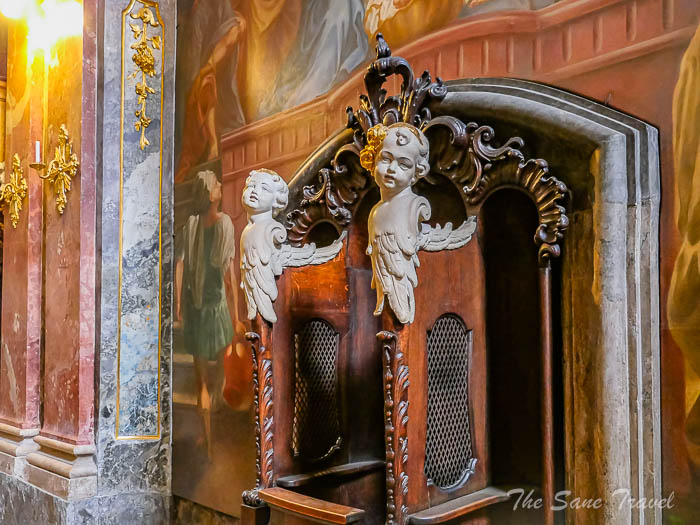
The initial cluster of churches is situated in the city centre and can be conveniently reached on foot.
1 Bürgersaalkirche
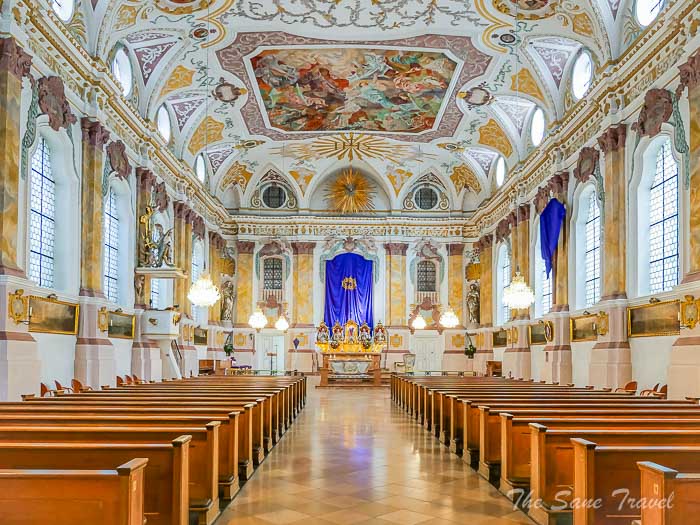
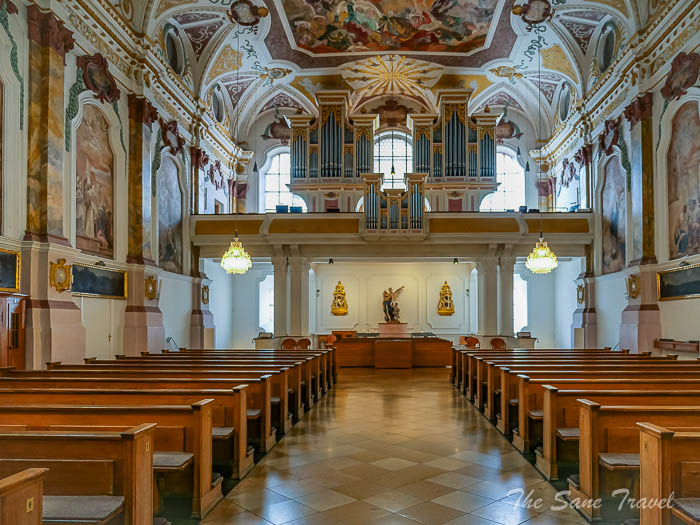
The Bürgersaalkirche, also known as the Citizens’ Hall Church, is a unique architectural treasure located in Munich’s bustling shopping district. Constructed in 1710, it was originally intended as a meeting place for a men’s congregation rather than a typical church. Its striking red-and-white Baroque façade might, at first glance, resemble a town hall. Yet the building’s true purpose becomes clear in the gold-lettered inscription along the friezes, which honours the Virgin Mary and the citizens of Munich who dedicated it to her in 1710. The façade is divided into two storeys, corresponding to the lower and upper churches within. The lower church is a solemn sanctuary housing the tomb and museum of Father Rupert Mayer, the Jesuit priest and anti-Nazi resistance figure. The upper church is a beautifully restored hall, filled with light, frescoes, and a grand altar relief. Baroque staircases adorned with Madonna of Mercy sculptures lead up to the upper church, which is elegantly decorated with marbled pilasters and features Baroque artwork by Ignaz Günther and Andreas Faistenberger.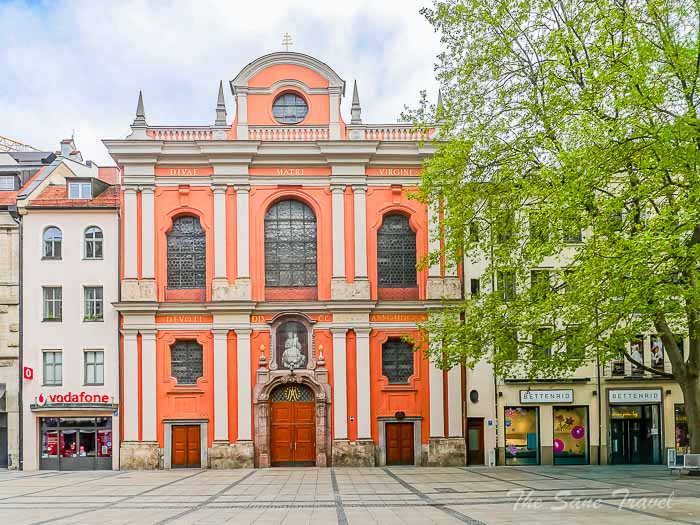
Address: Neuhauser Strasse 14
2 St Michael’s Church
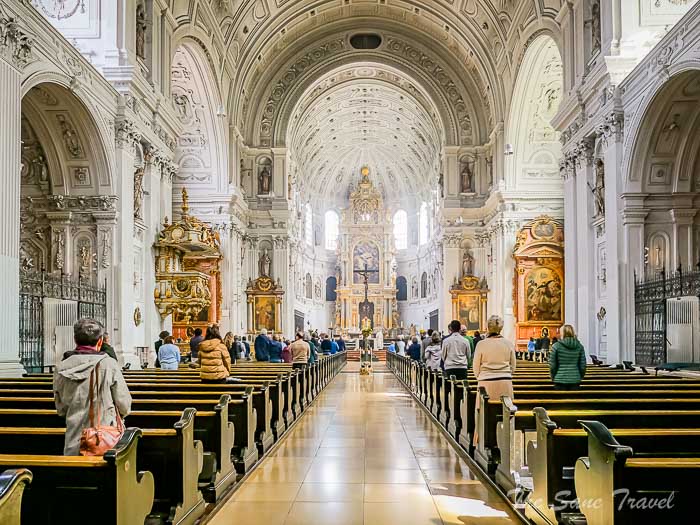
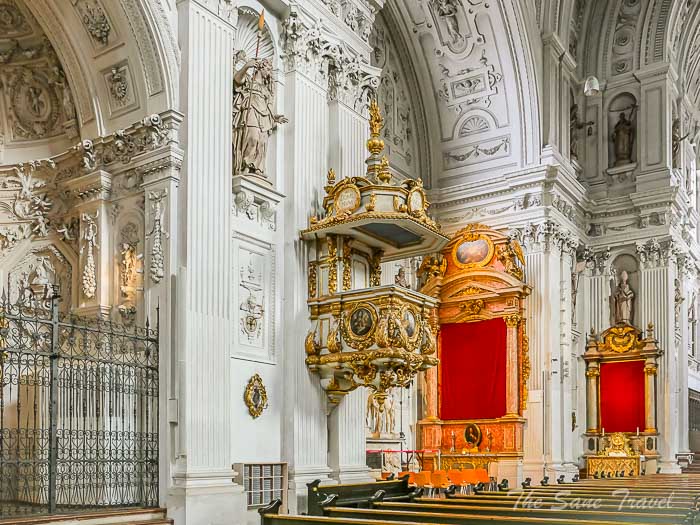
Having stood for more than 400 years, St Michael’s Church is recognised as Germany’s first Renaissance church and a central symbol of the Counter-Reformation. The building boasts an impressive façade and a spacious interior dominated by a towering roof truss. This Jesuit church houses the renowned altarpiece of the Angel’s Fall. The nave, with nearly 20 metres of barrel vaulting, is the world’s second largest after St Peter’s in Rome. The interior of St Michael’s Church is expansive and bright, with the interplay of light and shadow creating a visually striking effect on the vaulted ceiling. The church’s open space spans 1,500 square metres, reaching 28 metres in height and 80 metres in length. Side chapels are positioned between sturdy wall pillars, allowing natural light to flood the space through large windows. The high altar features Jesus Christ at the top, surrounded by depictions of saints and apostles.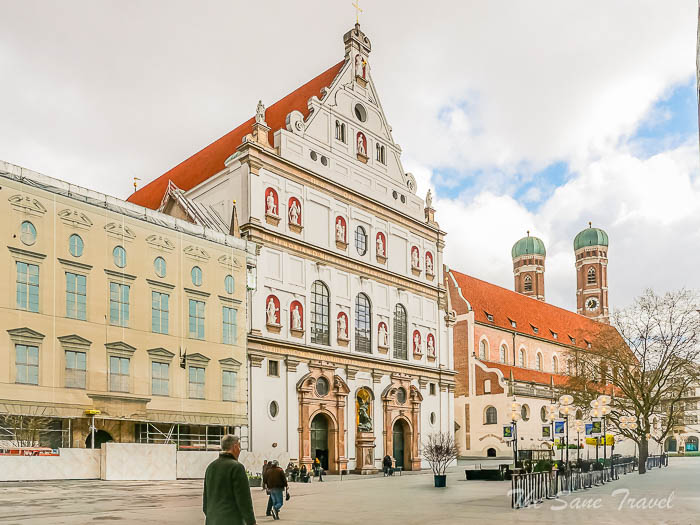
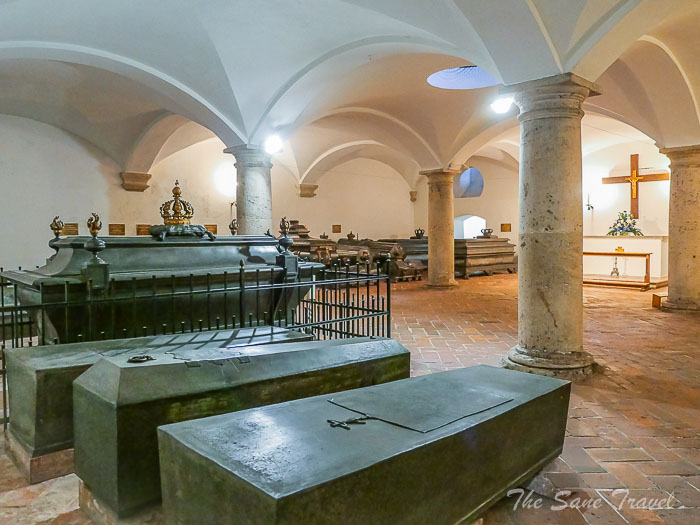
St Michael's was designed to be the final resting place for the House of Wittelsbach, making it one of the most significant burial sites for the Bavarian dynasty along with the Theatine Church and the Cathedral of Our Lady. In addition to members of the Wittelsbach family, their spouses from various European countries are also interred there. One of the most well-known figures buried at St Michael's is King Ludwig II of Bavaria (1845-1886).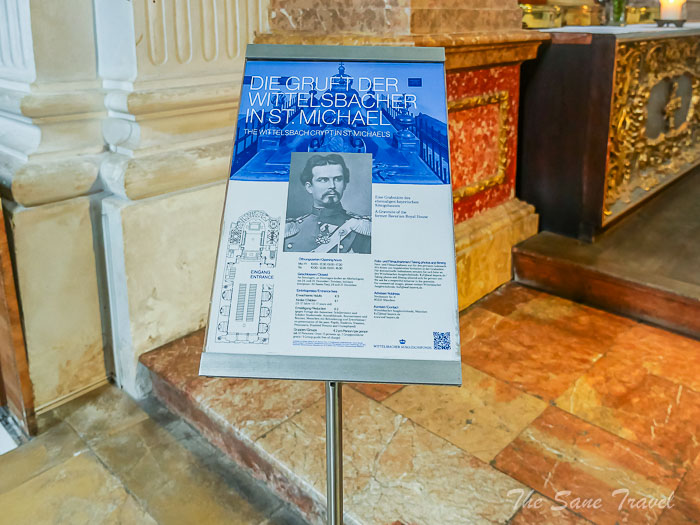
Address: Neuhauser Strasse 6
3 Munich Cathedral
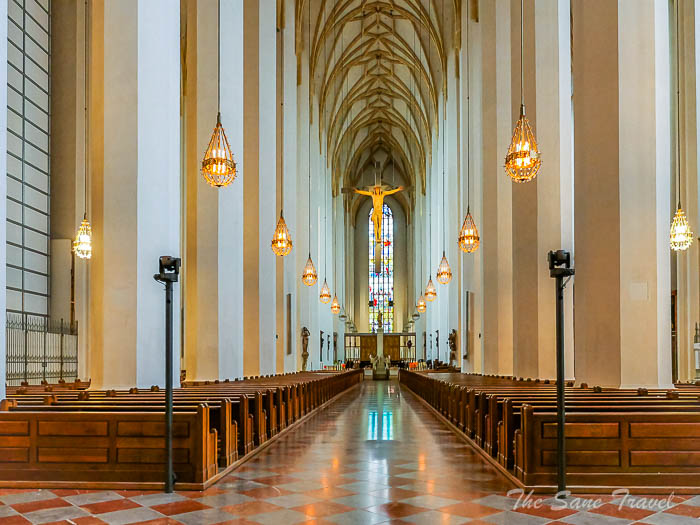
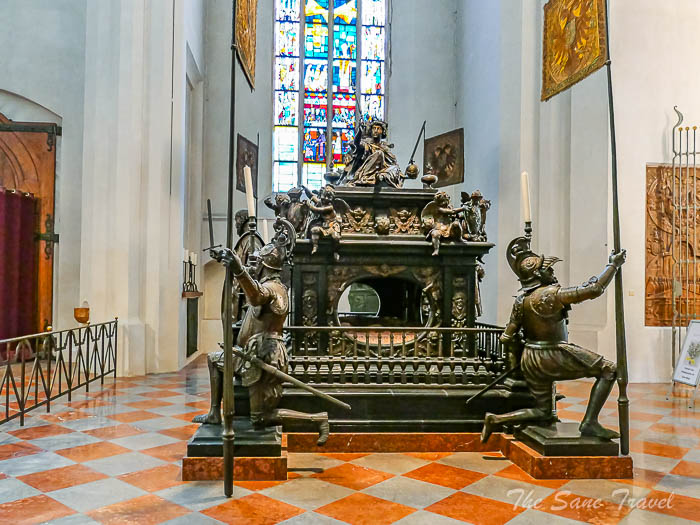
The Munich Cathedral, officially known as Dom zu Unserer Lieben Frau or the Church of Our Dear Lady, is commonly referred to as the Frauenkirche. It is recognised as the city’s most famous landmark, thanks to its distinctive towers, which are visible from afar and define Munich’s skyline. The cathedral’s red-brick construction features a simple design, a result of limited funds during construction. The towers, rising 99 metres and topped with green domes, were completed in 1525. Inside, the nave measures 109 metres long, 40 metres wide, and 37 metres high, allowing for up to 20,000 people. In 2004, a city-wide referendum was passed in Munich to prevent the construction of buildings taller than 99 metres, the height of the Frauenkirche. Visitors can climb the south tower for stunning views of the city, although they should be prepared to ascend 86 steps before reaching the lift. While the Frauenkirche may not be the most ornately decorated church, its central location and towering presence make it a must-see attraction in Munich.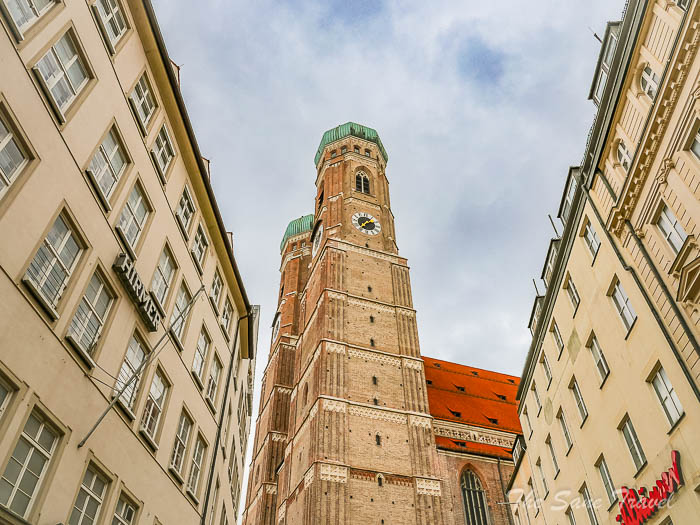
Address: Frauenplatz 12
4 St Peter’s Church
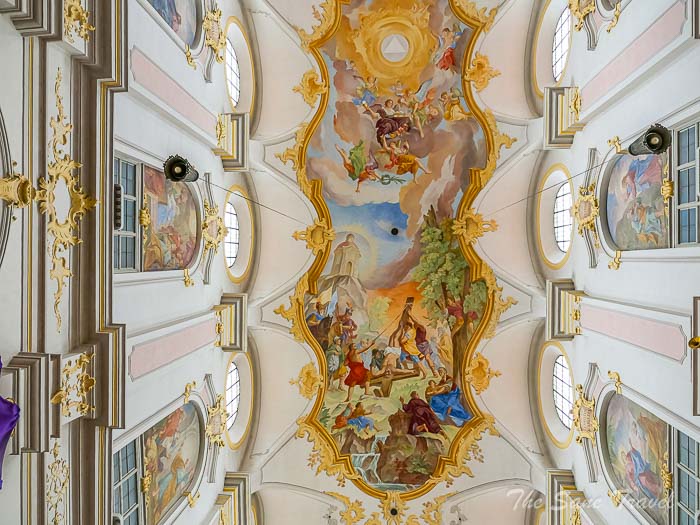
Dating back to the 12th century, St Peter’s Church, also known as Peterkirche or “Alter Peter”, is the oldest Catholic church in Munich and a significant symbol of the city. Over the centuries, it has undergone numerous architectural transformations, incorporating Romanesque, Gothic, and Baroque styles. Following extensive damage during World War II, the church was reconstructed through donations, preserving impressive Baroque furnishings, including the renowned high altar. The interior of Peterskirche combines Gothic, Baroque, and Rococo elements, with highlights such as the St Martin Altar and a ceiling fresco by Johann Baptist Zimmermann.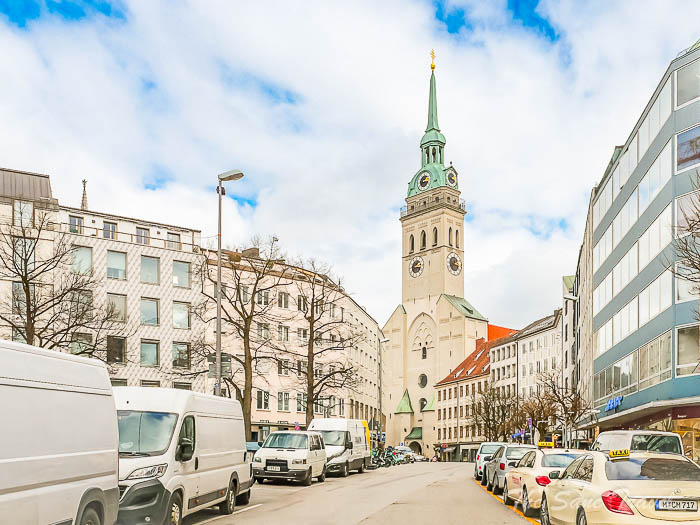
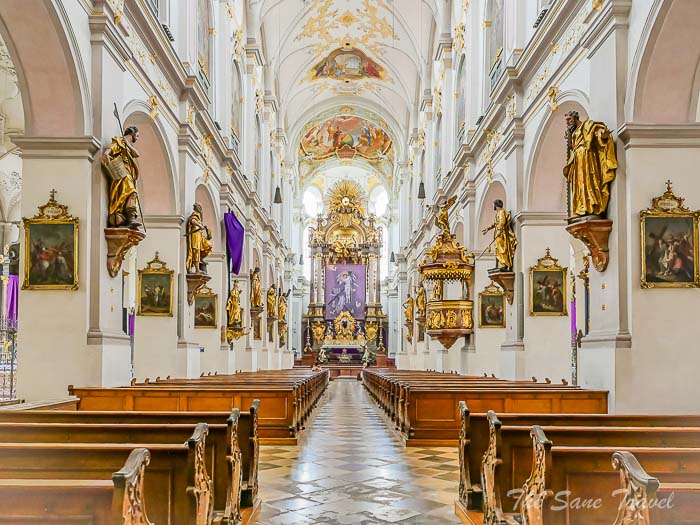
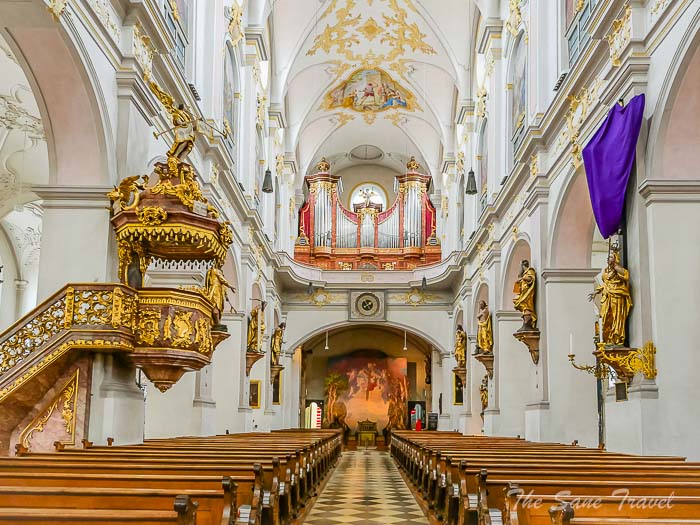 A unique attraction is the second chapel on the left, which houses the jewel-encrusted skeleton of Saint Munditia. Visitors can enjoy not only the art treasures but also a panoramic view from the observation platform. Climbing the church tower, with its 306 steps leading to a height of 92 metres, offers a sweeping view of Munich’s historic centre.
Address: Petersplatz 1
5 Heilig Geist Church
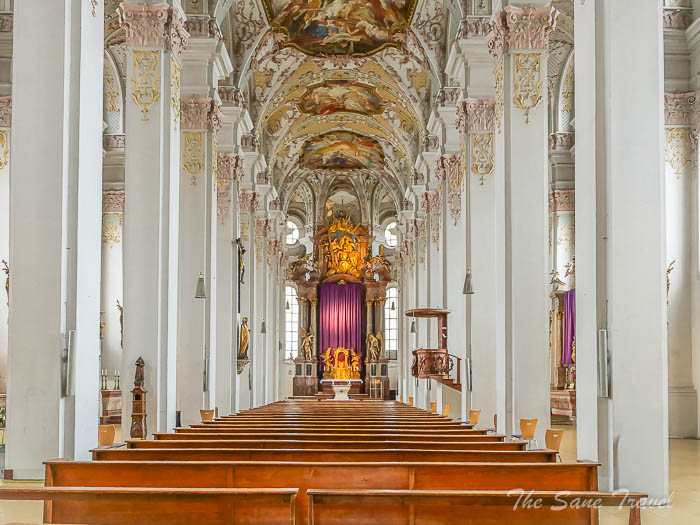
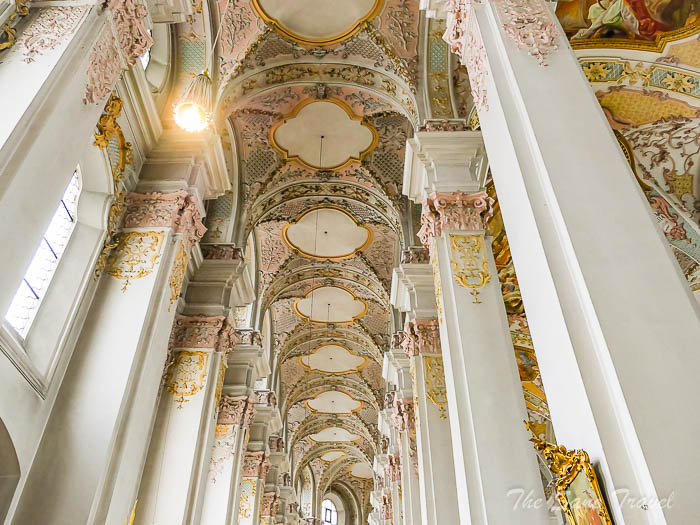
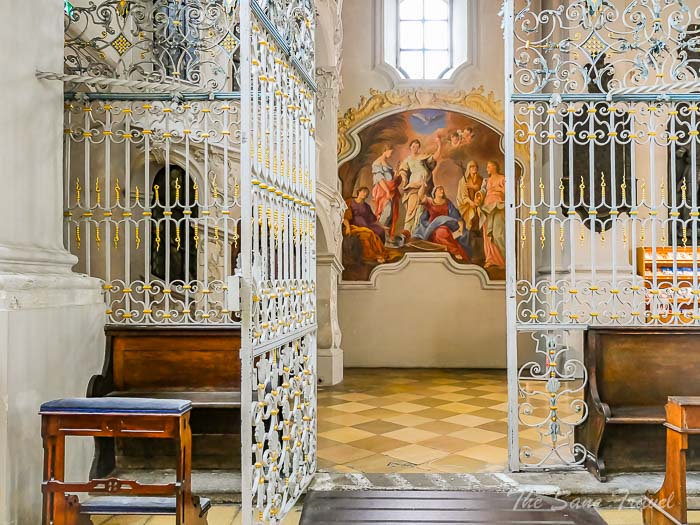
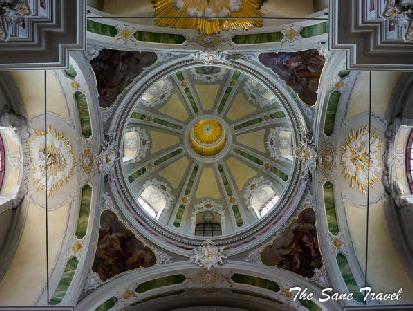
Despite its proximity to popular tourist attractions, this church often goes unnoticed. However, do not be deceived by its simple exterior! The Heilig Geist Kirche boasts a stunning Baroque interior, complete with intricate frescoes and stucco work. Originally built in the 13th century as a chapel for a religious hospital, the structure was later rebuilt in neo-Baroque style in the 18th century. While the original design was Gothic, the interior was transformed with lavish Rococo and Baroque decorations in the 18th century. The church’s large white columns and magnificent ceiling frescoes depicting biblical scenes complement a striking gilded Baroque high altar. Heavily damaged during World War II, it was faithfully reconstructed and now showcases its rich Baroque furnishings, including frescoes by the Asam Brothers and valuable altars. The choir ceiling frescoes depict the founding story of the hospice that once stood on the site, while the nave ceiling frescoes portray spiritual gifts. The high altar, adorned with paintings and sculptures, was created in 1730 by Nikolaus Stuber and Antonio Matteo and is a must-see. Another highlight is the Marienaltar, which features a 15th-century wooden sculpture known as the Hammerthaler Madonna.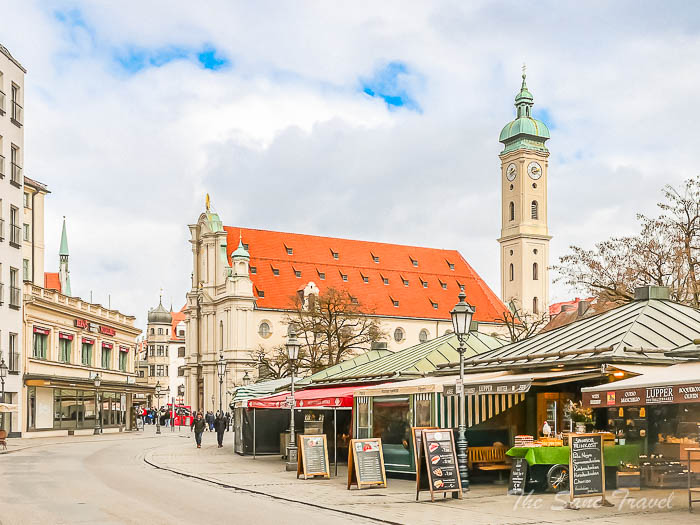
Address: Prälat-Miller-Weg 1
6 Asam Church
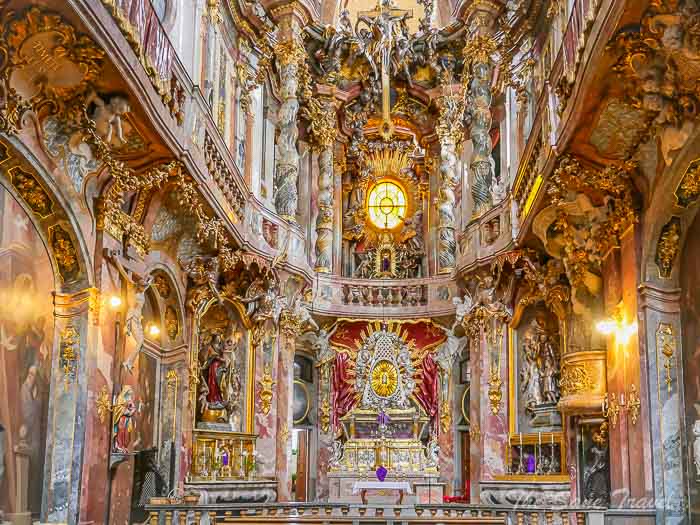
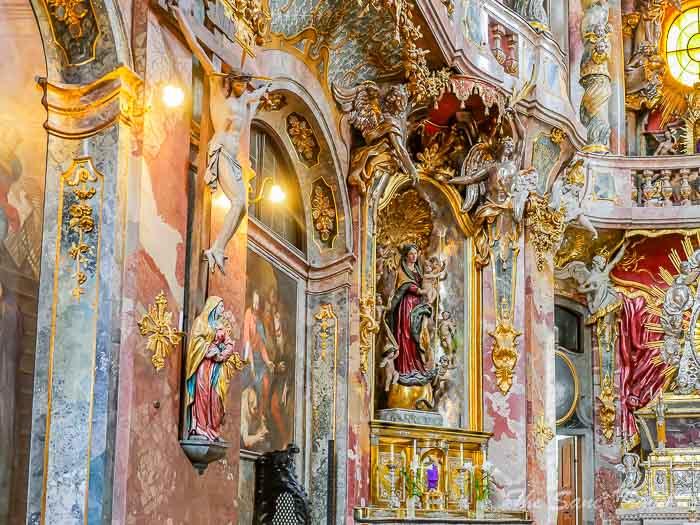
Located on Sendlinger Strasse in the city centre, the private St John Nepomuk Church, designed by the Asam brothers, is a must-see attraction in Munich. Built between 1733 and 1746, this magnificent church is one of the brothers’ finest works in the Bavarian late Baroque style. Although the façade is only 8 metres wide and 22 metres deep, the Asam brothers managed to create a stunning architectural marvel. The entrance features two rocks emerging from the column capitals, topped by a statue of St Nepomuk above the portal gable. Inside, the church is filled with elaborate stucco and striking ornamentation. The chancel is particularly remarkable, with Trinity figures illuminated through hidden windows. The high altar depicts God the Father on a mercy seat, crowned with a triple papal tiara. 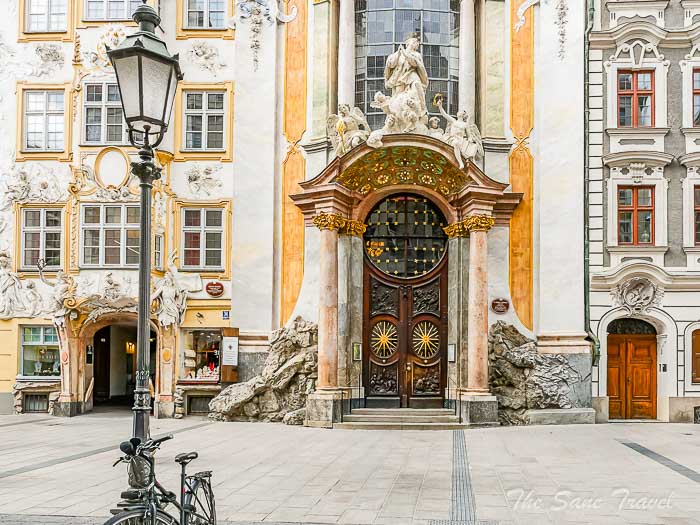
 Adjacent to the church stands the Asamhaus, a Baroque residential palace also redesigned by the Asam brothers in 1734. The palace’s façade is adorned with intricate stucco work, showcasing the brothers’ artistic talent. The Asamhaus can only be viewed from the outside, but its impressive design is a testament to their mastery.
Address: Sendlinger Strasse 32
7 All Saints Church of the Cross
All Saints’ Church at the Cross, Allerheiligenkirche am Kreuz in German, is located in Munich’s historic Old Town, close to the fortifications at Sendlinger Tor. Originally situated at the intersection of four roads, it takes its name from the suffix “at the Cross”. Built in the late 15th century by Jörg von Halsbach, the church is also known as the Holy Cross Church and is considered the city’s first cemetery church. The bell tower and façade showcase impressive Gothic architecture, while the interiors reflect 17th-century renovations that introduced Baroque elements. 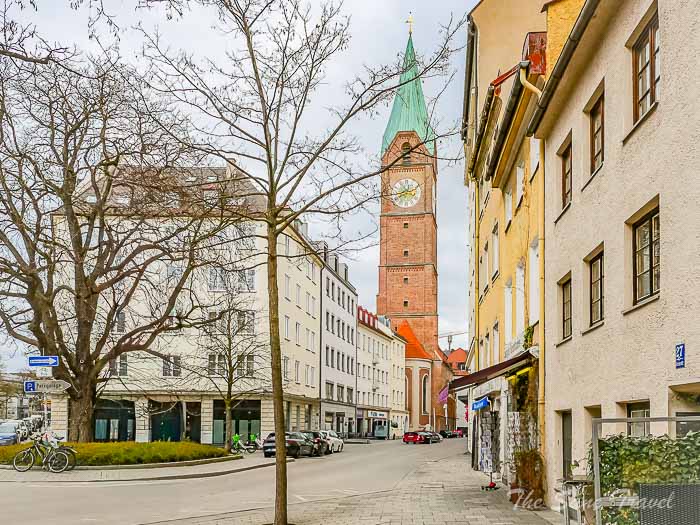
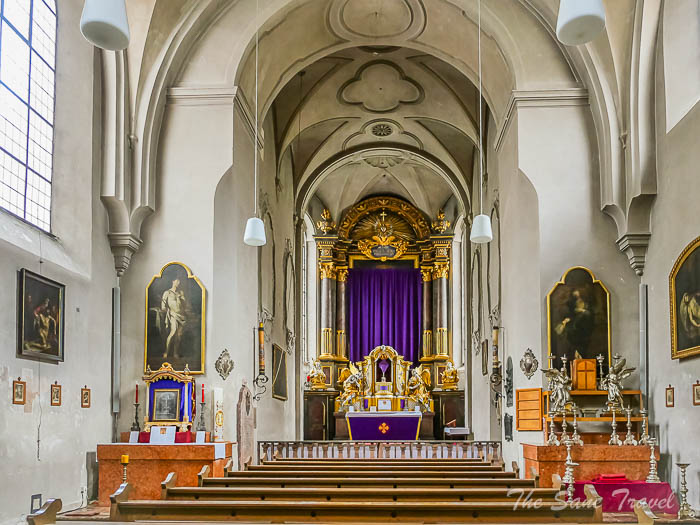
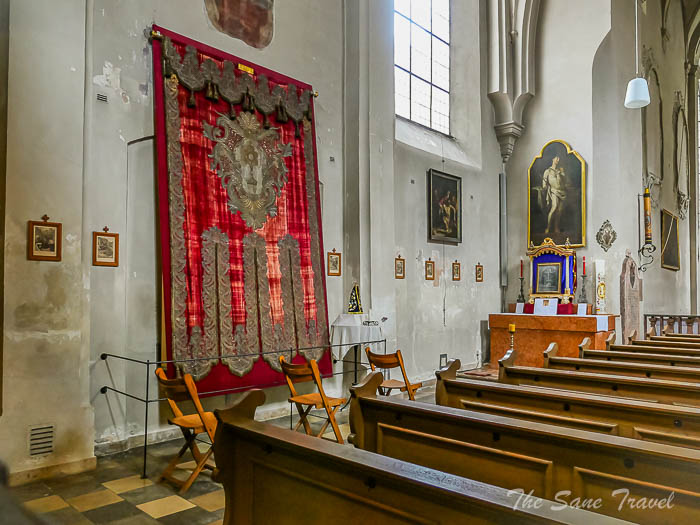 The church houses the tomb of the banker Gietz and features a 17th-century altarpiece depicting the Apparition of the Virgin to St Augustine. The tower contains two bells from the 18th and 19th centuries, which can be rung either manually using a rope or automatically by an electric clock mechanism.
Address: Kreuzstrasse 10
8 Theatiner Church
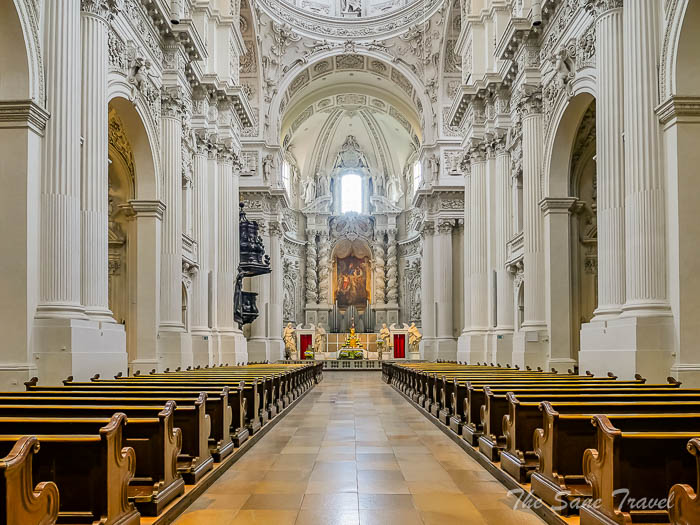
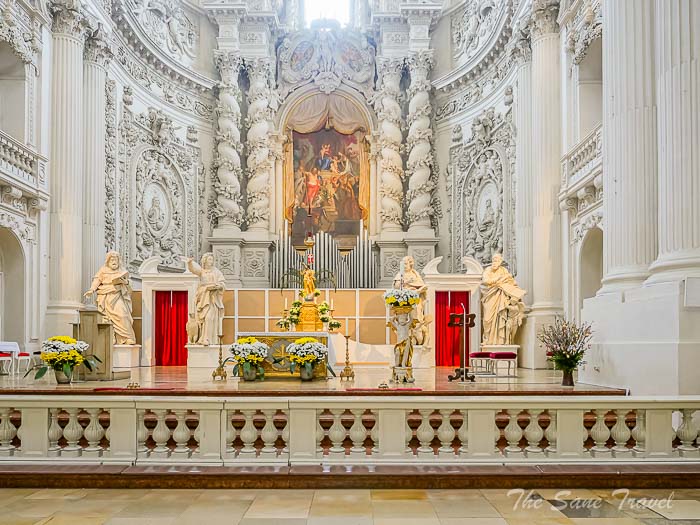
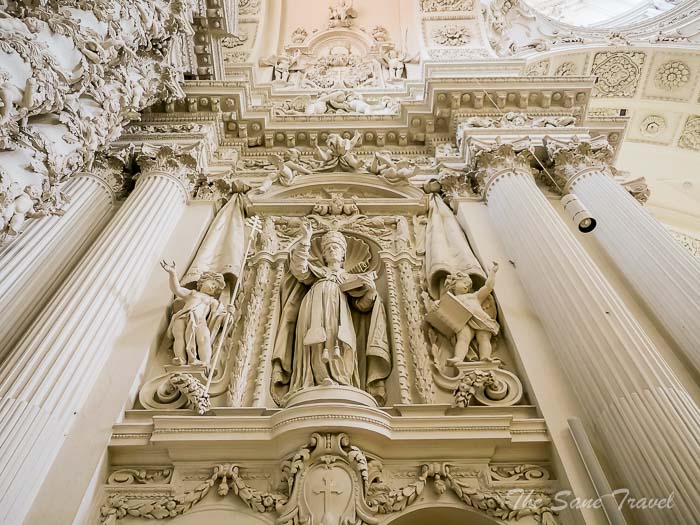
Constructed in the 17th century, the Theatinerkirche is considered one of the most impressive examples of Baroque architecture in Europe. Officially known as St Kajetan, the church served as a court church and a religious centre for Theatine monks. It is regarded as one of the most beautiful churches in Munich, with a yellow façade and an intricate interior. Commissioned by Elector Ferdinand Maria and his wife, Henriette Adelaide, to celebrate the birth of their heir, Max Emanuel, the church was designed by Italian architects, drawing inspiration from Sant'Andrea della Valle in Rome. The interior features white stucco arches, ornate domes, and grand columns, exuding opulence and grandeur. The church’s design blends Italian Baroque and Rococo styles, with intricate floral and figural decorations throughout. The main altars in the choir and transept are adorned with stucco figures, while the Electors’ burial chamber houses members of the House of Wittelsbach. Its interior is illuminated by light filtering through the large main dome and clerestory, creating a sense of vastness and splendour.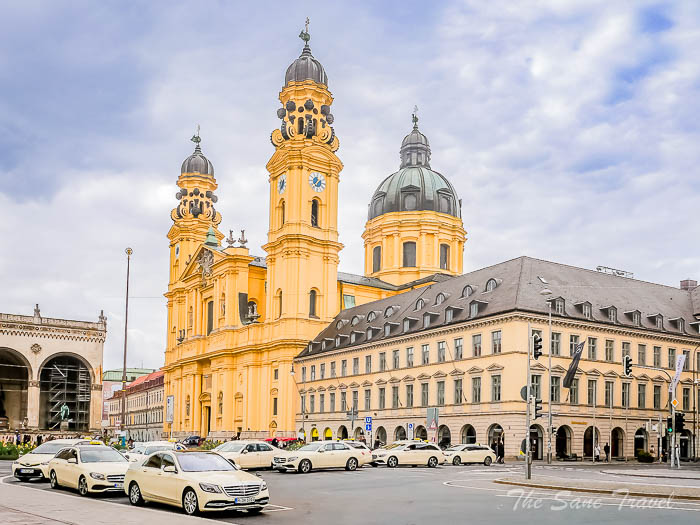
Address: Theatinerstrasse 22
Check out the map provided for visiting churches in the Munich city centre:
The following two churches are situated on the outskirts of Munich and can be reached by public transport.
9 Berg am Laim’s Majestic Landmark: St Michael’s Church
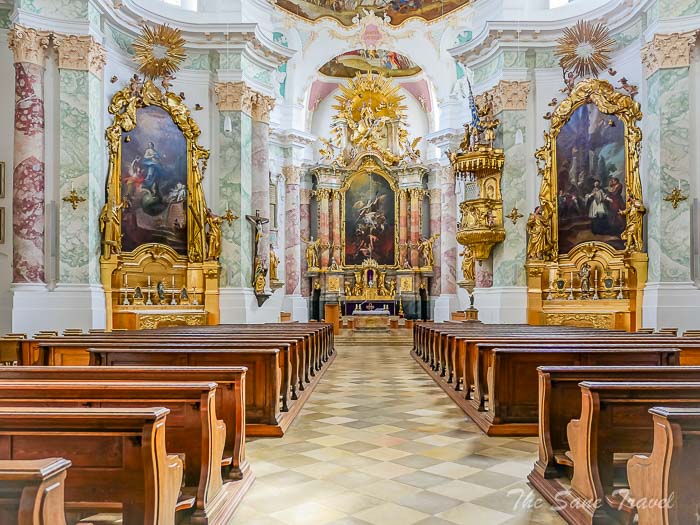
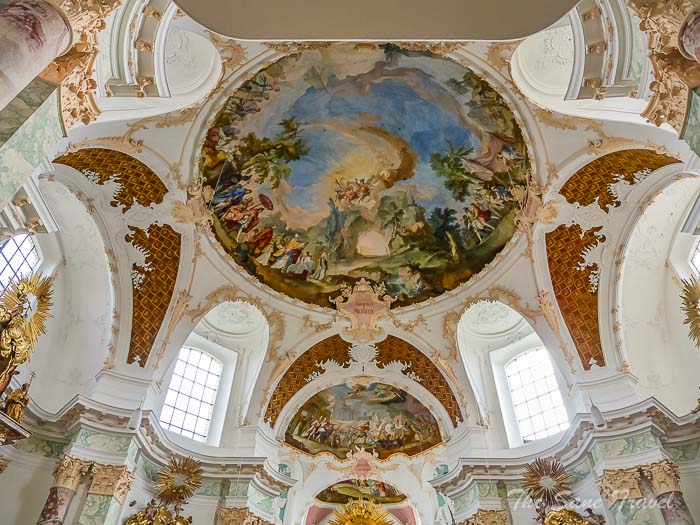
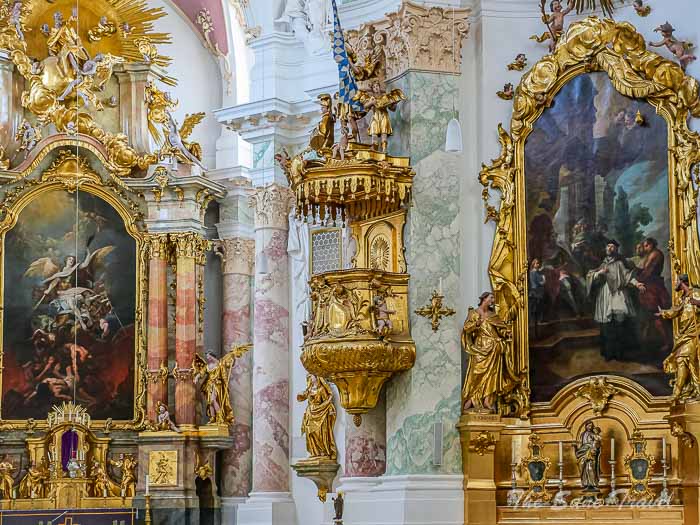
Even from a distance, the imposing twin towers of St Michael’s Church dominate the Berg am Laim skyline. More than just a pretty façade, this magnificent church is a true landmark and a historical symbol of the district. Built between 1735 and 1751 by order of Clemens August, St Michael’s was designed to be more than just a place of worship. At the time, the church held significant sway. It served as the court church for Clemens August, the Elector and Archbishop of Cologne, one of the most powerful ecclesiastical princes in the Holy Roman Empire, and also functioned as the church for the noble Order of the Knights Hospitaller. Today, St Michael’s Parish Church remains a popular pilgrimage site and one of the most important Rococo architectural monuments in the region. Stepping inside, visitors are immediately struck by the impressive spatial design crafted by Johann Michael Fischer. The courtly Rococo furnishings, created by Munich’s finest artists of the time, are breathtaking, featuring intricate stucco work, vibrant frescoes by Johann Baptist Zimmermann, and stunning altars sculpted by Johann Baptist Straub. A feast for the eyes and a treat for the soul!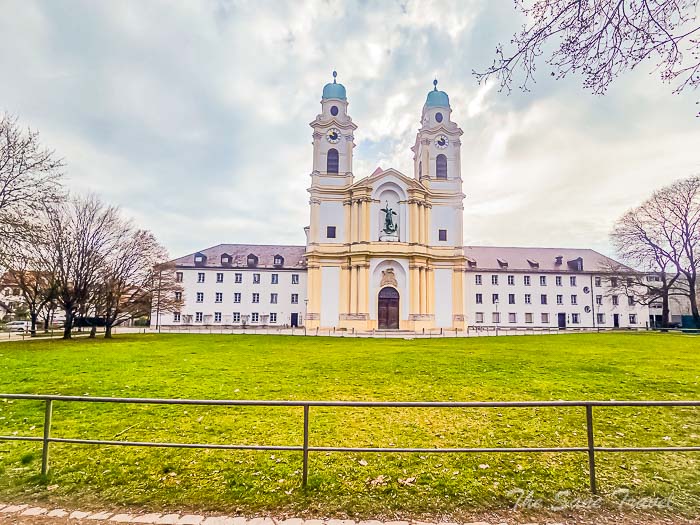
Address: Johann-Michael-Fischer-Platz 1
10 Blutenburg Castle Church
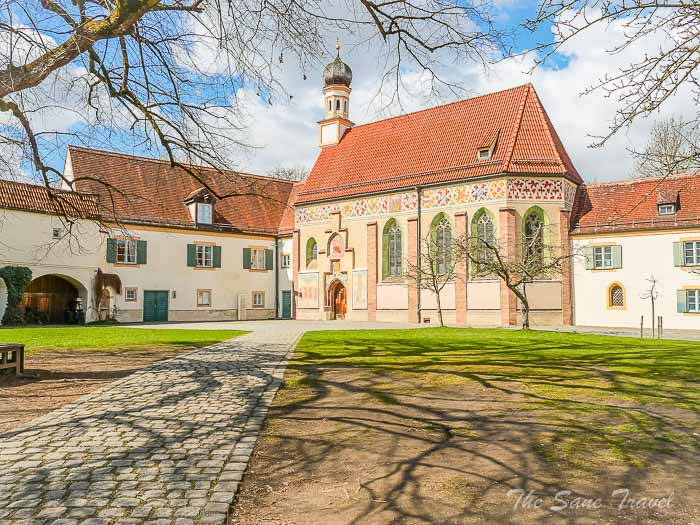
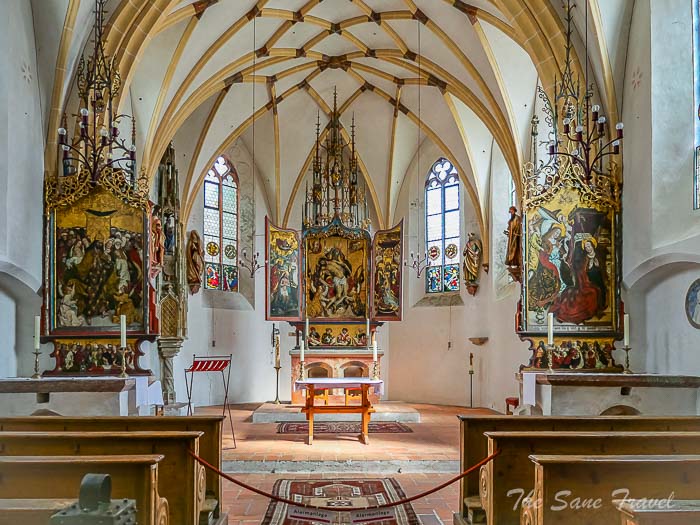
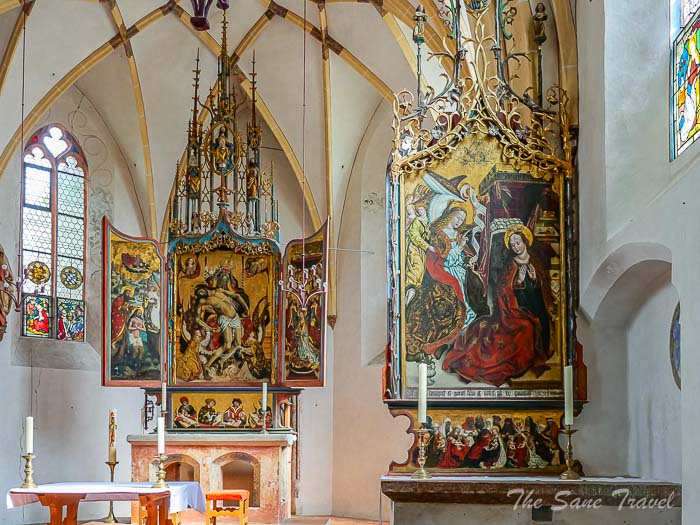
Schloss Blutenburg, located to the west of Munich, is a late Gothic building with a rich history. Originally constructed as a moated castle in the 13th century, it served various purposes over the years, including as a ducal country estate and a hunting lodge. Today, the castle is home to the International Youth Library and museums dedicated to renowned children’s authors such as Michael Ende and Erich Kästner. Surrounded by the Würm River, the castle was once visually linked to Schloss Nymphenburg. One of its highlights is the Gothic castle church featuring a Pietà by Jan Polack. Part of Schloss Blutenburg since 1488, the church retains much of its medieval and late Gothic character. Its centrepiece is the mercy seat attributed to painter Jan Polack, who is known for his panel painting of Saints Bartholomew and Sigismund on the main altar. The side altars depict Christ as King and the Annunciation of Mary. Additionally, the chapel contains wooden figures of the twelve apostles and stained glass created by unknown artists of the period.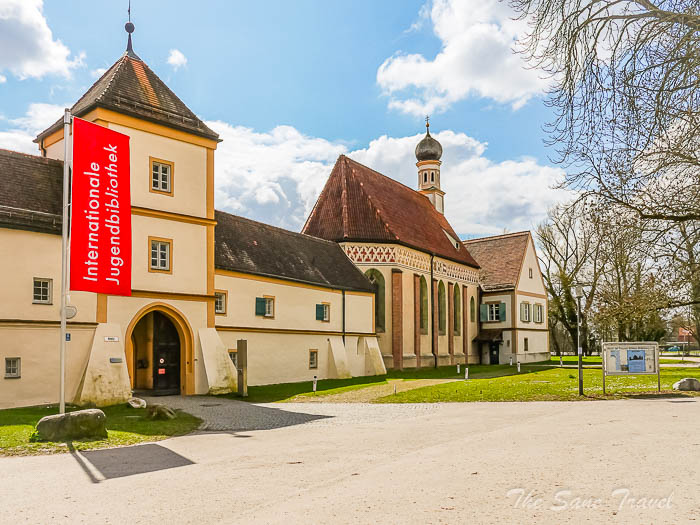
Address: Seldweg 15
11 St. Ursula Church
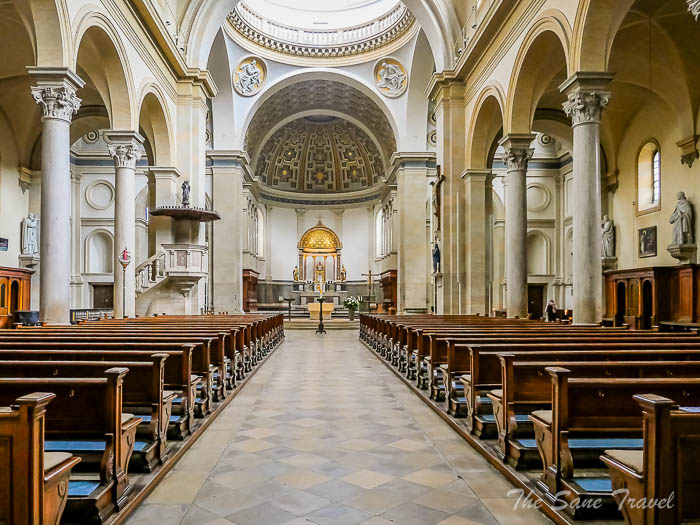
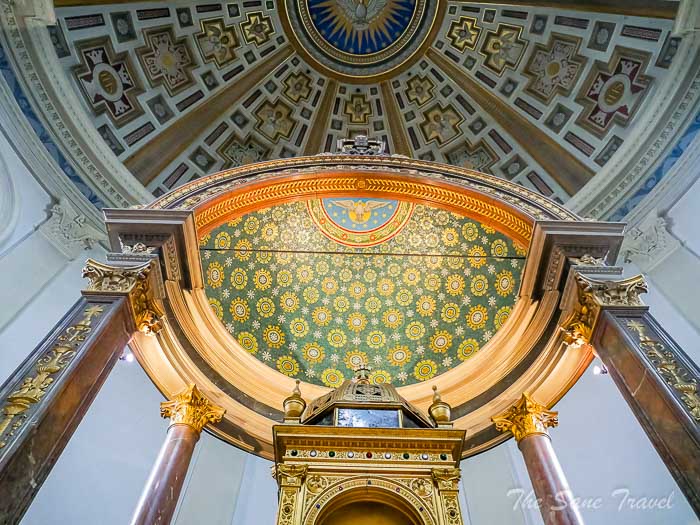
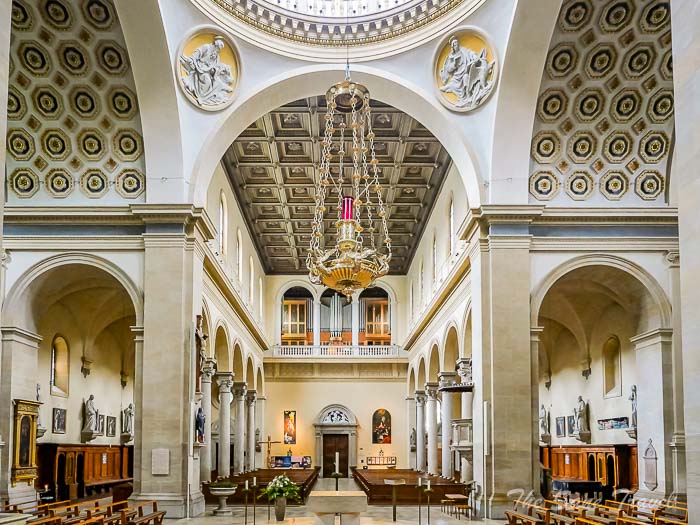
The St. Ursula Catholic Church, located at Kaiserplatz in Munich's Schwabing district, is commonly referred to as the "cathedral of Schwabing" by locals. The parish church was designed and constructed in 1894 by German architect August Thiersch to accommodate the growing population after the original St. Ursula church became too small. St. Ursula is notable for being the first sacred building in Munich to deviate from traditional medieval architectural styles, blending historicism with Art Nouveau elements. The basilica's 64-meter-high tower, influenced by Florentine Renaissance architecture, is a prominent feature visible from a distance. Visitors are encouraged to admire the majolica reliefs by sculptor Balthasar Schmitt inside the basilica. Majolica reliefs are vibrant, tin-glazed Italian ceramics that were particularly popular during the Florentine Renaissance.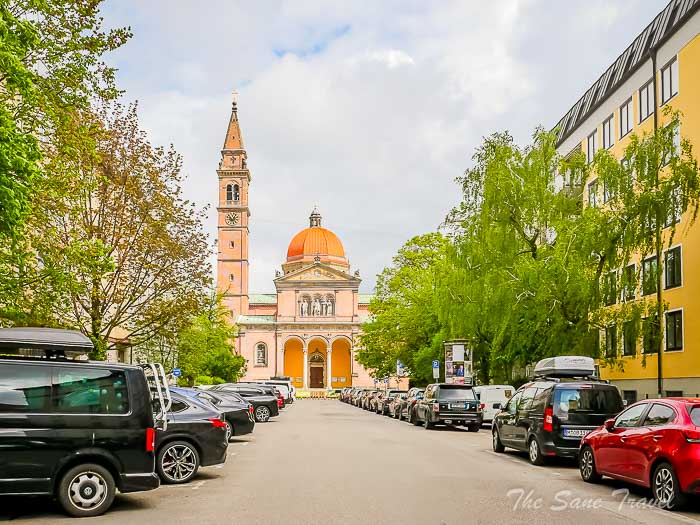
Address: Kaiserplatz 1
The following three churches are situated at least an hour from Munich and may be worth adding to your list of day-trip destinations when exploring Freising and Ammersee.
Freising Cathedral
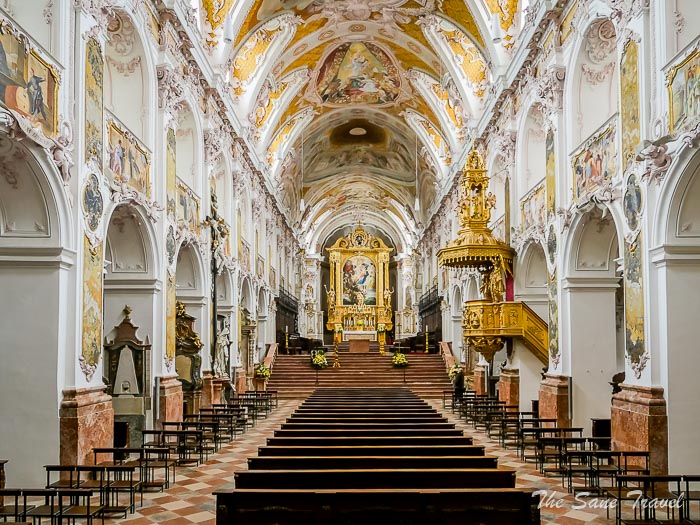
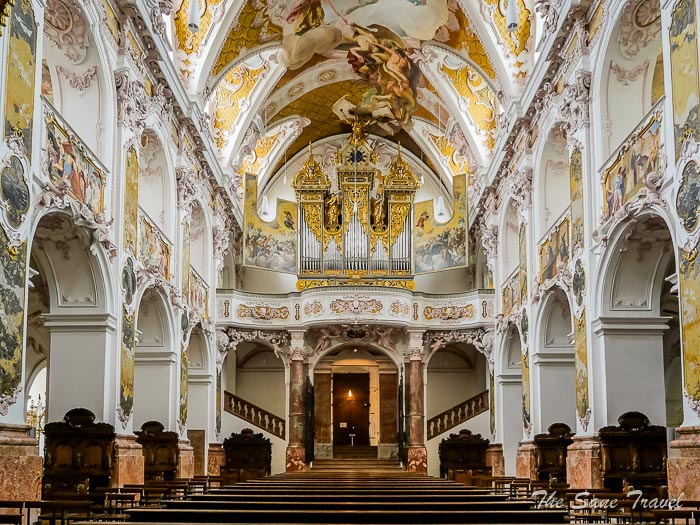
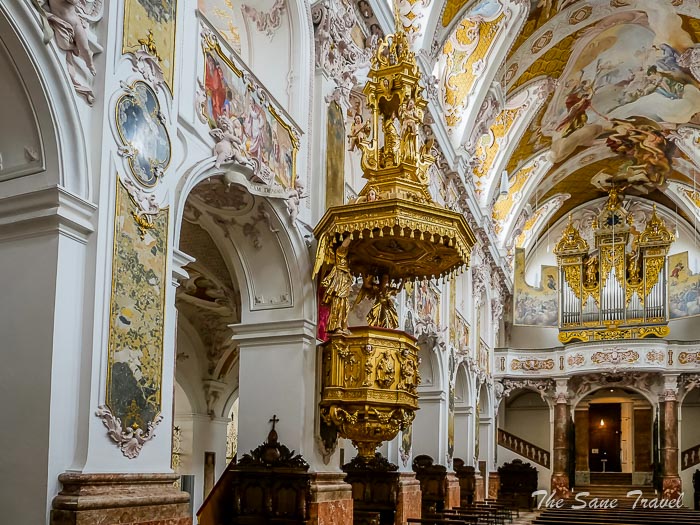
St Mary’s Cathedral, also known as Freising Cathedral, is a Romanesque basilica constructed in the 13th century. Perched on a hill overlooking the town, the cathedral and its two towers can be easily seen. While the exterior is in a simple Romanesque style, the interior displays Baroque magnificence following the 1724 renovation to honour the millennium of the bishopric. The renowned Asam brothers, prominent figures in Old Bavarian religious art, carried out the renovation. Visitors can admire the intricate stucco work by the Asam brothers, along with a high altar featuring an altarpiece by Peter Paul Rubens depicting the Blessed Virgin Mary. The original altarpiece is housed in the Alte Pinakothek in Munich, while a copy is displayed in the cathedral. Of particular interest is the crypt, which houses the unique 12th-century Beasts’ Pillar, portraying knights battling dragons. Notably, Freising Cathedral is where Pope Benedict XVI was ordained a priest in 1951.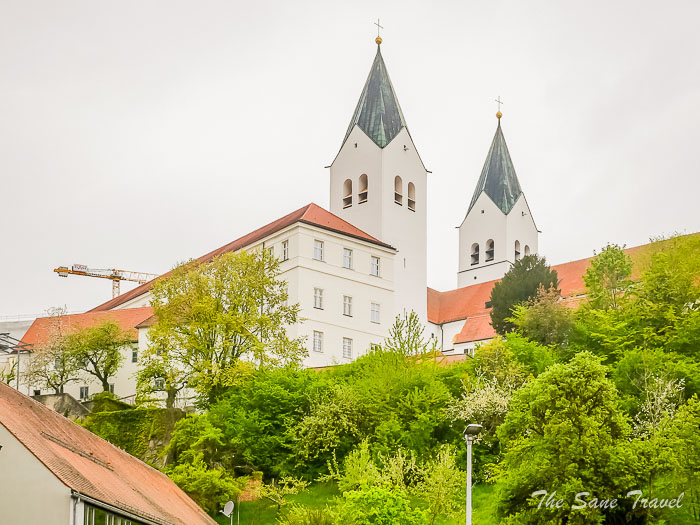
Address: Domberg 36, 85354 Freising
Marienmünster Church in Diesen
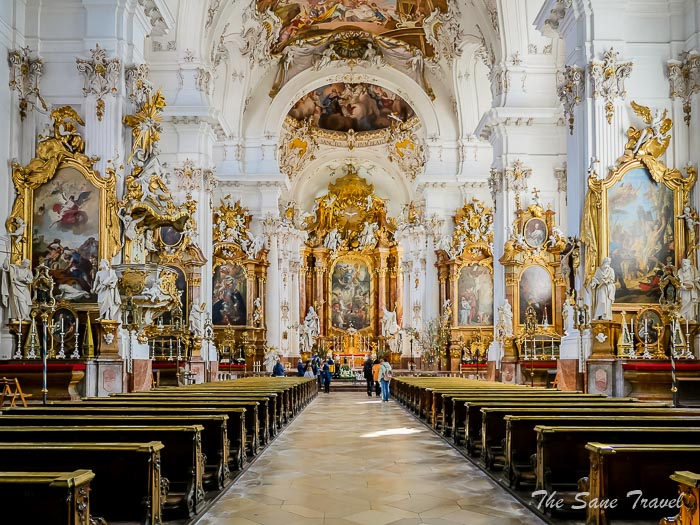
The Marienmünster was constructed in the 18th century by architect Johann Michael Fischer as the main building of the former Augustinian Canons’ Monastery. The church’s exterior is distinguished by its soaring Fischer’s tower and the elegant west façade. The painted plastered areas, in a subdued grey, are accented by architectural details in soft, complementary hues. Adorned with pilasters and a curved gable panel featuring vase decorations, the façade makes a striking impression. This church is considered one of Germany’s most important Baroque churches and is renowned for its intricate ceiling paintings, known as the Diessener Himmel, created by esteemed 18th-century artists.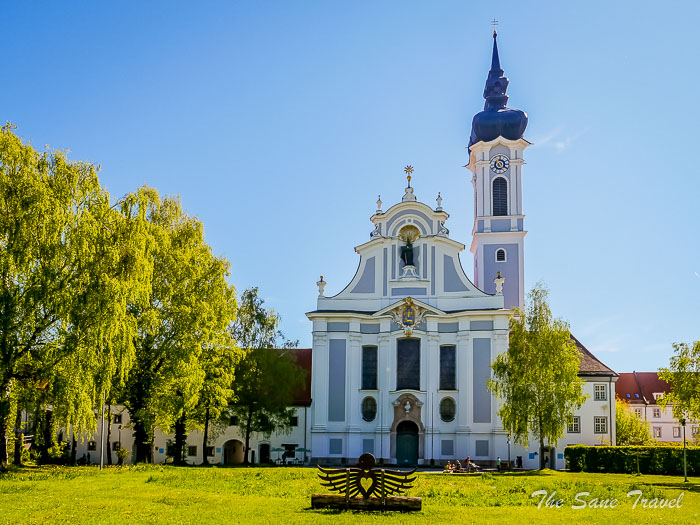
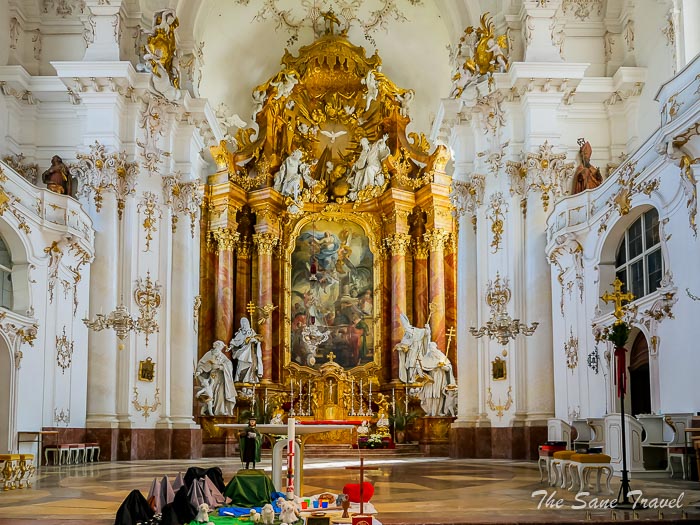
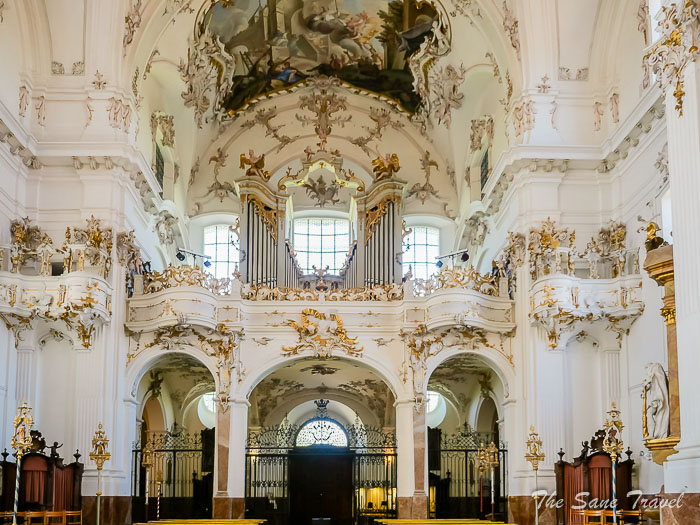
Address: Klosterhof 14, 86911 Dießen am Ammersee
Andechs Pilgrimage Church
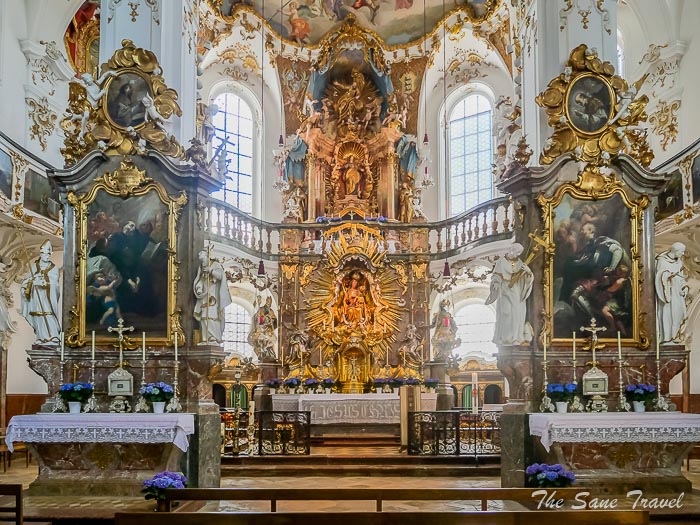
The Andechs Pilgrimage Church, perched on the Holy Mountain, is easily recognisable by its distinctive onion dome. It is dedicated to Saint Nicholas of Myra and Saint Elisabeth of Thuringia, both members of the line of the Counts of Andechs. The connection to Saint Nicholas dates back to the Counts of Andechs, with pilgrims visiting the Nikolauskapelle at Andechs Castle as early as 1130. The Andechs Monastery, founded in the 15th century and inhabited by Benedictines since 1455, was rebuilt in 1669 and acquired its Baroque form in 1755. The church’s interior, designed primarily by Johann Baptist Zimmermann, is a fine example of Rococo art.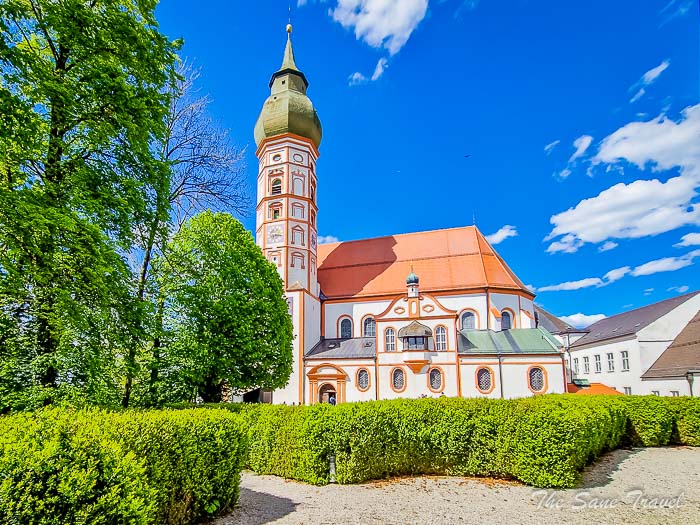
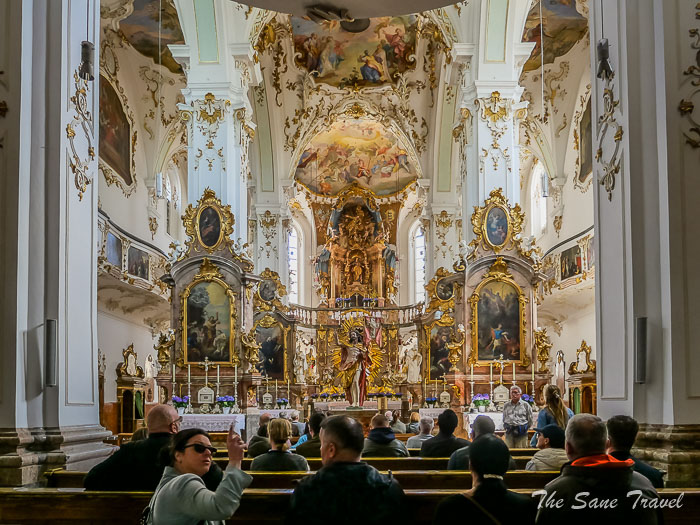
Address: Bergstraße 2, 82346 Andechs
Practical information
All the churches I visited in Munich and its surroundings did not have an entrance fee. Fees were only required for certain attractions, such as Wittelsbach's burial crypt in St. Michael's church and access to church towers for panoramic views. In cases where the church interior was closed to visitors, the front door was usually open, allowing visitors to still view the interior through a wrought-iron fence. When visiting a Catholic church as a tourist, it is important to show respect by dressing modestly, covering shoulders and knees, removing hats, silencing phones, entering quietly, refraining from walking around during Mass, and avoiding roped-off, explicitly marked, or sacred areas.
Final thoughts
I realise that your schedule may be busy and that you might not have time to visit all the places of worship in Munich and the surrounding area. With that in mind, here are some of my top recommendations: Theatiner Church, Asam Church, St Michael’s Church, St Peter’s Church, and Heilig Geist Church. If you have the chance to venture beyond the city, I suggest visiting the impressive Freising Cathedral and the opulent Marienmünster Church in Diesen.
Like it? Pin it!
What did you think? Do you like visiting churches when you travel? I would love to hear from you, so please add your comment below.
Author: Anita Sane

About the author
Anita is a part-time traveller, passionate photographer and a retired career woman from Latvia, travelling mostly solo for more than 15 years. She is a skilled travel planner who plans and executes her travels by herself. Anita wants to show you how to travel the world and open your mind to new experiences. Follow her on Facebook, Instagram, Pinterest, Twitter and Bloglovin.
Report
My comments