
Munich is a popular destination that blends traditional Bavarian culture with contemporary features. Known for its festivals, particularly Oktoberfest, Munich offers ample opportunities to explore its beer gardens, churches, art museums, and markets. Visitors appreciate its safety, museums, and vibrant urban culture. The city’s architecture reflects its history as part of the Holy Roman Empire, while also proudly displaying its Bavarian identity through the white-and-blue flag. The city also serves as a convenient base for day trips around the Bavarian region. Begin your Munich adventure at Karlsplatz, a bustling square that marks the entrance to the city’s pedestrian zone.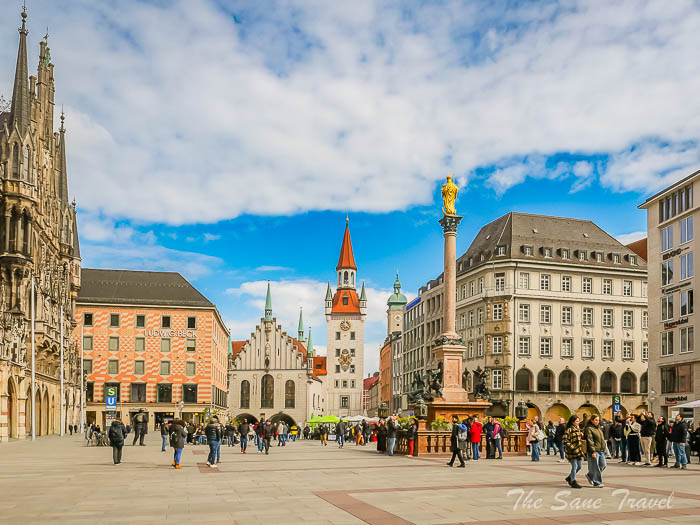
Stroll from Karlsplatz to Marienplatz via the Karlstor Gate
From Karlsplatz, you can enter Munich’s main pedestrian zone through the Karlstor Gate, a 900-metre-long stretch in the heart of the old town where cars are not allowed. 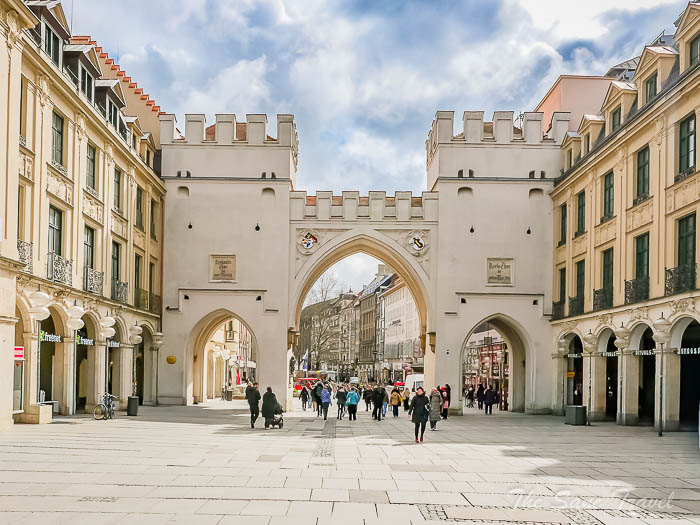 This bustling area extends as far as Marienplatz and includes popular shopping streets such as Kaufingerstrasse and Neuhauser Strasse, which are lined with department stores, cafés, and restaurants. These streets are known for their mix of high-street fashion, traditional Bavarian taverns, and charming boutiques.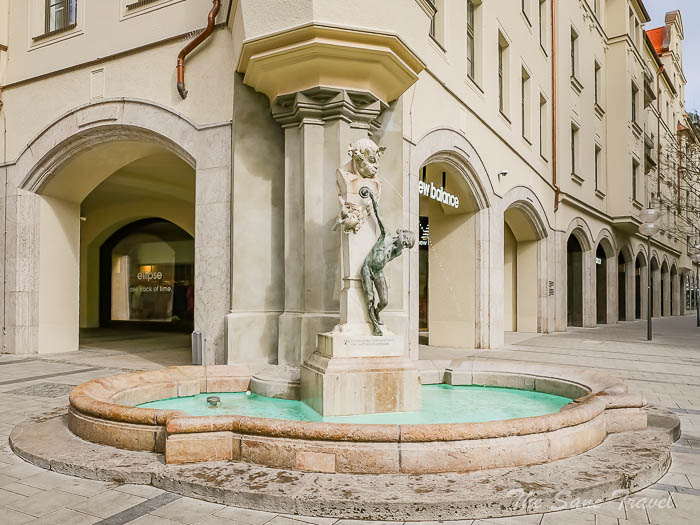
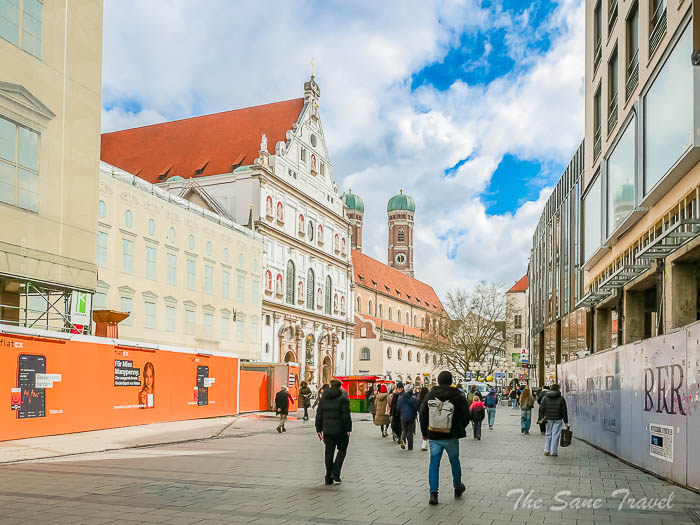 As you explore this part of the city, you will find landmarks such as the Frauenkirche cathedral and St Michael’s Church, with the lively Viktualienmarkt just a short walk away. Next to St Michael’s Church, the pedestrian zone opens into a welcoming plaza, perfect for relaxing and enjoying the surroundings, especially in the warmer months when it is adorned with palms and floral decorations. Within this historic part of Munich, three significant buildings rebuilt after wartime damage still stand: the Jesuit Church of St Michael, the Alte Akademie (a former Jesuit college), and the Bürgersaalkirche, where Father Rupert Mayer is buried and was beatified in 1980.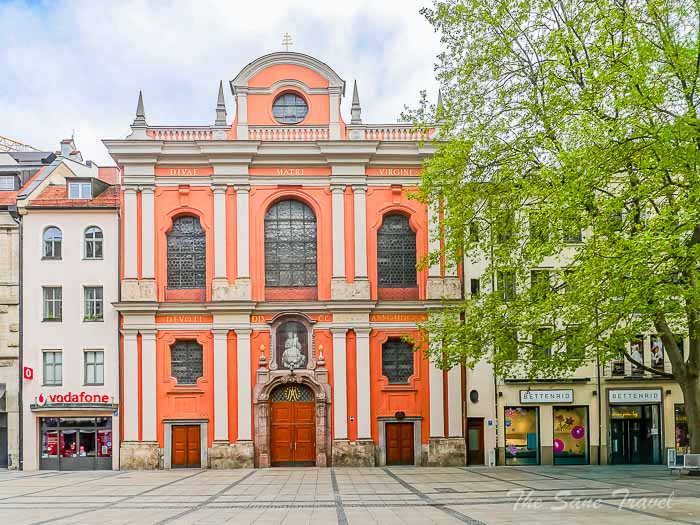
Be a part of the crowd in Marienplatz
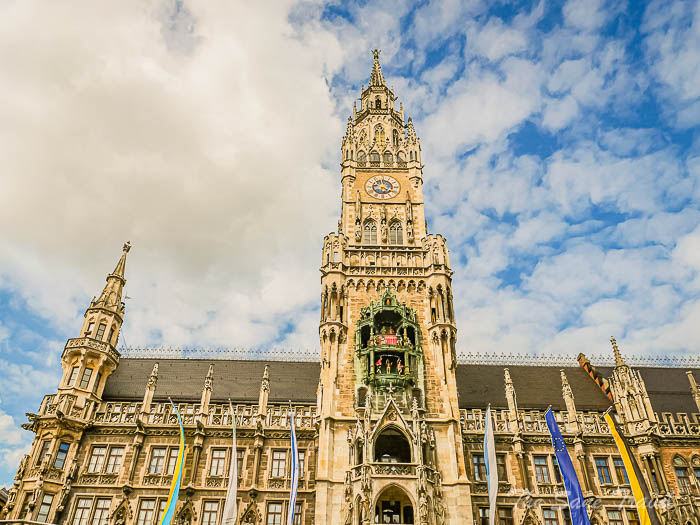
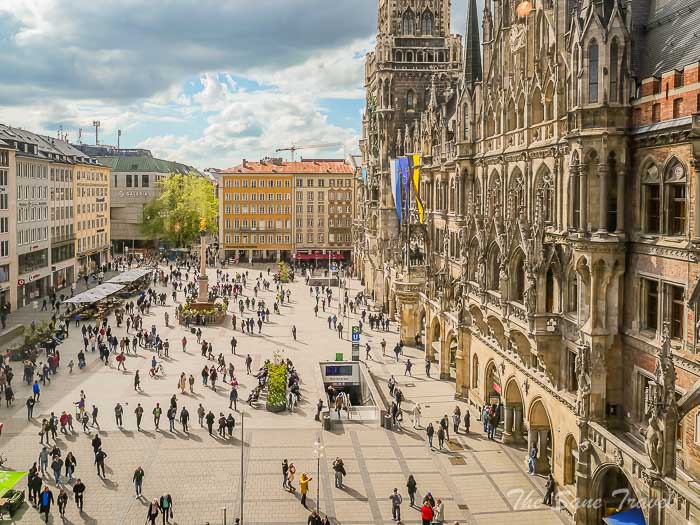
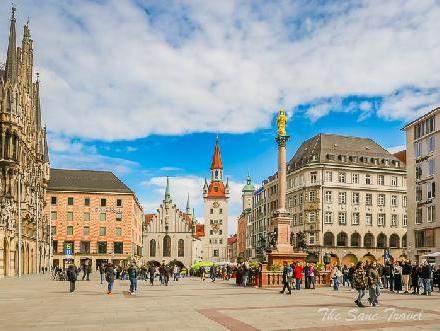
Marienplatz, or Mary’s Square, has been the beating heart of Munich since the city’s founding in 1158. This central square, a pedestrian-friendly zone in the heart of the old town, is surrounded by shopping streets, cafés, and historic buildings. The square’s main attraction is the Neues Rathaus (New Town Hall), famous for its daily Glockenspiel performance at 11 am and 12 pm (and at 5 pm in summer). The impressive façade of the New Town Hall stretches almost 100 metres and is adorned with intricate ornaments and figures. Look out for Henry the Lion, the city’s founder, alongside former rulers of the Wittelsbach dynasty. At the corner of Weinstrasse, a fearsome dragon serves as a reminder of the plague. Crowning the town hall is a statue of the Münchner Kindl (Munich Child), the city’s symbol, overlooking Marienplatz. Other notable landmarks in the square include the Altes Rathaus (Old Town Hall) and the Mariensäule column.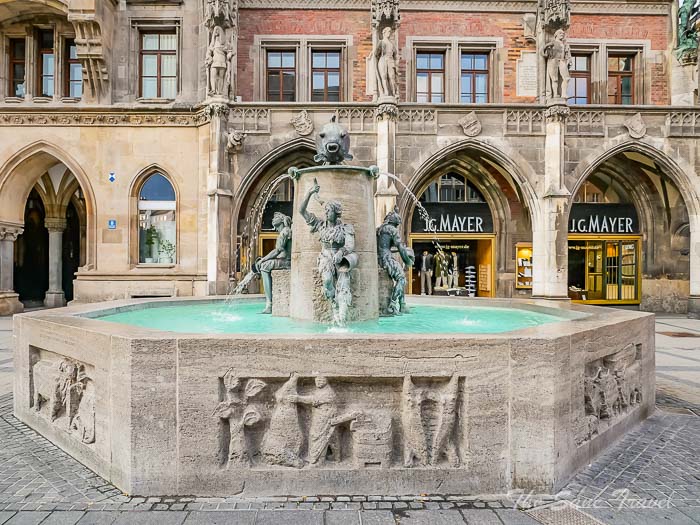
Coffee with a View: Monaco Cafe
Fancy soaking up the vibrant atmosphere of Marienplatz while enjoying coffee and cake? Head to Monaco Café on the fourth floor of the Ludwig Beck department store for superb views.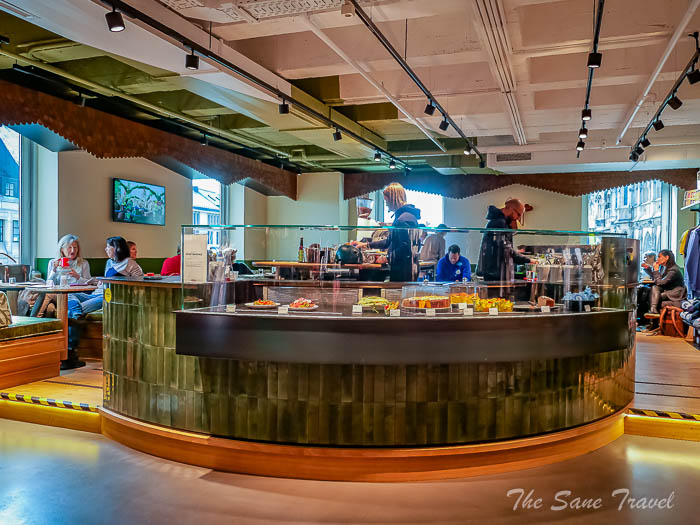
Delve into Art Nouveau splendour at the Law Library
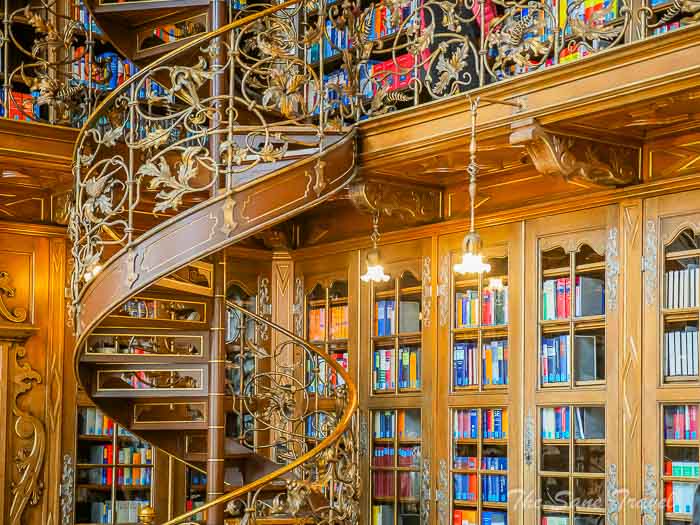
The Juristische Bibliothek (Law Library) in the New Town Hall is a hidden gem, not just for students, but for anyone captivated by beautiful architecture and the atmosphere of an old library. Arguably the city’s most striking library, it features towering walls of books, wrought-iron spiral staircases, and an Art Nouveau gallery. The reading room was relocated to the New Town Hall in 1906 and has since served as a haven for legal scholars. It also hosts lectures, discussions, and readings. Stepping inside, you might think scenes from Harry Potter were filmed here, though the library has actually been used as a backdrop for other stories too – your guide will tell you which ones.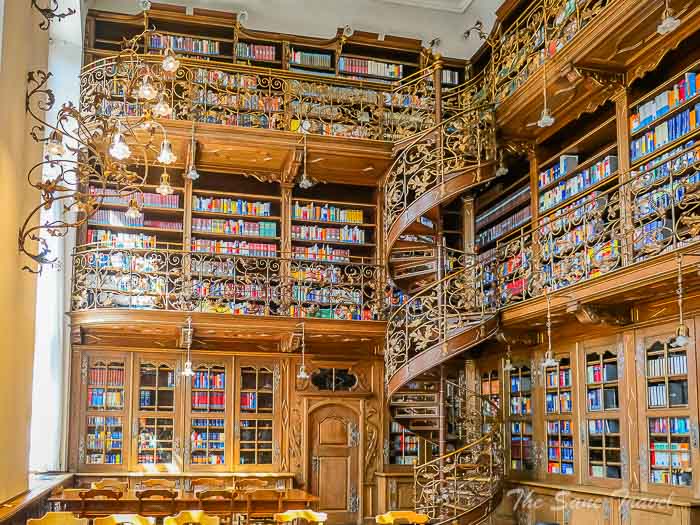
The town hall’s interior is equally impressive, showcasing granite and marble alongside magnificent meeting rooms, including the Hauberrisser Room (Room 200). This room, one of the few original rooms still used for official purposes, still contains its original furniture. I visited the Law Library on a guided tour, having booked my ticket in advance here.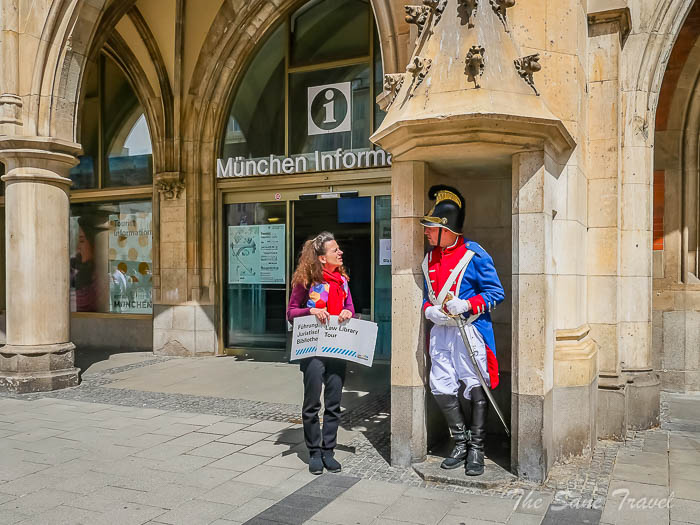
While some say it is open to the public during regular hours, I cannot confirm this.
Discover the grandeur of the Munich Residenz
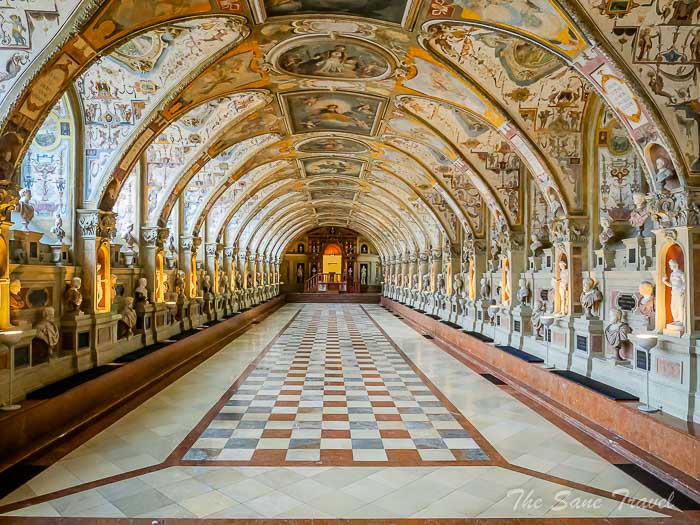
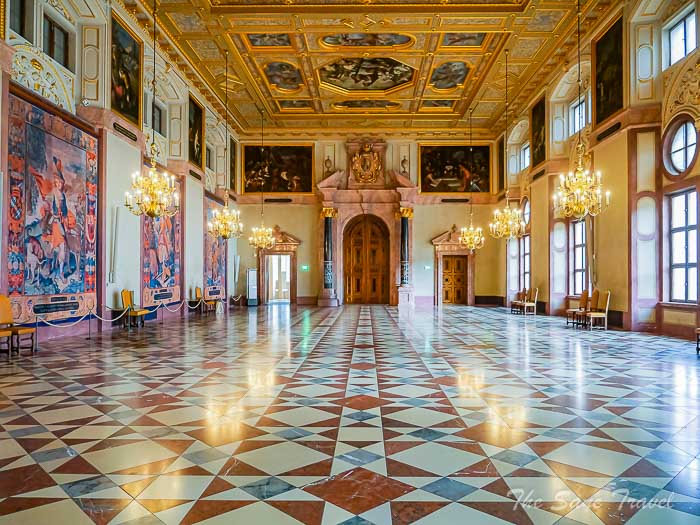
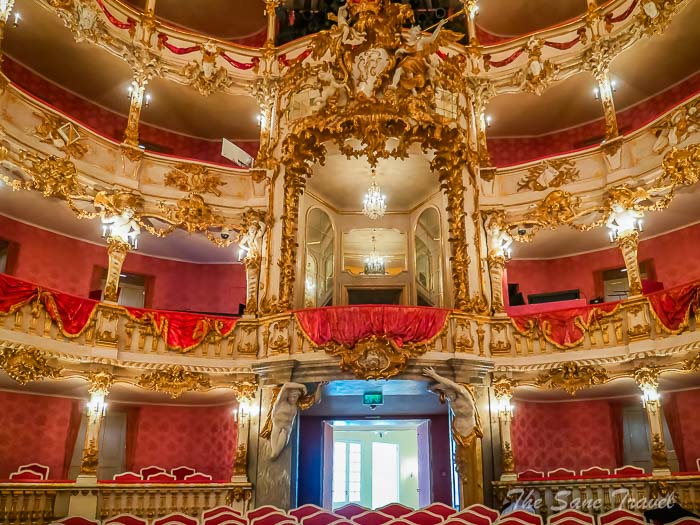
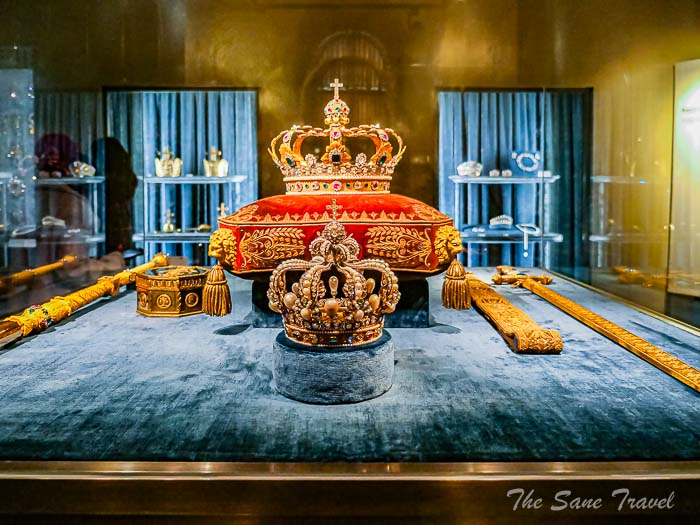
The Munich Residenz, Germany’s largest city palace, is a popular tourist attraction that offers a glimpse into the past. This grand palace features the impressive Antiquarium, the Treasury, the ornate Cuvilliés Theatre, and the enchanting Grotto Courtyard. From 1508 to 1918, the Munich Residenz served as the residence and seat of government for Bavarian dukes, electors, and kings. Originally built as a castle in 1385, it was expanded and transformed over the centuries into a magnificent palace. Despite being heavily damaged during World War II, the Residenz has been carefully reconstructed and now forms one of the largest museum complexes in Bavaria. Key highlights include the Antiquarium, the Treasury with its royal jewels, the Cuvilliés Theatre, the Grotto Courtyard, and a series of lavish halls showcasing art collections from different periods.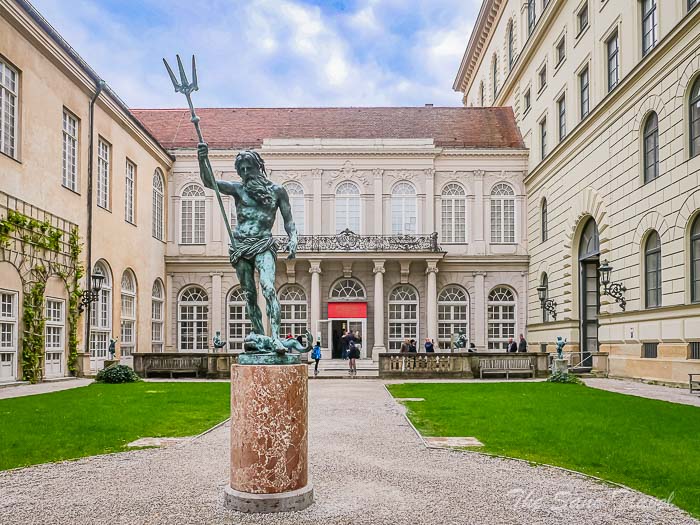
Practical Information
Ticket options include individual entries for the Residence Museum, Treasury, or Theatre. A combined ticket is available for approximately €20. Allow at least 2–3 hours for your visit. Last admission is usually one hour before closing. Large bags (over 35 × 30 × 12 cm), rucksacks, and bulky items are not permitted inside the Residenz, but can be left at the free, supervised cloakroom.
Admire the opulent interiors of Munich’s churches
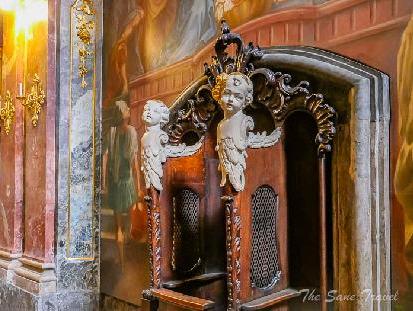
Munich’s churches are not only places of worship but also important historical and architectural landmarks that reflect the city’s cultural heritage. These buildings have stood for centuries and feature a range of architectural styles that have shaped Munich’s development. From the Gothic Frauenkirche to the Baroque Asamkirche, each church offers a unique insight into the city’s past. Alongside well-known landmarks such as the Frauenkirche and the Theatinekirche, Munich is home to a diverse range of churches with fascinating histories and impressive architecture. If you are short on time, the following churches are especially worth visiting: Theatine Church,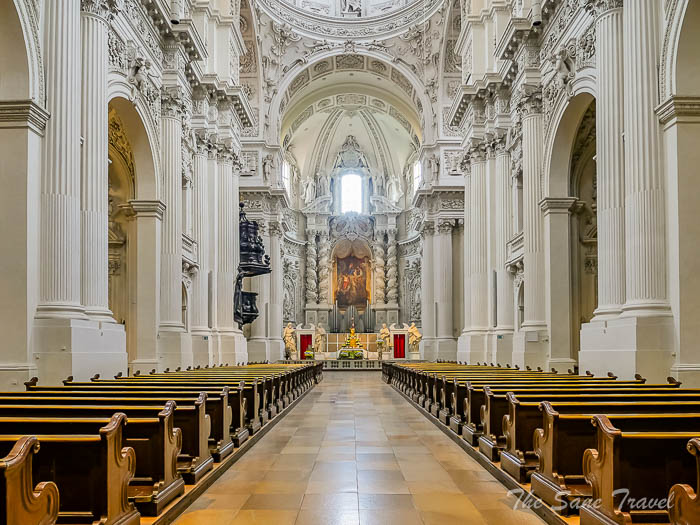 Asam Church,
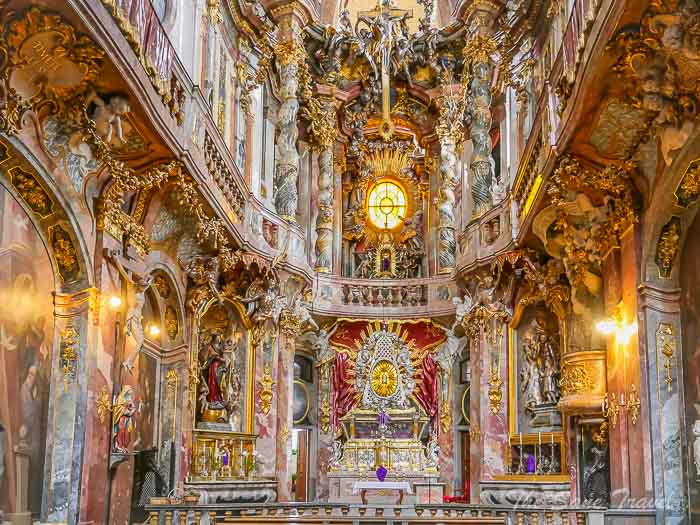 St Michael’s Church,
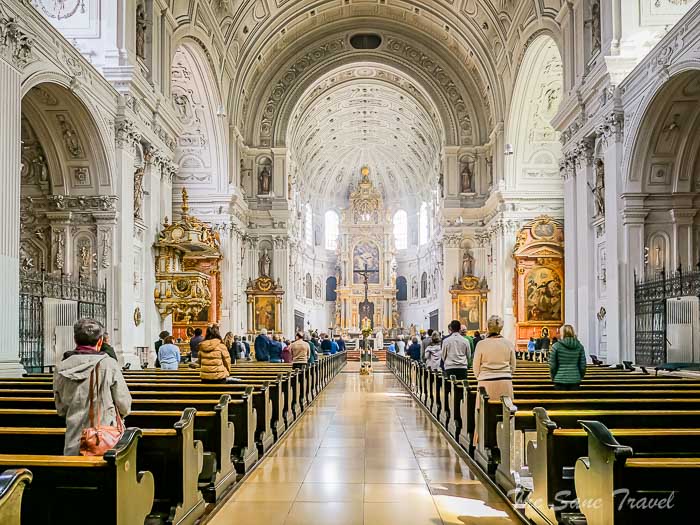 St Peter’s Church,
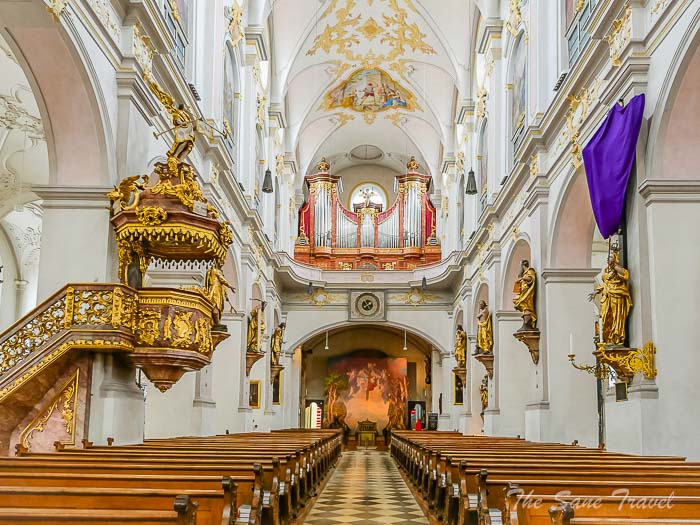 and Heilig Geist Church.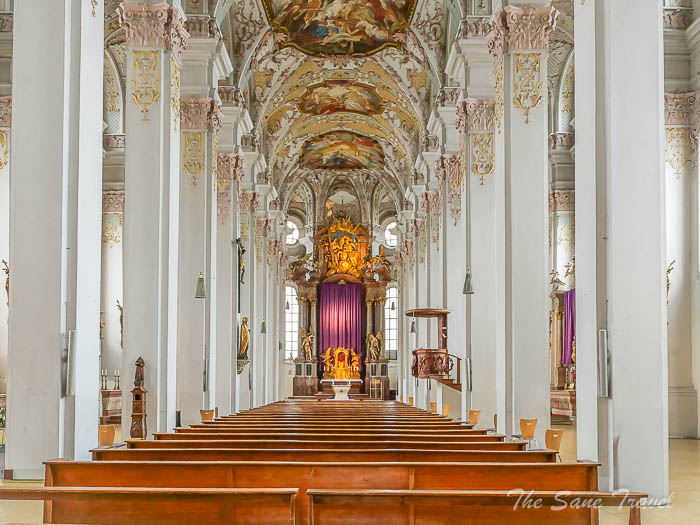
Discover your favourite Art Nouveau building in Munich’s bohemian Schwabing
Schwabing, Munich’s historic bohemian heart, is a veritable treasure trove of Art Nouveau (Jugendstil) architecture. Think vibrant façades adorned with floral motifs, flowing lines, and intricate decorative details from the turn of the 20th century. Forget the usual tourist traps and wander through the enchanting streets of this district. Here are a few highlights to get you started, but be sure to explore and discover your own hidden gems
Garden of Eden House
The Garden of Eden House is arguably Munich’s most celebrated Art Nouveau residential building, famed for its extraordinary detailing. What makes it truly special is that some of the most elaborate features are at eye level, making them especially memorable. Above the doorway, you will see a nude couple facing each other beneath a tree, the woman, Eve, offering an apple to her partner, Adam. Scenes of Adam and Eve were a popular motif in the Art Nouveau movement, with variations even appearing in Gustav Klimt’s evocative painting, The Kiss. When the fresco of the “original sinners” was first added to the house, it caused quite a stir among the locals.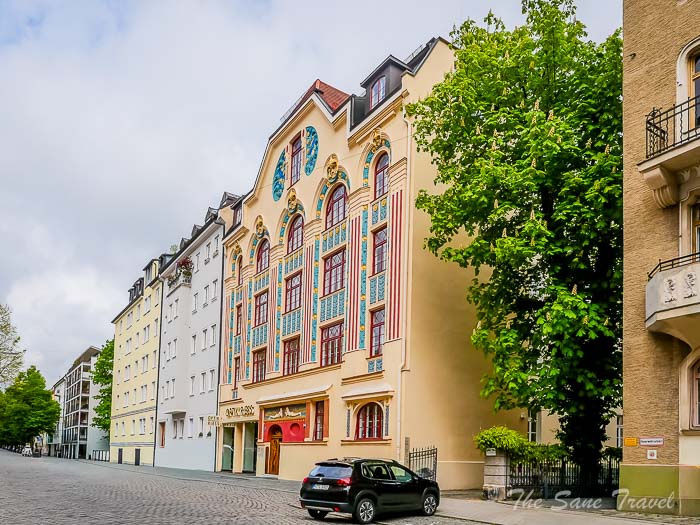
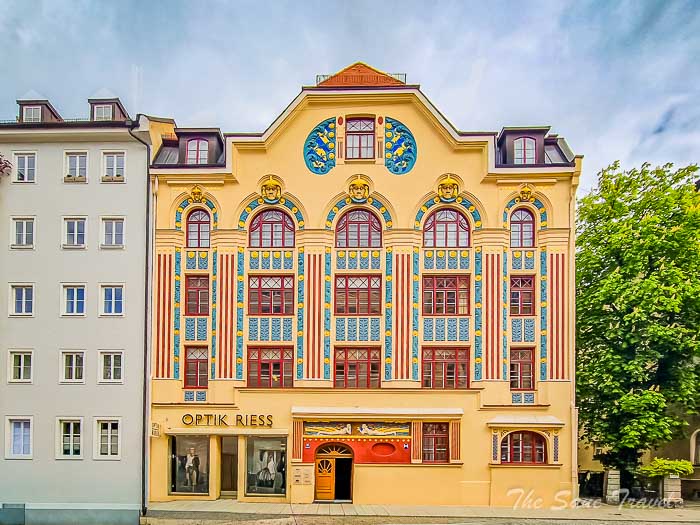
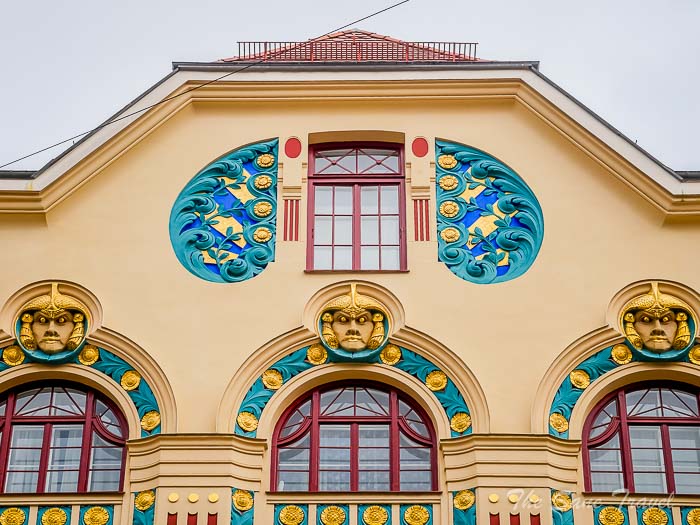
Address: Ainmillerstrasse 22
Liquorice Swirl House
Just around the corner from Leopoldpark, at 23 Franz-Josephstraße, stands a house that resembles liquorice swirls or rock candy. The balcony pillars are twisted into black-and-white chequered patterns, and the windows above are lined with bright red and blue accents. Keep an eye out for the little smiling man tucked beneath one of the windows. The building is partly hidden by trees, and its most striking features are not immediately visible from street level, making it somewhat challenging to fully appreciate. However, the other side of the house reveals a bold green-framed entrance, while the neighbouring buildings also feature some lovely decorative details. So keep your eyes peeled.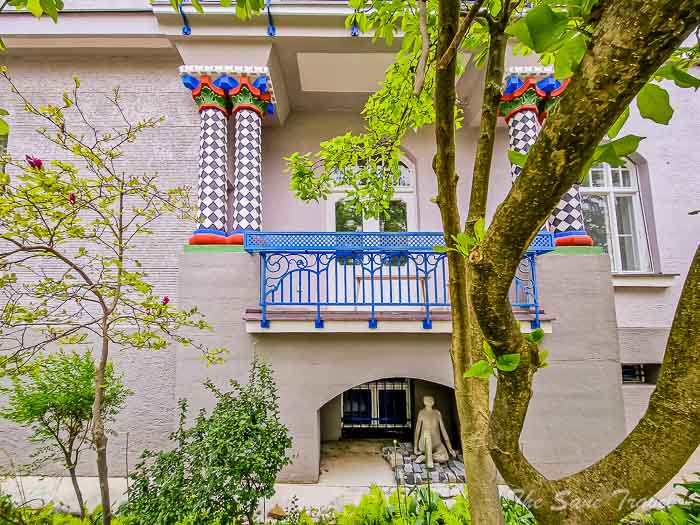
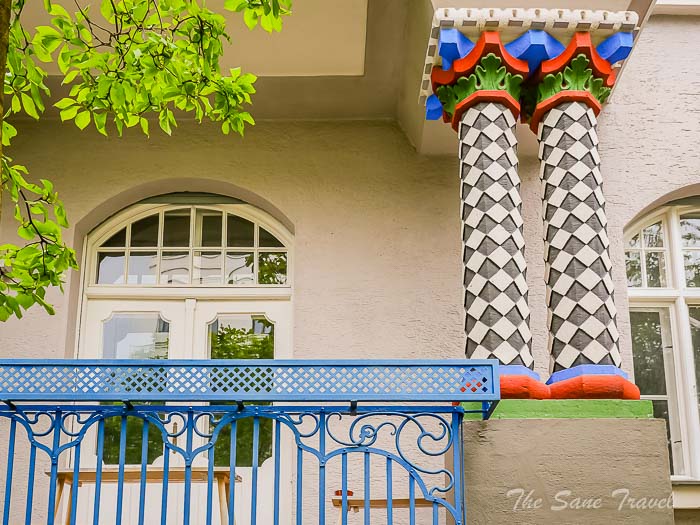
Address: 23 Franz-Josephstrasse
Bissing Palace
The Palais Bissing, located at 10 Georgenstrasse, was constructed in 1881 and later renovated in 1903 by architect E.R. Fiechter for Egyptologist Friedrich Wilhelm von Bissing. Bissing used the building to exhibit his collection of ancient Egyptian art. The palace’s striking façade is partially obscured by a tree, with a decorative entrance visible through the railings. Georgenstrasse boasts a total of 37 historic buildings, including several palaces. The bay window of the palace is adorned with intricate ornamentation featuring medallion portraits of notable figures and various bird motifs. In 1914, the palace and its art collection were donated to the city of Munich, where the collection now resides in the State Museum of Egyptian Art.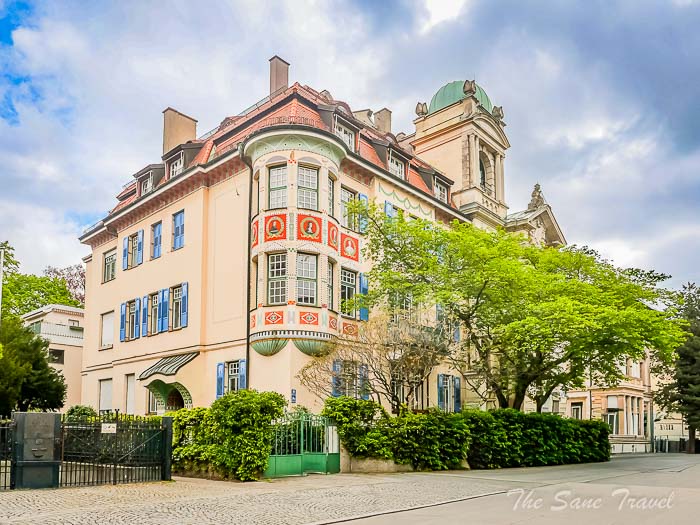
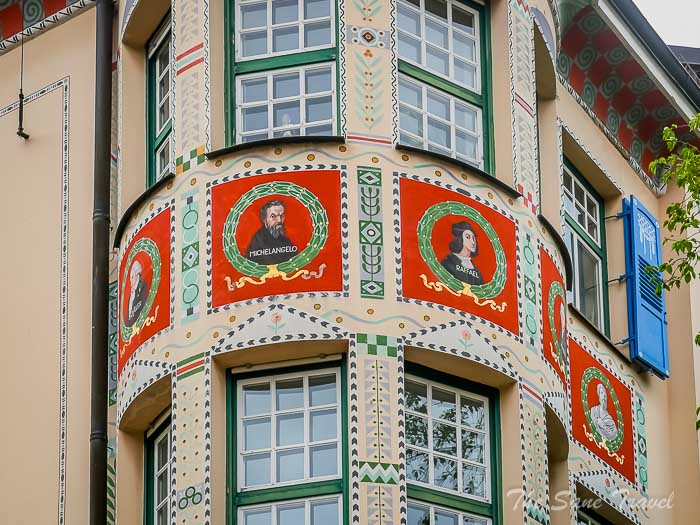
Address: 10 Georgenstrasse
Beyond Art Nouveau: Pacelli Palace
While you are exploring, take a moment to admire the Pacelli Palace next door at 8 Georgenstrasse. Although not Art Nouveau, this former upper-middle-class residence remains a sight to behold. Built in 1880–1881 by Joseph Hölzle, it underwent an extensive neo-Baroque renovation by the same architect in 1900–1901. Attached to the Palais Bissing, the palace boasts three domes and a picturesque, richly detailed façade. Look out for the sculptures by H. Schneider and the loggia adorned with large-format mosaics.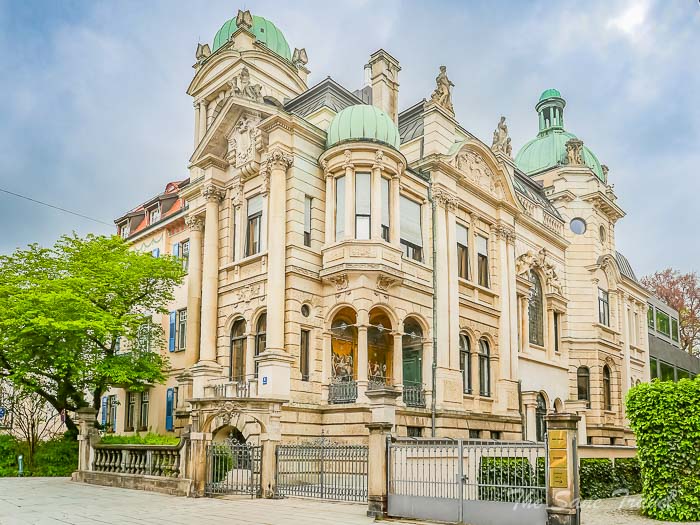
Egyptian House
The eye-catching Egyptian House stands at 11 Römerstrasse. Designed in 1899 by Henry Helbig and Ernst Haiger, the same architects responsible for the house on Ainmillerstrasse, it bears a striking resemblance to it. This building is distinguished by its red-striped pillars and peacock-feather-inspired floral motifs. The owner, a devoted Egyptophile, commissioned Art Nouveau architects to reflect his passion in the design. Do not miss the fearsome face above the entrance.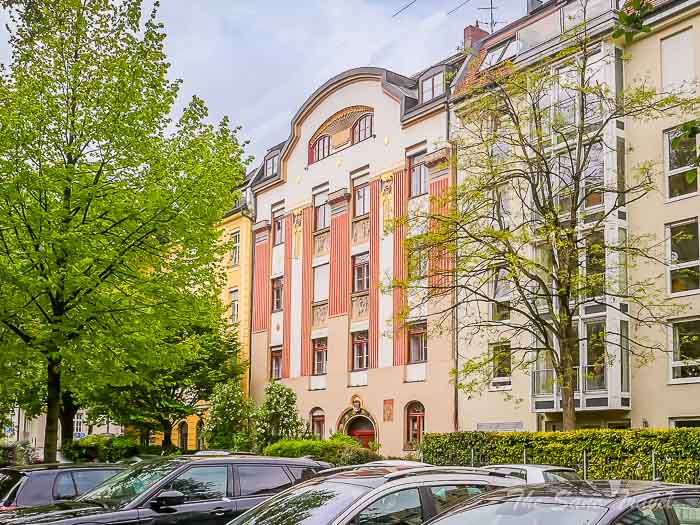
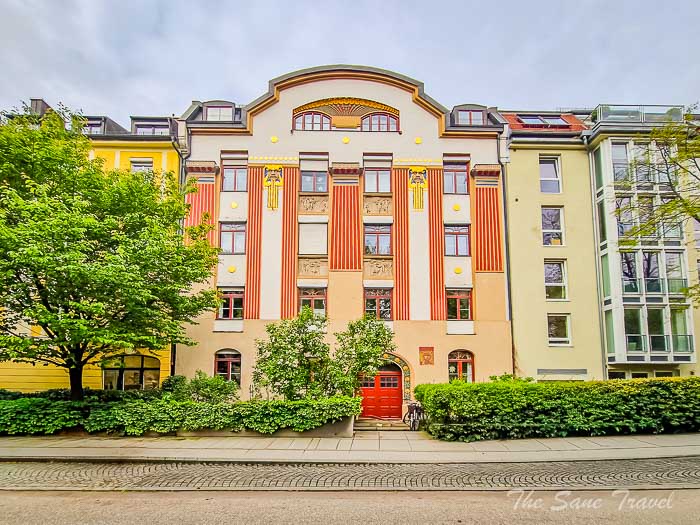
Address: Romerstrasse 11
ERES Stiftung Building
Further along Römerstrasse, at number 15, is a remarkable Art Nouveau apartment building, designed in 1900 by architects Eugen Hönig and Karl Söldner. The ornamental bay window and dormer gable are particularly striking. Today, it serves as the headquarters and main exhibition space of the ERES Stiftung, a foundation dedicated to fostering dialogue between science and the fine arts. The building showcases characteristic architectural elements of the period.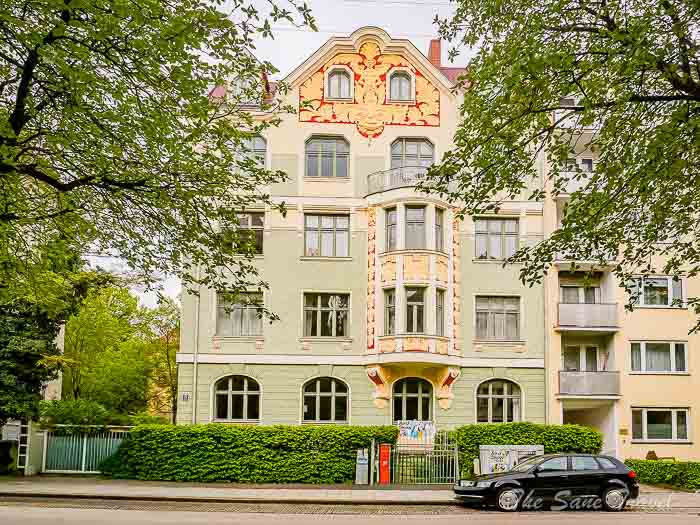
Address: Romerstrasse 15
Combine your architectural walk with a coffee break on lively Leopoldstrasse, or a relaxing stroll through the nearby English Garden.
Stroll Around the English Garden
The Englischer Garten, also known as the English Garden, is a large urban park covering over 360 hectares and extending for more than five kilometres from the city centre to the northern city limits. This popular recreational area includes the Eisbach wave, traditional beer gardens like the one at the Chinese Tower, and scenic spots such as the Monopteros. The park was created in 1789 by Elector Karl Theodor of Bavaria to enhance the city of Munich. Divided into two distinct areas, the Englischer Garten has a lively, bustling southern section, while the northern section, Hirschau, offers a more peaceful atmosphere.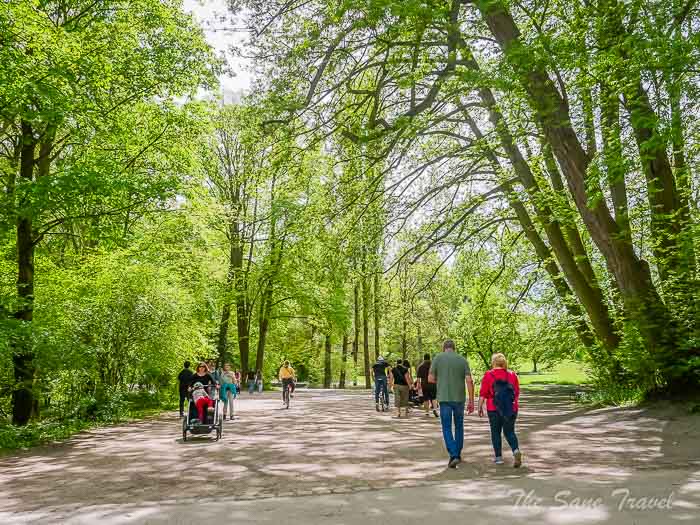
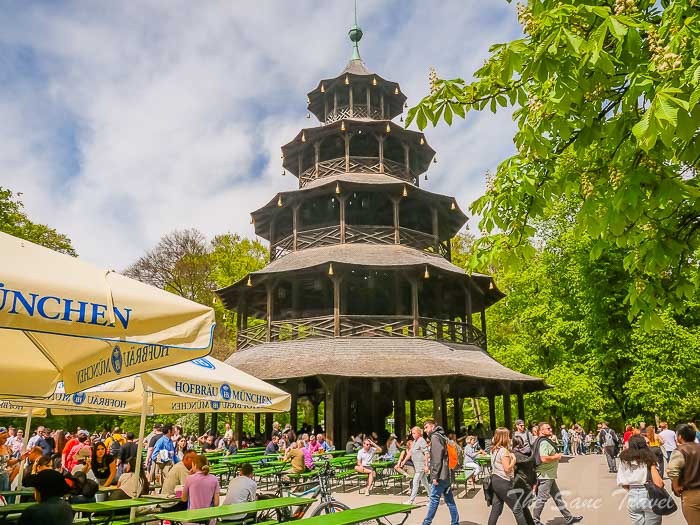
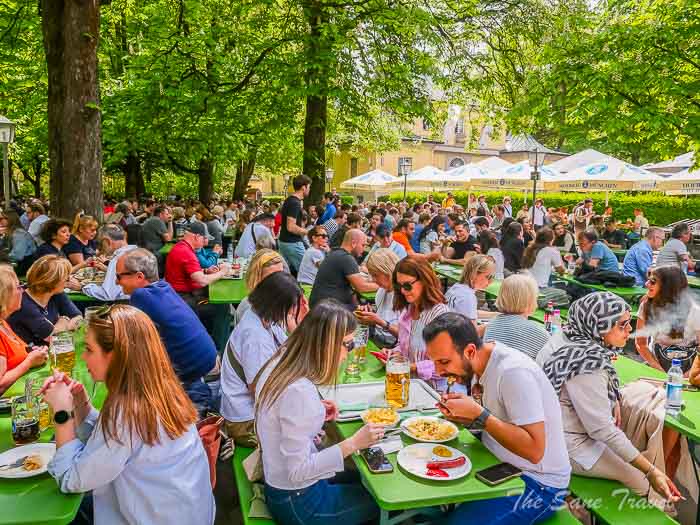
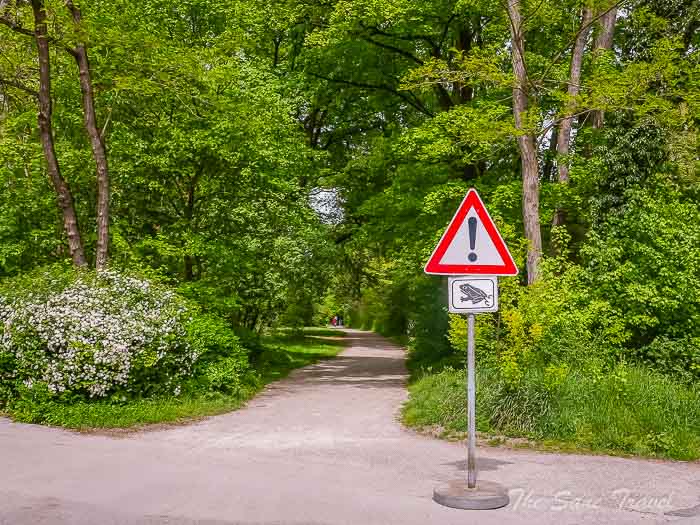 With over 75 kilometres of paths winding through forests, meadows, and gardens, visitors may come across unique structures such as an 18th-century Chinese pagoda, a Japanese teahouse built for the 1972 Olympics, and the Monopteros, a Greek-style temple with stunning views of the Munich skyline. The park also features two popular beer gardens, with Seehaus being a recommended spot to enjoy a local brew by the lake. For those short on time, the Hofgarten provides a smaller alternative for experiencing a touch of nature in Munich.
Do not forget to attend the event at the Olympic Park.
Munich’s Olympic Park: more than just a memory
Munich’s Olympic Park is not just a tourist hotspot or a haven for architecture buffs; it is also a beloved playground for locals. The combination of event spaces, recreation facilities, and attractions has cemented its place as a premier destination. Five decades after the 1972 Games, the park still buzzes with life. While many Olympic venues fade into history, Munich has cultivated a world-renowned leisure and events centre that thrives to this day. The park’s striking architecture continues to impress and remains at the forefront of modern design. Every year, four million visitors flock here to play sport, explore its attractions, or attend one of the many prestigious events. Beyond these activities, countless walkers and joggers enjoy its green spaces. With hundreds of events held annually across the park, there is rarely a dull moment. The Olympic Stadium is famous for its open-air shows and major sporting competitions, while the Olympic Hall is almost always packed, hosting rock and pop concerts, sporting events, exhibitions, and trade fairs on more than 200 days each year. Boasting capacities of 77,337 and 15,000 respectively, the Olympic Stadium and Hall are the largest event venues in Munich and the surrounding region.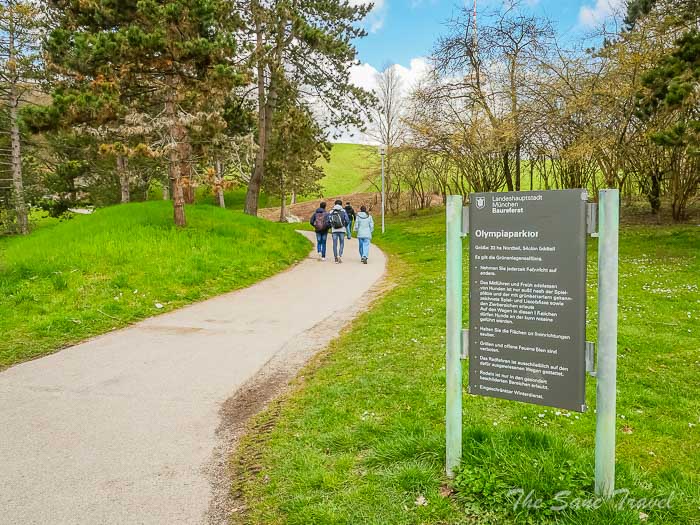
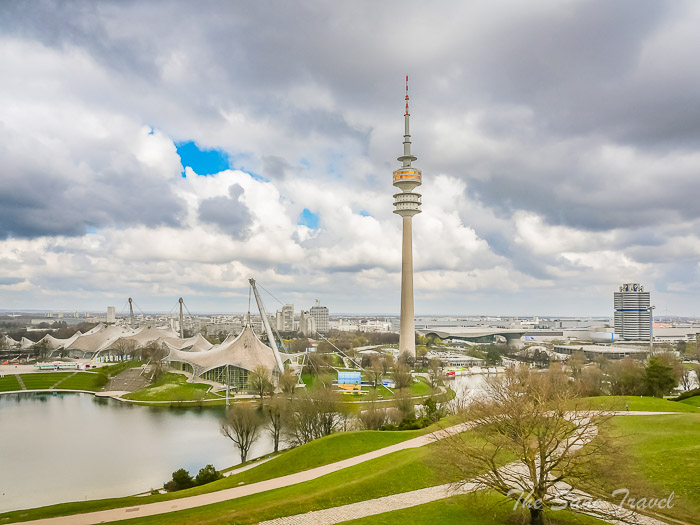
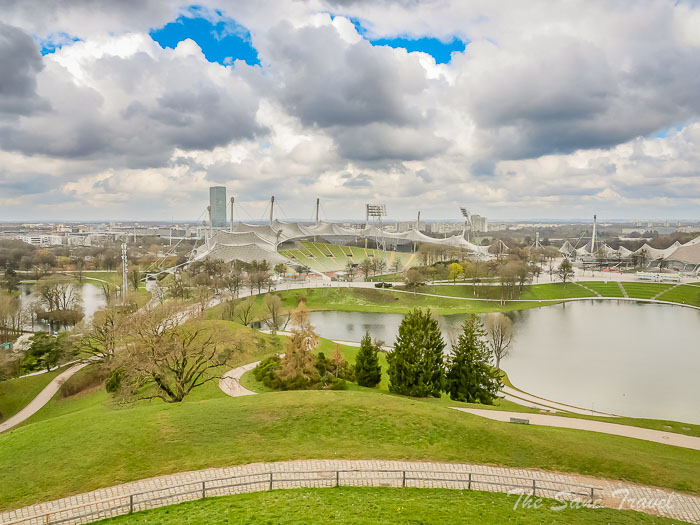
For a truly picturesque experience, do not miss the park’s stunning cherry blossom trees. The best time to witness their beauty is typically from late March to early April, weather permitting. Strolling through the park during blossom season is an unforgettable spring treat.
Art lover’s paradise: Alte Pinakothek
The Alte Pinakothek ranks among Europe’s most significant art museums. Munich owes much of its cultural development to King Ludwig I, a true enthusiast of the arts. Eager to share his royal collection with the public, he commissioned court architect Leo von Klenze to design the museum in the early 1820s. When it opened in 1836, the Pinakothek was the largest museum in the world. After sustaining significant damage during World War II, the museum was restored by architect Hans Döllgast, who preserved the “wounds” of war by replacing the missing façade with unrendered brickwork, thereby creating a poignant reminder of the past.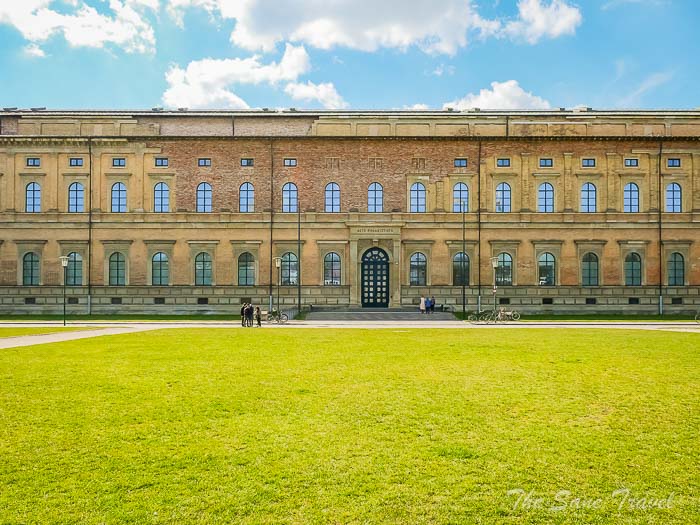
Prepare to be swept away by one of the world’s most impressive collections of European paintings, spanning the 14th to 18th centuries. The Pinakothek boasts over 800 works, including masterpieces by artists such as Albrecht Dürer and Peter Paul Rubens. The collection also features seminal works by Rogier van der Weyden and Hans Memling, Raphael and Titian, Albrecht Altdorfer and Lucas Cranach the Elder, Jan Brueghel the Elder and Anthony van Dyck, Rembrandt and Frans Hals, as well as Nicolas Poussin and Bartolomé Esteban Murillo.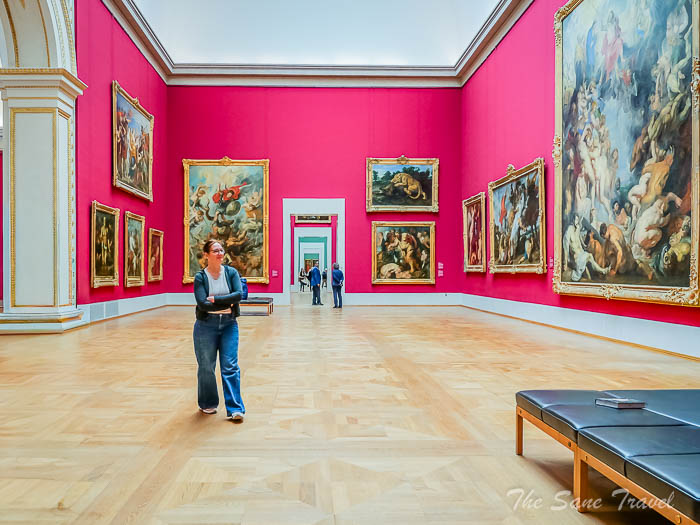
Many of the works on display are considered pinnacles of art history, including Dürer’s iconic Self-Portrait at Twenty-Eight Years Old Wearing a Coat with Fur Collar (1500). The Pinakothek is also the only museum in Germany to house Leonardo da Vinci’s work, particularly the Madonna of the Carnation.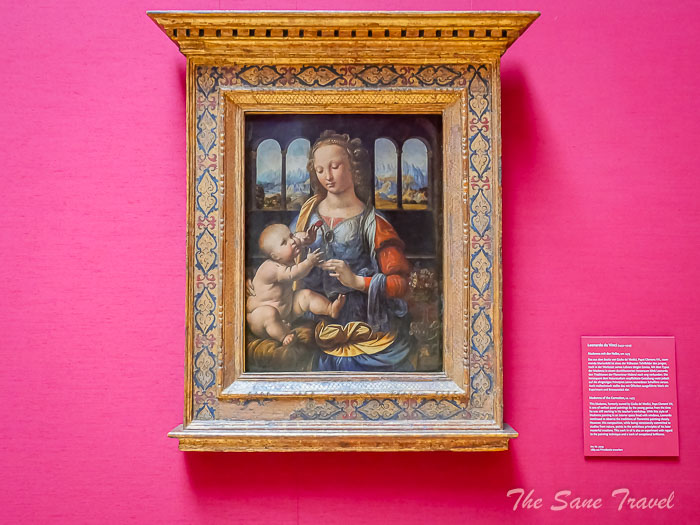
I am consistently drawn to Arcimboldo's paintings and was pleased to discover several of them at the Alte Pinakothek in Munich. The Four Seasons series by Arcimboldo is unique in its intricate details and format. These paintings are workshop versions of Arcimboldo's original allegories, with the autograph versions located in Paris and the Kunsthistorische Museum in Vienna.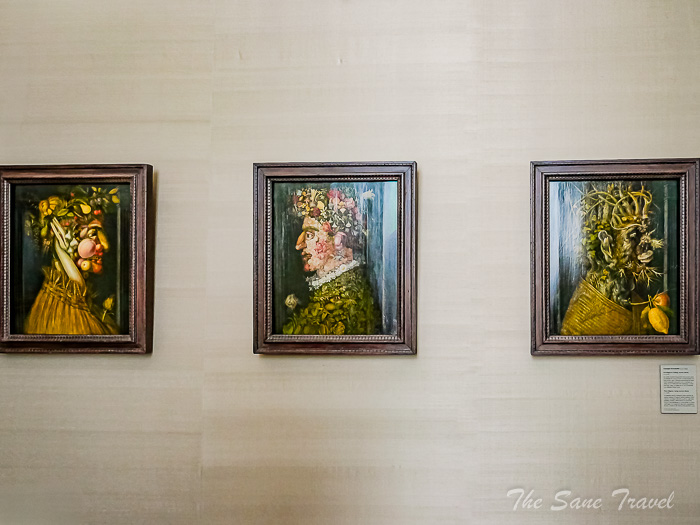
Live like royalty: Nymphenburg Palace
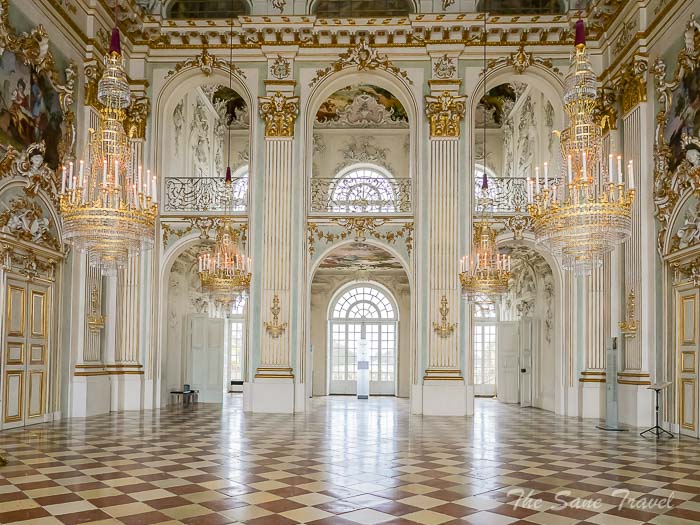
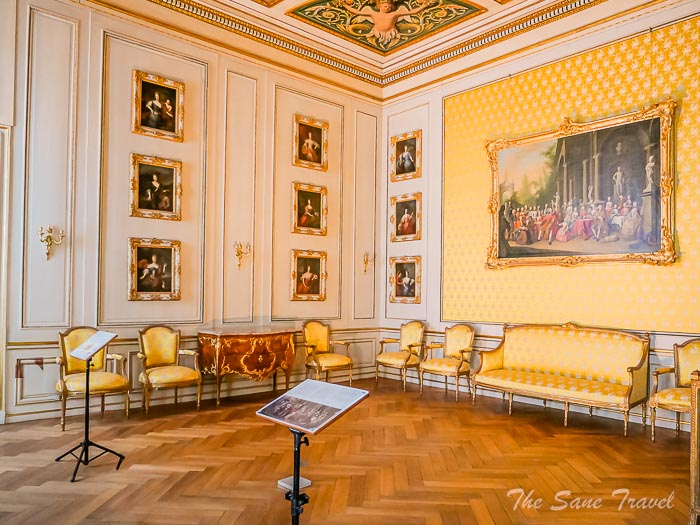
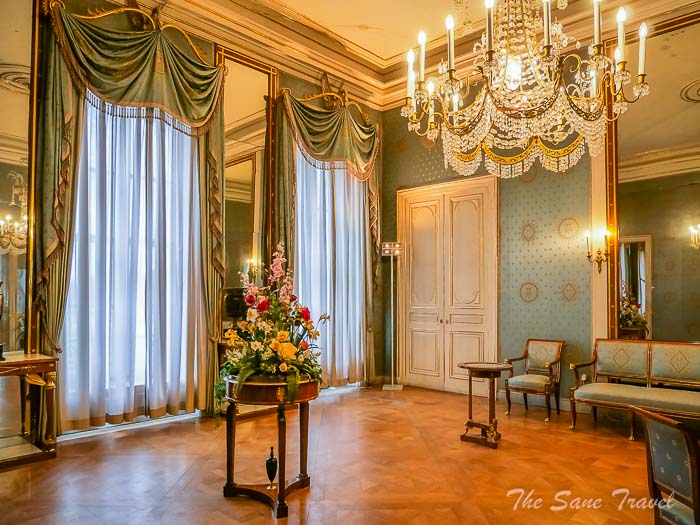
Immerse yourself in the grandeur of Nymphenburg Palace, a stunning palace and park seamlessly combining architecture and garden design. Construction began in 1664 under Elector Ferdinand Maria and his consort, who commissioned Agostino Barelli to build it following the birth of their heir, Max Emanuel. The complex was further expanded during Max Emanuel’s reign with the addition of side galleries and residential buildings designed by Henrico Zuccalli. Under Joseph Effner, the adjacent four-winged buildings were completed, and the central façade was remodelled in the French style, transforming the private country house into a lavish summer residence befitting a ruler. The palace features exhibitions and artworks spanning the Baroque period to Classicism, including the room where Ludwig II of Bavaria was born, as well as the “Gallery of Beauties”, which showcases portraits commissioned by Ludwig I of Bavaria. Together with Nymphenburg Palace Park, it served as the main summer residence of the House of Wittelsbach, the former rulers of Bavaria, and remains one of Europe’s most impressive royal palaces – surpassing even the Palace of Versailles in width. Highlights include the grand Stone Hall, the Carriage Museum, the ornate Amalienburg hunting lodge, the birthplace of King Ludwig II, and lush gardens with unique pavilions. Plan to spend around 2–3 hours exploring this magnificent site.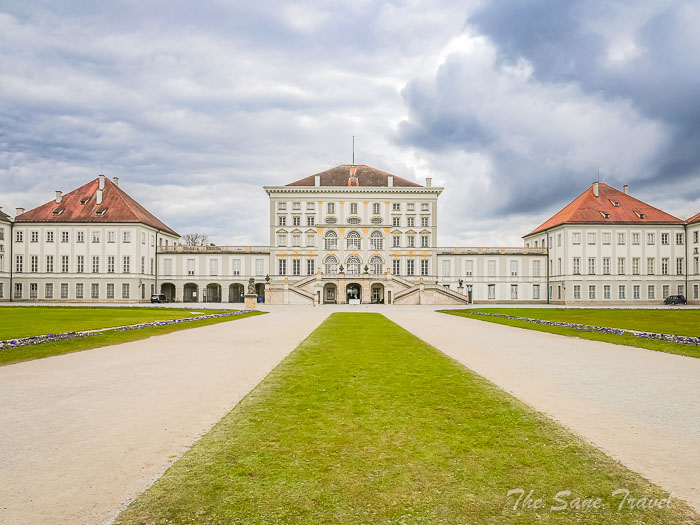
Planning your visit: Time-slot tickets are essential, and booking online at least a day in advance is highly recommended. However, I was able to purchase a ticket on-site in early April, so it is always worth a try.
Discover the Endless Staircase
Fancy seeing a work by Ólafur Elíasson without spending a penny? Head to Munich’s Westend district to see the “endlose Treppe” or endless staircase. This artwork, officially titled Umschreibung (meaning “circumscription”), sits in an inner courtyard at 29 Ganghoferstrasse and has been open to the public since 2004. Tucked behind the professional services firm KPMG, the nine-metre-tall staircase forms a closed loop, leading nowhere and ensuring that the moment you reach the top, you are already descending. While climbing is prohibited, photography is encouraged.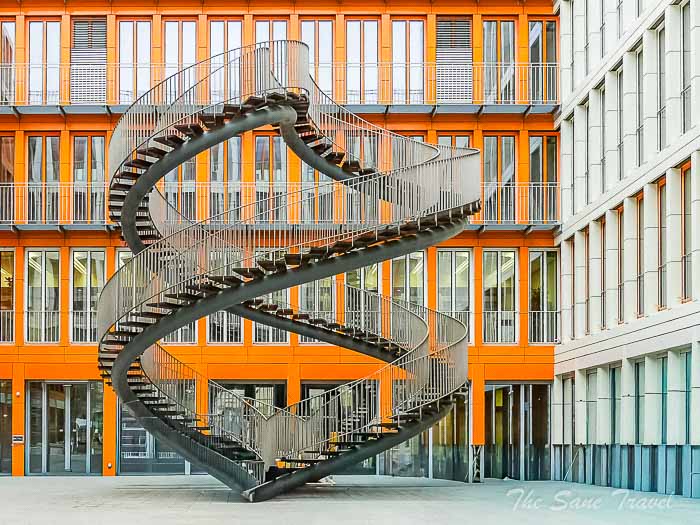
Practical Tips for Your Munich Adventure
To fully experience the attractions mentioned, allow at least three days; you may also wish to extend your stay to a week to include some amazing day trips.
Accommodation: Be mindful of trade fair dates, as accommodation prices tend to rise sharply during these periods. It may also be worth exploring alternatives to Booking, such as Motel One or Premier Inn.
Transport: Public transport in Munich can be pricey. If you are staying for more than five days, the Deutschland-Ticket (€63/month as of 2026) is a worthwhile investment. This monthly, cancellable subscription offers unlimited travel on local and regional trains, buses, U-Bahn, and S-Bahn throughout Germany. You can get it via the DB Navigator app or regional transport apps. Note that it does not cover high-speed ICE/IC trains. It is advisable to stay up to date with any changes to public transport schedules, particularly at weekends.
Shopping and dining: Be aware that shops in Munich are closed on Sundays and public holidays, while cafés and restaurants remain open. Some restaurants may only serve drinks outside standard lunch and dinner hours, though snacks are sometimes available.
Airport security: Surprisingly, at Munich Airport, I was allowed to carry liquids over 100ml in my hand luggage. Although this is not officially stated, I asked and was permitted to bring a large bottle of water.
Like it? Pin it! 
What did you think? Have you been to Munich? I would love to hear from you, so please add your comment below.
Author: Anita Sane

About the author
Anita is a part-time traveller, passionate photographer and a retired career woman from Latvia, travelling mostly solo for more than 15 years. She is a skilled travel planner who plans and executes her travels by herself. Anita wants to show you how to travel the world and open your mind to new experiences. Follow her on Facebook, Instagram, Pinterest, Twitter and Bloglovin.

Report
My comments